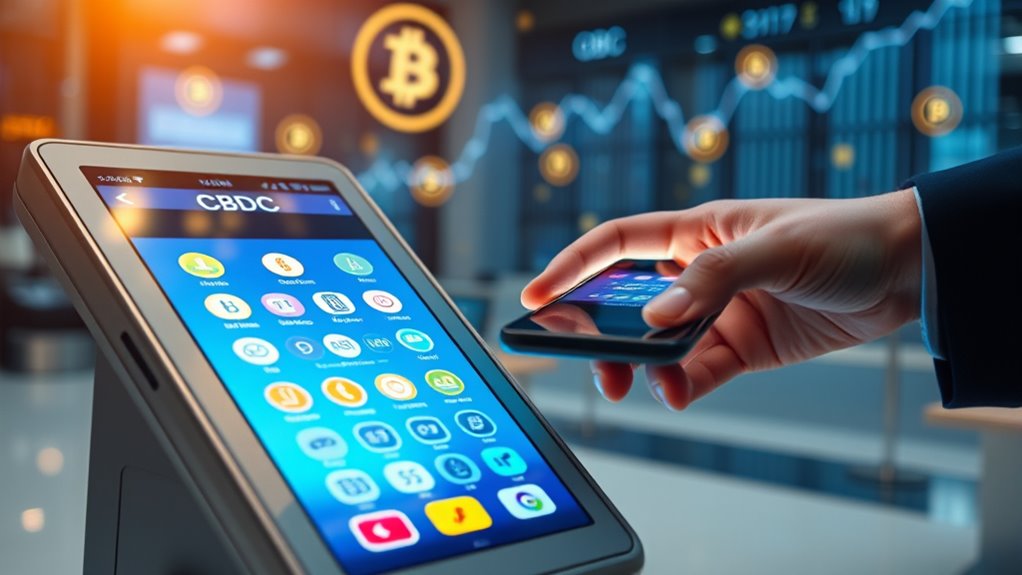

When CBDCs arrive, you’ll use secure digital wallets to manage and spend your digital currency effortlessly. Choose wallets with strong encryption and multi-factor authentication to safeguard your assets. You’ll be able to make transactions faster, safer, and more transparent, whether locally or across borders. Keep an eye on evolving protocols and best practices to guarantee secure, smooth transfers. If you want to make the most of these new tools, there’s more to learn about their full potential.
Key Takeaways
- Set up a secure digital wallet with strong encryption and multi-factor authentication.
- Learn how to manage and monitor your CBDC transactions for transparency and security.
- Familiarize yourself with cross-border transaction procedures and compatible digital wallet platforms.
- Stay updated on new tools, protocols, and regulations for using CBDCs effectively.
- Practice secure habits to protect your digital assets during transactions and wallet management.

Central bank digital currencies (CBDCs) are transforming how we think about money and payments. As these digital currencies become more mainstream, understanding how to use them effectively is essential. When CBDCs arrive, you’ll likely manage them through digital wallets, which serve as secure, convenient repositories for your digital funds. Ensuring your digital wallet security is vital; you’ll want to choose platforms with robust encryption, multi-factor authentication, and fraud detection features. These measures protect your assets from hacking and unauthorized access, giving you peace of mind when making transactions. With CBDCs, transactions are not only faster but also more transparent and traceable, which can help reduce fraud and improve overall financial security.
Manage CBDCs securely with robust encryption and multi-factor authentication for safer digital transactions.
One of the most significant advantages of CBDCs is their ability to facilitate cross-border transactions efficiently. Unlike traditional banking methods, which can involve multiple intermediaries, delays, and hefty fees, CBDCs enable near-instantaneous transfers across countries. All you need is access to a compatible digital wallet, and you can send or receive funds across borders with ease. This streamlined process minimizes exchange rate risks and reduces transaction costs, making international payments more affordable and accessible. As you navigate cross-border transactions, it’s important to stay informed about the currency conversion policies and regulations of the countries involved, as these can impact the speed and cost of your transfers. Additionally, adopting secure digital wallet practices is essential to safeguard your funds during these international exchanges.
Using CBDCs for cross-border payments also enhances transparency. Since each transaction is recorded on a secure digital ledger, you can track your transfers in real-time, ensuring accuracy and reducing the risk of disputes. This transparency helps you understand exactly where your funds are at each stage of the process, which is especially valuable when dealing with large amounts or sensitive transactions. Additionally, CBDCs can promote financial inclusion by providing easier access to digital payment systems for people in remote or underserved regions, making international transactions more feasible for a broader population.
As you prepare for the arrival of CBDCs, keep in mind that adopting these digital currencies will require familiarity with new tools and protocols. Prioritize learning how to secure your digital wallet properly and stay updated on the evolving landscape of cross-border transactions. With the right precautions and understanding, you’ll be well-positioned to leverage the benefits of CBDCs, enjoying faster, safer, and more efficient digital payments both locally and worldwide.

EVEO Screen Cleaner Spray - Large Screen Cleaner Bottle - TV Screen Cleaner, Computer Screen Cleaner, for Laptop, Phone, Ipad - Computer Cleaning kit Electronic Cleaner (1 Pack)
- Versatile Electronic Screen Cleaner: Suitable for TVs, laptops, phones, and tablets
- Effective Streak-Free Cleaning: Removes dust, fingerprints, smudges easily
- Gentle on Sensitive Screens: Safe for LCD, LED, OLED, CRT screens
As an affiliate, we earn on qualifying purchases.
Frequently Asked Questions
Will CBDCS Replace Cash Entirely?
CBDCs won’t replace cash entirely, but they’ll coexist with it. You’ll likely use a digital wallet for transactions, enjoying quick, secure payments. However, cash remains essential for those valuing privacy and monetary sovereignty. While CBDCs offer convenience and control, cash provides an offline, untraceable option. Expect a hybrid system where both forms serve different needs, ensuring you have flexible choices for your financial transactions.
How Secure Are CBDC Transactions?
CBDC transactions are designed to be highly secure, leveraging advanced cryptography security to protect your funds and data. They also promote transaction transparency, allowing you to verify each transfer easily. While no system is entirely foolproof, CBDCs aim to minimize risks like fraud or hacking. You can confidently use them, knowing that strong security measures and transparent processes are in place to keep your transactions safe and trustworthy.
Can CBDCS Be Used for International Trade?
Yes, you can use CBDCs for international trade through cross-border payments. They enable faster, cheaper transactions by improving currency interoperability among different nations’ digital currencies. When using CBDCs, you’ll benefit from real-time settlements and reduced reliance on traditional banking systems. This streamlines international commerce, making cross-border transactions more efficient and secure, ultimately supporting global trade growth and easing currency exchange complexities.
What Privacy Protections Exist With CBDCS?
CBDCs might be the most groundbreaking shift in finance, but privacy protections are built in. You’ll have safeguards like digital identity verification and transaction anonymity, ensuring your info isn’t exposed with every payment. Central banks aim to balance transparency with privacy, so you can use CBDCs confidently without losing control over your personal data. Rest assured, your financial privacy remains a priority even as these digital currencies evolve.
How Will CBDCS Impact Traditional Banking?
CBDCs will markedly impact traditional banking by altering how you access and manage money. They enable central banks to implement monetary policy more directly, influencing interest rates and liquidity. This shift can enhance financial stability but also challenge banks’ roles. As you adapt, expect changes in payments, savings, and loans, with digital currency offering faster, more secure transactions while requiring banks to innovate to stay relevant in the evolving financial landscape.

iO CLEAN Screen Cleaner Spray (16oz - 473ml) – Best Large Cleaning Kit
- Versatile Screen Compatibility: Works on all electronic screens and devices
- Gentle, Advanced Formula: Removes dust, fingerprints, and grime safely
- Protective, Anti-Static Coating: Leaves a streak-free, smudge-free shine
As an affiliate, we earn on qualifying purchases.
Conclusion
As CBDCs arrive, think of them as your digital bridge to the future—a sleek vessel guiding you through the financial landscape. Embrace their potential, but stay vigilant, like a sailor watching the horizon for storms. By understanding how to navigate this new currency, you’ll stay afloat in the ever-changing tide of technology. Remember, you’re the captain of your financial journey—steer wisely and harness the power of your digital compass.

Screen Cleaner Spray 16oz (4oz x 4 Pack) - TV & Computer Screen Cleaner with 2 Microfiber Cloths for Multiple Devices
- Includes 4 Bottles and 2 Microfiber Cloths: Complete screen cleaning kit with multiple supplies
- Effective Dust and Fingerprint Removal: Easily cleans smudges and dust from screens
- Gentle, Deep Cleaning Microfiber Cloths: Cleans without scratching, absorbs oils
As an affiliate, we earn on qualifying purchases.

Aioneus Portable Charger, 10000mAh Power Bank 22.5W Fast Charging Portable Charger with Built in Cable Battery Pack USB C Travel Charger for iPhone11 12 13 14 15 16 Samsung GalaxyS24 S23 Android(1 Pk)
- Built-in Cables and Multiple Ports: Compatible with most smart devices, charges 4 devices simultaneously
- Fast Charging Technology: 22.5W PD & QC fast charging for quick power up
- High-Speed Charging: Charges phones from 0% to 55% in 25 minutes
As an affiliate, we earn on qualifying purchases.