Smart telescopes make astronomy easier by offering user-friendly interfaces, guided setups, and precise data, even for beginners. However, they come with hidden costs you might not expect, like software updates, subscriptions, and accessories that add up over time. These ongoing expenses can make your initial investment much higher than traditional models. To find out the full picture and how to manage these costs, keep exploring what smart telescopes truly require.

Get the latest gadgets delivered free — and shop member deals
- Fast, free delivery on millions of items
- Access to Prime Big Deal Days deals on October 6–7
- Prime Video, Amazon Music and more included
Key Takeaways
- While user-friendly, smart telescopes often require costly ongoing subscriptions for software updates and detailed celestial data.
- Additional accessories and hardware upgrades significantly increase the total long-term investment beyond the initial purchase price.
- Dependence on cloud services and software updates can limit functionality if support is discontinued or costs rise.
- Maintenance of data accuracy and device performance involves recurring expenses, making them more costly over time.
- The convenience of automation may mask hidden costs, leading to higher overall expenses compared to traditional telescopes.

Smart telescopes are revolutionizing astronomy by making stargazing more accessible and effortless than ever before. With their advanced technology, you no longer need extensive knowledge or experience to identify celestial objects. Instead, these telescopes come equipped with user-friendly interfaces that guide you through setup and operation with ease. The intuitive controls often feature touchscreens or smartphone apps, simplifying what used to be a complex process. This seamless user interface reduces the learning curve, so you can spend more time observing rather than fiddling with equipment. Additionally, smart telescopes utilize sophisticated sensors and onboard computers to guarantee data accuracy, meaning you receive precise information about stars, planets, and other celestial bodies. This accuracy enhances your viewing experience, allowing you to confidently explore the night sky with minimal guesswork.
However, this convenience comes with unanticipated costs. While the initial price of a smart telescope might seem comparable to traditional models, the real expenses can add up over time. These devices often rely heavily on software updates, cloud services, and subscriptions to access their full potential. For example, some models require ongoing payments to unlock detailed star maps or enhanced data sets, which can strain your budget if you’re not prepared. Moreover, as technology advances, you might find yourself needing to upgrade or replace components to stay current, further escalating costs. The cost of maintaining high data accuracy isn’t limited to the hardware itself; it also involves the subscription services that keep your telescope’s celestial database current. These expenses can make smart telescopes considerably more expensive in the long run compared to traditional, manual models. Furthermore, software dependency means that if updates or cloud services are discontinued, your device could lose some of its functionality.
Another unexpected expense stems from the accessories and complementary devices that smart telescopes often demand. To maximize their features, you might want to invest in additional lenses, mounts, or adapters, which can quickly drive up the total cost. Plus, if you’re not technically inclined, you might find yourself paying for technical support or troubleshooting services. All these factors highlight that, while smart telescopes make astronomy more accessible and precise, they also introduce new financial considerations. You might initially be drawn in by the promise of effortless stargazing, but the hidden costs related to software, upgrades, and accessories can make the overall investment more substantial than anticipated. In the end, smart telescopes are powerful tools that transform how you explore the cosmos, but they also remind you that convenience often comes with a higher price tag.
Additionally, the dependence on software updates and cloud-based data can lead to ongoing costs that traditional telescopes do not require.
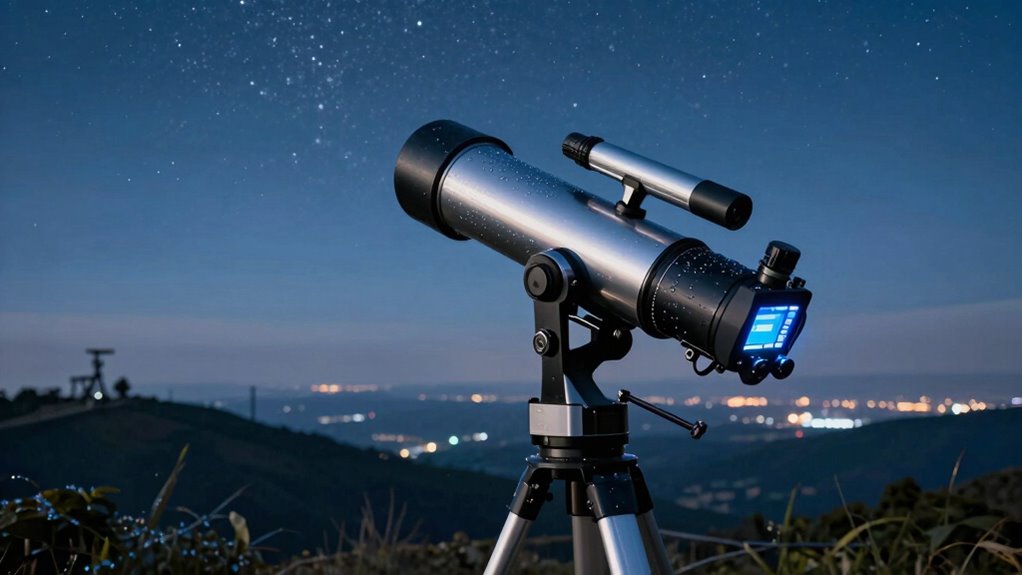
smart telescope with smartphone app
As an affiliate, we earn on qualifying purchases.
As an affiliate, we earn on qualifying purchases.
Frequently Asked Questions
Do Smart Telescopes Require Internet Access to Function?
Most smart telescopes do require internet connectivity to function properly, especially for features like remote control and accessing updates or celestial databases. Without internet access, you might still be able to use basic functions, but you’ll miss out on remote control capabilities and real-time data. So, if you want full features, make sure your smart telescope has a stable internet connection.
Can Smart Telescopes Be Used for Astrophotography?
Yes, you can use smart telescopes for astrophotography. They often feature automated focusing and image processing capabilities, making capturing detailed images easier. You simply align the telescope, let the automation handle focus adjustments, and use built-in software to enhance your photos. While these features simplify astrophotography, they can also increase costs. However, they’re perfect for beginners and enthusiasts wanting quality images without extensive manual adjustments.
Are Smart Telescopes Suitable for Beginner Astronomers?
Yes, smart telescopes are suitable for beginner astronomers because they often come with beginner-friendly features that simplify setup and navigation. However, you should also consider cost considerations, as these advanced features can make smart telescopes pricier than traditional options. If you’re just starting out, look for models with easy-to-use controls and helpful guides to make your astronomy experience enjoyable without breaking the bank.
How Durable Are Smart Telescopes in Harsh Weather Conditions?
Weather resistance and durability testing show that smart telescopes aren’t always built for harsh conditions. While some models offer water-resistant or dustproof features, many aren’t designed to withstand extreme weather, so you risk damage in storms or heavy rain. You should check the manufacturer’s durability testing results before exposing your telescope to harsh weather. In general, treat your smart telescope with care and avoid harsh environments for maximum longevity.
Do Smart Telescopes Need Regular Software Updates?
Yes, smart telescopes need regular software updates to address software vulnerabilities and improve functionality. You should check for updates often, as outdated firmware can cause compatibility issues and security risks. Keeping your telescope’s software current ensures it runs smoothly, maintains firmware compatibility, and stays protected from potential vulnerabilities. Regular updates also enhance features, making your stargazing experience more reliable and enjoyable.
As an affiliate, we earn on qualifying purchases.
Conclusion
While smart telescopes make stargazing more accessible and exciting, they also come with hidden costs that can turn your astronomy dream into a financial black hole. Think of it like climbing a mountain—once you start, there’s no turning back without risking an avalanche of expenses. So, before you embark on the world of smart telescopes, weigh the benefits against the price tag, or you might find yourself richer in gear but poorer in your bank account!
automatic star tracker telescope
As an affiliate, we earn on qualifying purchases.
As an affiliate, we earn on qualifying purchases.
As an affiliate, we earn on qualifying purchases.
Fall Picks
fall essentials
As an affiliate, we earn on qualifying purchases.