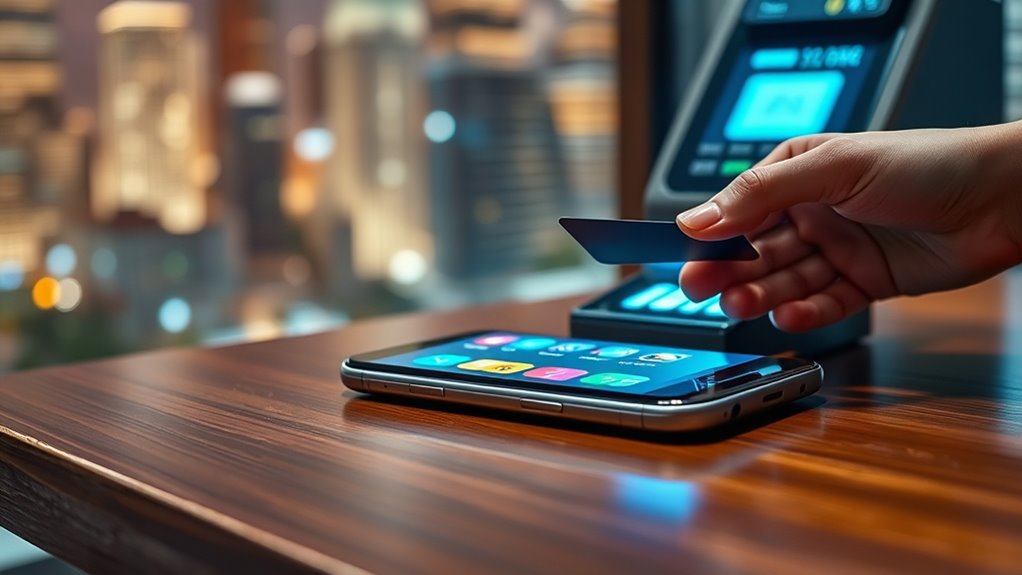

Digital wallets are transforming how you pay by securely storing your financial info and enabling quick, contactless transactions via smartphones. They use encryption, tokenization, and biometric verification to keep your data safe. Supporting traditional currencies and cryptocurrencies, digital wallets offer speed, convenience, and enhanced security — vital factors in today’s mobile payment trends. If you want to understand how these tools work and why they’re so crucial, explore the details ahead.
Key Takeaways
- Digital wallets securely store and manage payment information for quick, contactless transactions via smartphones.
- They utilize encryption, tokenization, and biometric authentication to ensure user data and transaction security.
- Support for cryptocurrencies enables holding, sending, and receiving digital assets securely within the wallet.
- Evolving trends focus on seamless user experiences, contactless payments, and enhanced security features.
- Trust in digital wallets depends on robust security protocols, regular updates, and protecting user privacy.
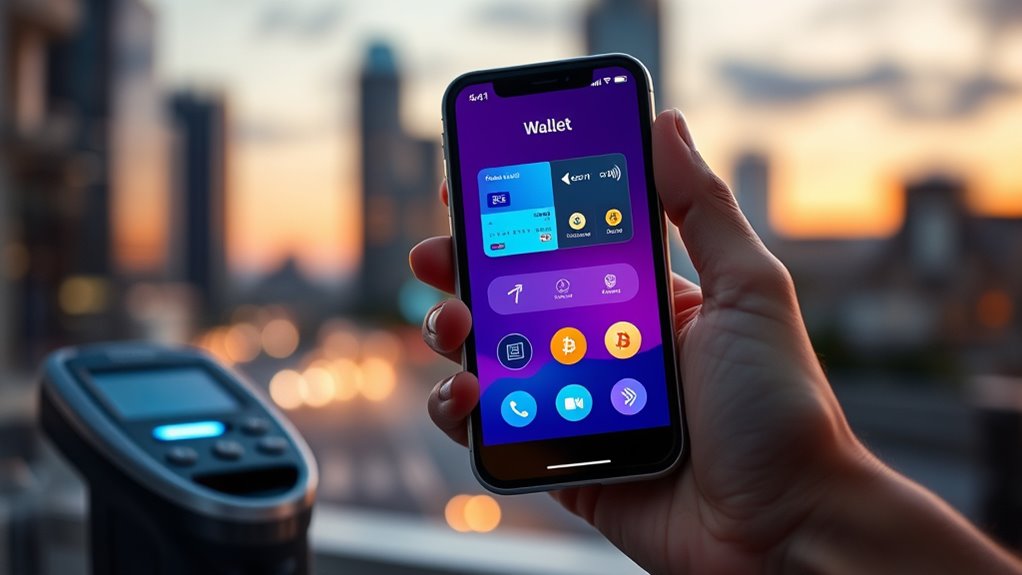
Digital wallets have revolutionized the way you handle money by allowing you to store and manage your payment information electronically. Instead of carrying cash or physical cards, you can make transactions with a few taps on your smartphone. This convenience aligns with current mobile payment trends, which emphasize quick, secure, and contactless payment methods. As you adopt digital wallets, it’s essential to understand how they work behind the scenes, especially regarding security and the evolving landscape of cryptocurrency.
Digital wallets let you pay quickly and securely without cash or cards, combining convenience with advanced security features.
When you use a digital wallet, your payment information isn’t stored in a plain, easily accessible format. Instead, advanced encryption and tokenization protect your data, making it difficult for hackers to access your sensitive information. Cryptocurrency security plays a significant role here; as digital wallets increasingly support cryptocurrencies, safeguarding your digital assets becomes critical. Wallet providers implement multi-factor authentication, biometric verification, and real-time alerts to guarantee only you can authorize transactions. These measures help prevent unauthorized access, giving you peace of mind as you make purchases or transfer funds.
The integration of cryptocurrencies into digital wallets signifies a major shift in financial technology. You’re no longer limited to traditional fiat currencies; instead, you can hold, send, and receive cryptocurrencies directly from your mobile device. This functionality makes digital wallets a versatile tool for both everyday transactions and long-term investment. However, managing cryptocurrency security requires extra vigilance. Since cryptocurrencies operate on decentralized networks, once your digital assets are compromised, recovery options are limited. That’s why choosing a reputable wallet provider with robust security features is essential.
Mobile payment trends continue to evolve, emphasizing seamless user experiences and heightened security features. Touchless payments via QR codes, NFC technology, and biometric authentication are becoming standard. These trends reflect consumer demand for faster, safer transactions, and digital wallets are at the forefront of this movement. As you explore different platforms, look for those that prioritize user privacy, employ end-to-end encryption, and regularly update their security protocols to keep pace with emerging threats. Enhanced security measures are crucial in protecting your digital assets and maintaining trust in mobile payments.
Frequently Asked Questions
Are Digital Wallets Secure Against Hacking and Fraud?
Digital wallets are generally secure against hacking and fraud because they use strong encryption protocols that protect your data. Plus, they often include fraud detection systems that monitor transactions for suspicious activity. To stay safe, you should enable two-factor authentication, keep your app updated, and avoid sharing your login details. While no system is completely invulnerable, these security measures greatly reduce your risk of falling victim to cyber threats.
Can Digital Wallets Be Used Internationally Without Fees?
Yes, you can use digital wallets internationally without fees, but it depends on the provider. Some wallets waive cross border fees and offer favorable currency conversion rates, making global transactions cheaper. However, others charge extra for international use, especially for currency conversion. Always check your digital wallet’s terms to understand any potential fees before making cross-border purchases, so you can save money and avoid surprises.
What Devices Are Compatible With Digital Wallets?
Your device is your gateway to the digital payment universe, and luckily, most smartphones and tablets are compatible. Whether you use an iPhone with iOS or an Android device with various operating systems, digital wallets work seamlessly. You can also access them on smartwatches and some laptops. Just make certain your device supports NFC or has the latest OS updates, and you’re ready to pay with a tap that feels like magic.
How Do Digital Wallets Handle Loyalty Programs and Coupons?
Digital wallets handle loyalty programs and coupons through seamless loyalty integration and efficient coupon management. You can add your loyalty cards and coupons directly into your digital wallet, which automatically applies discounts and tracks rewards during checkout. When you make a purchase, the wallet recognizes your loyalty accounts, updates points, and applies coupons, making transactions faster and more convenient without needing physical cards or paper coupons.
Is There a Limit to the Amount of Money Stored in a Digital Wallet?
In most cases, there’s no strict limit to your digital wallet’s storage capacity, but account limits vary. For example, a digital wallet like Apple Pay may have a maximum balance of $10,000. Your storage capacity depends on the provider, and some may impose limits for security or regulatory reasons. Always check your wallet’s terms to understand specific account limits and guarantee you can store your intended funds.
Conclusion
As you embrace the convenience of digital wallets, you’re quietly stepping into a future where effortless transactions become the norm. While these tools subtly reshape how you manage your finances, they also invite a sense of security and sophistication into your everyday life. By trusting in this evolving technology, you’re gently opening the door to a seamless, more connected world—one where simplicity and innovation work hand in hand to elevate your financial experience.