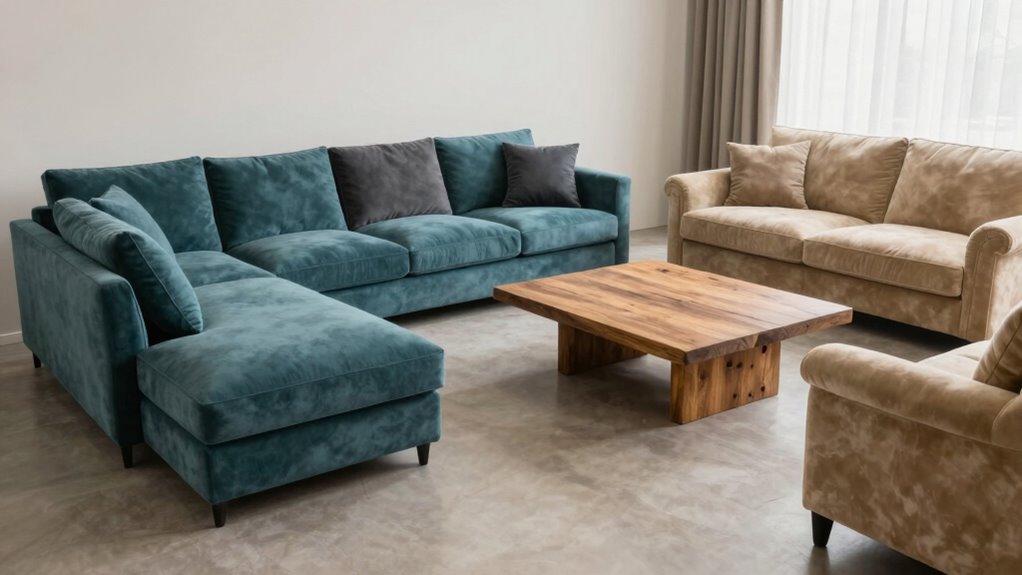
Choosing between modular and traditional sectionals depends on what you value most. If you want flexibility, customizable configurations, and easy updates, a modular piece offers great long-term potential despite a higher initial cost. On the other hand, if durability, higher-quality materials, and simpler maintenance are your priorities, a traditional sectional might suit you better. To understand how each fits your needs in style, cost, and long-term value, explore the details ahead.
Key Takeaways
- Modular sectionals offer greater flexibility and reconfigurability, adapting to evolving needs and spaces, potentially providing more long-term value.
- Traditional sectionals typically have higher durability and better materials, leading to longer-lasting furniture with less maintenance over time.
- Initial costs for modular pieces are higher, but their adaptability and replaceability can make them more cost-effective long-term.
- Traditional models may have limited customization, but their solid construction and simpler maintenance can enhance their longevity and value.
- The best choice depends on your priorities: flexibility and customization with modulars, or durability and simplicity with traditional sectionals.
What Are Modular and Traditional Sectionals? Definitions and Key Differences

When choosing between modular and traditional sectionals, it’s important to understand what sets them apart. Modular sectionals come in individual pieces you can arrange in various configurations, offering flexibility. Traditional sectionals are fixed, single-unit sofas designed for a specific layout. Assembly challenges differ: modular pieces may require more effort to assemble and reconfigure, while traditional sofas typically arrive ready to use but can be heavy and awkward to move. Cleaning and maintenance also vary: modular sections are easier to clean underneath and around, but their seams can collect dust, whereas traditional sectionals often have fewer crevices but can be harder to reach in tight spaces. Additionally, understanding the construction materials used can influence durability and longevity, helping you make a more informed decision. Recognizing the design flexibility of modular sectionals can significantly impact your living space’s functionality and style. Knowing these differences helps you decide which type suits your space and lifestyle better.
How Versatile Are Modular Versus Traditional Sectionals?

Are modular sectionals more adaptable to changing needs than traditional ones? Absolutely. Their multi-use furniture design allows you to reconfigure your setup easily, fitting different spaces or activities. This flexibility makes them ideal for those who want a piece that adapts as your lifestyle evolves. Traditional sectionals are fixed, limiting options for customization or re-layouts. Modular designs support space optimization by maximizing seating without cluttering your room. You can:
- Rearrange sections for larger gatherings or intimate settings
- Add or remove pieces depending on your needs
- Transform into beds, ottomans, or other functional furniture
This versatility makes modular sectionals a smart choice for dynamic living spaces, offering more ways to tailor your furniture to your changing environment. connected furniture technology further enhances their adaptability, allowing for seamless integration with smart home systems. Additionally, their flexibility makes them a practical investment for long-term use, accommodating various lifestyle shifts over time.
Which Type Is More Durable and Long-Lasting?

When choosing between modular and traditional sectionals, material quality and structural integrity are key factors to consider. You want furniture that withstands daily use without quickly showing wear. By examining how each type holds up over time, you’ll identify which is truly more durable and long-lasting. Additionally, selecting furnishings with proper ventilation can help extend their lifespan by preventing moisture buildup and related damage. Incorporating material durability considerations, such as the quality of fabrics and frames, is essential to ensure your sectional remains in good condition for years to come. Moreover, understanding the construction methods used in each style can provide further insights into their long-term performance and resilience. Recognizing the significance of manufacturing standards can also help you choose furniture that meets industry benchmarks for quality and durability. Paying attention to testing and certification processes can further guarantee that your furniture is built to last under various conditions.
Material Quality and Durability
Material quality plays a crucial role in determining how long your sectional will last, and generally, traditional sectionals tend to feature higher-quality fabrics and frames that withstand daily use better. You’ll find that upholstery fabrics in traditional models are often more durable and resistant to wear, reducing the need for frequent replacements. They also typically have sturdier frames made from solid wood or reinforced materials, which support long-term use. Keep in mind, maintenance requirements can vary: traditional fabrics might need regular cleaning to maintain appearance, but they usually tolerate more rigorous use. Modular sectionals, while versatile, often use lighter materials that may wear faster over time. Ultimately, investing in higher-quality upholstery fabrics and durable frames ensures your sectional holds up longer, giving you better value over time.
Structural Integrity Over Time
Traditional sectionals often outperform modular ones when it comes to maintaining their structural integrity over time. They typically feature a solid frame, enhancing frame stability and joint strength, which helps them resist sagging or loosening. Modular sectionals, while flexible, may experience weaker joints, affecting long-term durability. To illustrate:
| Aspect | Traditional Sectionals | Modular Sectionals |
|---|---|---|
| Frame Stability | High | Moderate |
| Joint Strength | Strong | Variable |
| Durability | Long-lasting | Depends on use |
| Maintenance | Less frequent | More frequent |
If longevity is your priority, traditional sectionals tend to hold their value longer due to superior frame stability and joint strength. Additionally, traditional designs often require less maintenance over time, further supporting their durability.
Are Modular or Traditional Sectionals More Budget-Friendly?

Deciding which type of sectional offers the best value depends largely on your budget and priorities. When comparing costs, modular sectionals often have a higher upfront price but can be more cost-effective long-term due to flexibility. Traditional sectionals tend to be less expensive initially but might incur higher repair costs over time if damaged or worn out. Additionally, easy maintenance is a significant advantage of modular designs, as individual modules can often be replaced without the need to buy an entirely new piece. Moreover, selecting high-quality materials can also influence the durability and overall value of your investment. Considering long-term durability is essential when evaluating which style provides better overall value for your specific needs. Proper upholstery care can extend the life of your sectional, regardless of its style, and choosing durable fabrics can further enhance its longevity.
How Do Style and Customization Options Compare?
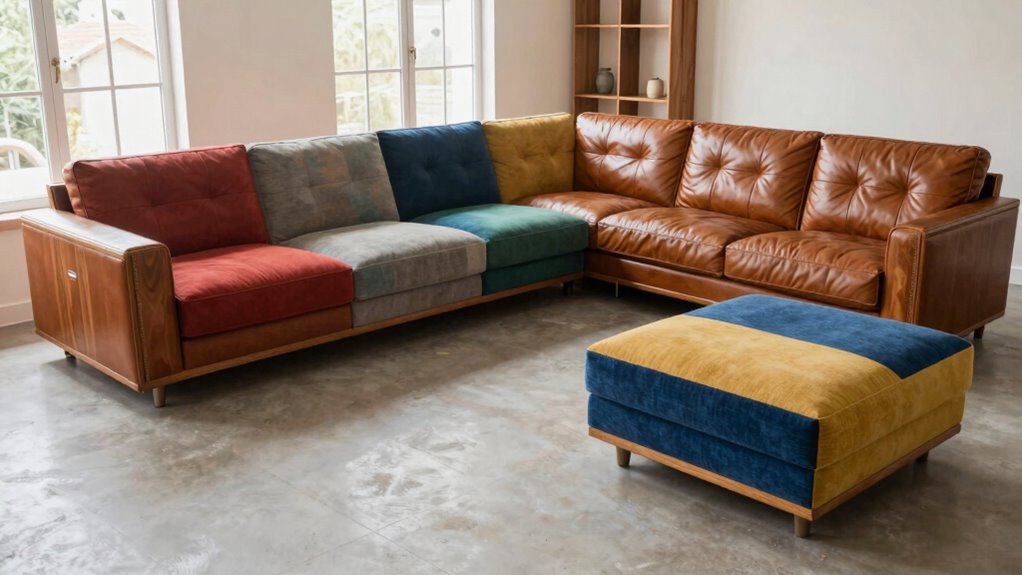
When it comes to style and customization, you’ll find that modular sectionals offer a wide variety of designs to choose from, making it easier to match your decor. You can personalize these pieces more easily, adjusting configurations or selecting fabrics and colors to suit your taste. Additionally, design versatility of modular pieces allows for easier updates or reconfigurations over time, providing a lasting value. Furthermore, the material technology used in manufacturing modular furniture is continually advancing, leading to smarter, more durable, and customizable materials that enhance both functionality and longevity. However, traditional sectionals often have more limited design options, restricting your ability to customize beyond standard styles. Additionally, financial flexibility plays a role in choosing between the two, as modular options may sometimes offer more economical or adaptable solutions for different budgets.
Variety of Styles Available
Modular sectionals offer a broader range of styles and customization options compared to traditional designs. You can choose from various configurations, shapes, and sizes that fit your space perfectly. Plus, you have more control over features like color options and fabric choices, allowing you to match your decor and personal taste. This flexibility means your sectional can be unique and tailored to your preferences. Whether you want a sleek, modern look or something more classic, modular designs give you the power to create it. Additionally, you can select different upholstery textures and finishes that suit your lifestyle. This wide variety guarantees your sectional isn’t just functional but also a statement piece in your home.
- Multiple color options to match any decor
- Diverse fabric choices for comfort and style
- Customizable configurations for perfect fit
Ease of Personalization
Compared to traditional sectionals, modular designs make personalization more straightforward and accessible. With modular furniture, you have a wide range of personalization options that let you customize your setup to fit your space and style perfectly. You can mix and match different pieces, colors, and fabrics, giving you greater aesthetic flexibility. This flexibility allows you to adapt your sectional over time, adding or removing sections as needed. Traditional sectionals often have limited customization options, typically offering only a few fabric or color choices. Modular designs empower you to create a unique look tailored specifically to your preferences, making it easier to achieve the perfect fit for your home and personal taste. Additionally, High-Quality Materials in modular sectionals ensure durability and longevity, making them a smart investment.
Limitations in Design Choices
While modular sectionals excel in flexibility, they often fall short in offering a wide variety of design styles. You might find limited options when it comes to color choices and fabric selections, restricting your personalization. This means you may not get the exact aesthetic you envision. Additionally, the design options available for modular pieces tend to be more constrained compared to traditional styles. Limited style options also impact the ability to match existing decor seamlessly. Fewer style options limit your ability to match existing decor. Limited fabric choices reduce customization for comfort and durability. Color options are often restricted, affecting overall harmony. With traditional sectionals, you typically have more control over these elements, enabling a cohesive look. Modular pieces prioritize versatility but can sacrifice the depth of style and fabric variety, making them less ideal if design consistency is your priority.
Which Sectional Offers Better Long-Term Value for Your Space?

When considering which sectional provides better long-term value for your space, it’s essential to think about flexibility and durability. Modular sectionals often offer greater investment potential because they can be rearranged or expanded as your needs change, extending their usability. This adaptability can translate into higher resale value, especially if you choose versatile styles and quality materials. Traditional sectionals, while typically sturdy, may lose appeal over time if your space or style preferences evolve, potentially lowering their resale value. By selecting a sectional that balances durability and adaptability, you maximize long-term value. Additionally, smart design principles emphasize creating furniture that can adapt to various living situations, further enhancing your investment. This means you get more from your initial investment and retain better resale potential if you decide to upgrade in the future.
Frequently Asked Questions
Can Modular Sectionals Increase or Decrease in Size Over Time?
Modular sectionals can increase or decrease in size over time thanks to expandable options designed for flexibility. You can add or remove sections as your space and needs change, making them adaptable. However, guarantee structural stability when making modifications, as poorly connected pieces may affect durability. With proper care and assembly, your modular sectional can evolve with your lifestyle, maintaining its value and functionality over the years.
How Easy Is It to Repair or Replace Parts of Each Sectional Type?
You’ll find that repairing or replacing parts is generally easier with modular sectionals, thanks to their individual pieces, which often come with warranty coverage and are designed for easy assembly or disassembly. Traditional sectionals may require more effort, especially if they’re upholstered or glued, but their material durability can help them last longer. Overall, modular options typically offer more straightforward repairs, making maintenance more manageable for you.
Are There Environmental Impacts Associated With Manufacturing Modular Vs Traditional Sectionals?
Think of choosing your sectional as planting a garden. Modular sectionals often use sustainable materials and have lower manufacturing emissions, making them a greener choice. Traditional models may involve more resource-intensive processes, leading to higher environmental impacts. By opting for modular pieces, you help reduce your carbon footprint, as their eco-friendly manufacturing process supports sustainability. So, your decision can positively influence the planet while furnishing your home stylishly.
Which Sectional Type Retains Its Aesthetic Appeal Longer?
You’ll find that traditional sectionals often retain their aesthetic appeal longer because of their superior frame quality and fabric durability. Their sturdy frames resist sagging and wear over time, and high-quality fabrics maintain their look better with regular use. Modular sectionals, while versatile, may show signs of wear quicker if the components aren’t built with equally durable materials. So, for lasting beauty, traditional options tend to hold up better.
Do Modular Sectionals Have Better Resale Value Than Traditional Ones?
Yes, modular sectionals often have better resale value because of their flexibility and customization options. Buyers appreciate that you can reupholster parts to match their decor, which can lower reupholstering costs over time. Plus, their adaptable design appeals to a wider audience, making them easier to sell. This ongoing versatility helps modular sectionals hold their value better than traditional ones, especially if maintained well.
Conclusion
So, whether you see yourself as a modern architect or a vintage enthusiast, choosing between modular and traditional sectionals is like picking between a Swiss Army knife and a classic hammer. One offers endless customization, the other timeless durability. Just remember, in the furniture world, your “value” depends on whether you want a chameleon that adapts or a trusty old friend that stands the test of time. Happy furniture hunting—may your choice be as wise as your decor dreams!