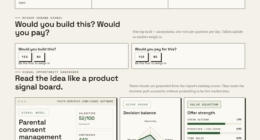

📊 Full opportunity report: Watermarks Could Change How Claude Is Used In Classrooms And Offices on ThorstenMeyerAI.com — validation score, market gap, and execution plan.

Get the latest gadgets delivered free — and shop member deals
- Fast, free delivery on millions of items
- Access to Prime Big Deal Days deals on October 6–7
- Prime Video, Amazon Music and more included
TL;DR
Anthropic has implemented embedded watermarks in Claude AI outputs, supporting detection of AI-assisted work in schools and workplaces. Support is currently limited to models launched after August 2, 2026, with broader support coming soon.
Anthropic has introduced machine-readable watermarks in outputs from supported Claude models, supporting detection of AI-assisted work. a move that could influence how AI-assisted work is detected in schools and workplaces. The company states that these watermarks can remain after copying, pasting, and some editing, raising questions about transparency and monitoring.
The new system embeds imperceptible patterns within generated text, which can be detected by third-party tools or institutions to identify AI involvement. The watermarks are part of the text itself, not metadata, and are supported in models launched on or after August 2, 2026, across platforms including Claude, Claude Code, and Claude Cowork. Support for older models is still being developed, and the full detection process has not yet been publicly disclosed.
Anthropic emphasizes that the presence of a watermark does not confirm misconduct or original authorship, merely indicating that the text may have been processed by Claude. The company also supports signed provenance metadata for images, based on the open C2PA standard, which can show if an image was processed or altered by Claude. These measures are driven by European Union transparency regulations, but they will be applied globally wherever Claude is available.
Critics and users have expressed concern over potential misuse, such as undisclosed AI assistance in school or work submissions, but experts note that detection is not foolproof. Short, heavily edited, or paraphrased content may evade detection, and watermarks can disappear after re-saving or screenshotting. Anthropic has not yet released detailed detection tools or technical guidance for independent verification.
Implications for Educational and Workplace Monitoring
The introduction of embedded watermarks in Claude’s outputs could significantly influence how AI-generated work is monitored and verified in schools and workplaces. While intended to promote transparency, these watermarks may lead to increased scrutiny of student assignments and professional documents, potentially affecting privacy and trust. However, since detection is not guaranteed and does not confirm misconduct, institutions will need to interpret watermark presence carefully and consider it as one piece of evidence among others.
As an affiliate, we earn on qualifying purchases.
Regulatory Push and Global Adoption of Watermarks
The move follows Anthropic’s commitment to comply with the EU AI Act and its Code of Practice on transparency for AI-generated content, which mandates marking AI outputs for clarity. Although the regulation originates in Europe, Anthropic states that supported watermarks will be implemented worldwide wherever Claude is used. This development marks a shift from probabilistic detection methods to provider-embedded provenance signals, aligning with broader regulatory trends toward AI transparency and accountability.
Support for watermarking across various models and platforms is part of Anthropic’s strategy to meet legal requirements while maintaining user trust. However, technical details about the detection process and the support for older models remain undisclosed, leaving some uncertainty about the scope and reliability of these measures.
“The watermarks are designed to remain within the text, even after copying and some editing, to support transparency and detection.”
— Anthropic spokesperson
AI-generated content verification software
As an affiliate, we earn on qualifying purchases.
As an affiliate, we earn on qualifying purchases.
Technical Limitations and Detection Reliability Unclear
It remains uncertain how accurate and resistant to editing the watermarks will be, especially in real-world scenarios involving heavy paraphrasing, translation, or reformatting. The full detection mechanisms have not been publicly released, and the effectiveness of third-party detection tools is still unproven. Support for older Claude models and the timeline for widespread implementation are also unclear.
As an affiliate, we earn on qualifying purchases.
Upcoming Technical Releases and Policy Clarifications
Anthropic plans to publish detailed technical guidance and detection tools for verifying watermarks, and to expand support to older models. Institutions will need to evaluate how watermark detection fits into their policies for AI use and misconduct. The next few months will reveal whether detection remains reliable across varied editing and whether organizations adopt watermark-based verification as part of their standard procedures.
As an affiliate, we earn on qualifying purchases.
Key Questions
Will every Claude response now contain a watermark?
Only models launched on or after August 2, 2026, support watermarking at launch. Support for older models is still being developed and may not include watermarks yet.
Can a watermark prove that Claude wrote my assignment?
No. The presence of a watermark indicates that the content was processed by Claude, but it does not confirm original authorship or whether the work complies with policy. Human review is still necessary.
Will copying or editing Claude text remove the watermark?
Heavy editing or short excerpts may reduce detection reliability, but because the watermark is embedded in the text, it generally travels with the content unless it is heavily altered or reformatted.
Are detection tools available now?
Support for third-party detection tools is forthcoming, but as of now, detailed mechanisms have not been publicly released. Institutions will need to wait for official guidance and tools from Anthropic.
Does this mean AI use is now transparent everywhere?
Not necessarily. While watermarks support transparency, detection is not foolproof, and policies on AI assistance vary among organizations. Watermarks are one tool among many for oversight.
Source: ThorstenMeyerAI.com
Fall Picks
fall essentials
As an affiliate, we earn on qualifying purchases.