

📊 Full opportunity report: VigilSAR: The Object That Isn’t Transmitting on ThorstenMeyerAI.com — validation score, market gap, and execution plan.
TL;DR
VigilSAR is a radar-based surveillance platform that detects vessels not broadcasting transponder signals. It fuses radar data with other signals to identify potentially illegal or distressed ships, improving maritime domain awareness.
VigilSAR has publicly announced its capability to detect vessels that are operating without transponder signals, a development that could significantly enhance maritime surveillance. The platform combines synthetic-aperture radar (SAR) data with other signals to identify ships that go “dark,” which is critical for law enforcement, safety, and security at sea.
The core of VigilSAR’s technology relies on SAR imagery from sources such as the European Space Agency’s Sentinel-1 satellites, which can operate in all weather and darkness. It detects anomalies like ships that scatter radar signals differently from water and then pairs these detections with known transponder data, such as AIS and ADS-B signals.
When a vessel appears on radar but has no corresponding transponder signal, VigilSAR flags it as an anomaly. This process, called fusion, subtracts explained detections—those with transponder signals—and highlights unexplained ones. Such vessels are often associated with illegal activities like fishing, smuggling, or sanctions evasion, or may be in distress.
The platform’s approach is built on established detection and classification techniques, with the unique value lying in its fusion capability, which correlates radar detections with other signals to identify “dark” objects. Its deployment remains in demonstration and positioning phases, with no public pricing announced.
VigilSAR — the object that isn’t transmitting
Radar sees through cloud and darkness, when cameras can’t. Fuse it with transponder data and the signal is the one detection no transponder explains.
Independent commentary on public positioning, produced with AI assistance under human editorial oversight. The views are the author’s own and may change. This does not verify or endorse VigilSAR’s capabilities, contracts, or performance. Capabilities on Sentinel-1 / Copernicus reflect a free, public data foundation; commercial-constellation and air-gapped-deployment references reflect stated positioning, not independently demonstrated fact. ISR and related technologies may be subject to export controls and dual-use regulations — lawful, ethical use is solely the operator’s responsibility. Nothing here is an offer, pricing, or operational/safety/legal advice. AI detection and classification can err and require human verification. Product and company names are trademarks of their respective owners; mention does not imply endorsement.
Why Detecting ‘Dark’ Vessels Matters for Maritime Security
Detecting vessels that operate without transponders is crucial for maritime safety, law enforcement, and security. Many illegal activities, such as unreported fishing, smuggling, and sanctions violations, rely on ships going “dark” to evade detection. VigilSAR’s ability to identify these vessels regardless of weather or darkness offers a significant advantage over traditional optical systems, which are limited by weather and lighting conditions.
Beyond security, the technology supports humanitarian efforts by locating vessels in distress that have disabled or failed transponders. Its broad applicability across defense, coast guard, and regulatory agencies underscores its potential to improve maritime domain awareness globally.
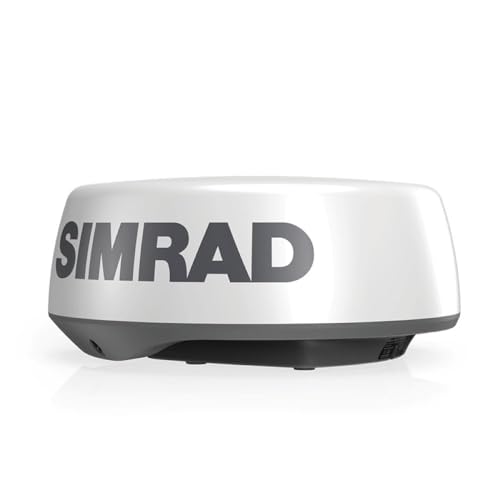
Simrad Marine Electronics, HALO20 Radar System, 24 Nautical Mile Range, Compact 20 Inch Dome, White, 000-14537-001
- Dome Size: 20-inch compact dome
- Detection Range: 24 nautical miles
- Performance: Reliable situational awareness
As an affiliate, we earn on qualifying purchases.
As an affiliate, we earn on qualifying purchases.
Maritime Surveillance Challenges and SAR Advantages
Traditional optical satellite imagery is limited by weather and daylight, making continuous monitoring difficult. Synthetic-aperture radar (SAR), however, provides all-weather, day-and-night imaging capabilities by illuminating surfaces with microwave signals. This technology is increasingly used for maritime monitoring, but interpreting SAR data requires sophisticated AI systems to detect and classify objects.
The concept of fusion—combining radar detections with transponder signals—has been under development for several years. VigilSAR builds on publicly available SAR data from Sentinel-1 and aims to bridge the detection gap by highlighting vessels that are intentionally hiding or disabling transponders, a common tactic among illegal operators.
While the core detection techniques are established, VigilSAR’s emphasis on fusion and anomaly detection is a relatively new application, with ongoing demonstrations and positioning for broader deployment.
“VigilSAR’s fusion capability represents a meaningful step toward all-weather, persistent maritime domain awareness, especially for detecting vessels that go dark.”
— Thorsten Meyer, remote sensing expert

AIS Receiver Portable AIS Receiver with Stable USB Output for Marine
- Folding Telescopic Antenna: Stainless steel, durable, foldable design
- Portable and Lightweight: Compact for easy marine use
- USB AIS Receiver: Receives AIS messages directly to devices
As an affiliate, we earn on qualifying purchases.
As an affiliate, we earn on qualifying purchases.
Unconfirmed Capabilities and Deployment Status
While VigilSAR has demonstrated its detection and fusion approach using public SAR data, it is not yet confirmed how effectively it performs at scale or in operational environments. The platform’s deployment remains in demonstration and positioning phases, with no public details on commercial availability or pricing. Its effectiveness against highly sophisticated evasion tactics or in congested maritime zones is still to be fully evaluated.

Synthetic Aperture Radar Signal Processing with MATLAB Algorithms
As an affiliate, we earn on qualifying purchases.
As an affiliate, we earn on qualifying purchases.
Next Steps Toward Broader Adoption and Validation
VigilSAR plans to continue demonstrations, potentially expanding its data sources and operational testing. Further validation in real-world scenarios and engagement with maritime authorities will be critical. The company may also seek formal contracts or partnerships to move from positioning to deployment, with public availability and pricing details expected in the future.

Captain's Log Book: Professional Maritime Journal for Maintenance, Navigation, and Vessel Systems Tracking.
As an affiliate, we earn on qualifying purchases.
As an affiliate, we earn on qualifying purchases.
Key Questions
How does VigilSAR detect vessels that are not transmitting transponder signals?
It uses synthetic-aperture radar (SAR) imagery to detect objects on the water and then fuses these detections with known transponder signals like AIS and ADS-B. Vessels seen on radar without corresponding transponder signals are flagged as anomalies.
What are the main advantages of SAR over optical satellites in maritime monitoring?
SAR can operate in all weather conditions and at night, providing continuous surveillance capabilities that optical satellites cannot offer due to cloud cover, darkness, or smoke.
Is VigilSAR currently available for operational use?
No, VigilSAR is still in demonstration and positioning phases. It has not yet announced public pricing or full deployment, and its effectiveness in operational environments is still being evaluated.
Who benefits most from VigilSAR’s capabilities?
Maritime law enforcement agencies, coast guards, fisheries regulators, and humanitarian organizations benefit from the platform’s ability to identify unreported or distressed vessels, enhancing safety and security at sea.
What are the limitations of VigilSAR’s current technology?
Its performance at large scale, in highly congested zones, or against sophisticated evasion tactics remains unconfirmed. Deployment logistics and integration with existing systems are also still under development.
Source: ThorstenMeyerAI.com