
The Industrial Capital That Outpaced Public Funds In AI Innovation

📊 Full opportunity report: The Industrial Capital That Outpaced Public Funds In AI Innovation on ThorstenMeyerAI.com — validation score, market gap, and execution plan.

TL;DR

Schwarz Group, Europe’s largest retailer, is investing €11 billion in a massive AI data center in Germany without government subsidies. This marks a significant move by industrial firms to lead Europe’s AI infrastructure.

Schwarz Group is building Europe’s largest AI data center in Brandenburg, Germany, with a €11 billion investment entirely financed by the company, without any government subsidies. This project is a key development in Europe’s AI infrastructure, demonstrating how industrial capital is now leading in AI sovereignty.

The new data center, located on a former coal plant site in Lübbenau, will have a connected load of 200 MW in its first phase, with capacity for up to 100,000 GPUs. It is designed to be fully green, with liquid cooling and waste heat piped into local district heating. The project aims for completion by the end of 2027, with initial construction targeted to start then.

Schwarz Group, Europe’s largest retailer with €175 billion in annual revenue, is investing more than five times its annual AI division revenue (€1.9 billion) into this single site. It is part of Schwarz Digits, the company’s IT arm, which includes cloud platform STACKIT, cybersecurity, and AI initiatives. The project is positioned as a potential EU AI Gigafactory, meeting upcoming EU specifications.

This investment contrasts sharply with other major European AI projects like Intel’s Magdeburg chip fab, which relied heavily on €9.9 billion in state aid before being canceled in 2025. Schwarz’s project is notable for its complete independence from government funding, emphasizing a pattern of industrial-led AI infrastructure development in Europe.

At a glance
reportWhen: ongoing; construction expected to start…
The developmentSchwarz Group is constructing a €11 billion AI data center in Brandenburg, Germany, entirely financed by the company, bypassing government aid and highlighting a new industrial-led approach to AI sovereignty.
The Supermarket That Bought Europe’s AI — Reality Check
AI Dispatch · Reality Check · 16 July 2026

The supermarket that bought Europe’s AI: why industrial capital beats government money

The €500M cheque got the headlines. The €11 billion one is the story. On a dead coal plant in Brandenburg, the owner of Lidl is building a 200 MW, 100,000-GPU AI data centre — with no government subsidy at all.

▲ Under construction
€11B · Lübbenau
Schwarz Digits. 200 MW · up to 100,000 GPUs · brownfield coal site · green power · first module end-2027. State aid: €0.
vs
▼ Cancelled
€9.9B · Magdeburg
Intel’s fab. Years negotiating German state aid — cancelled outright, July 2025. A hole in the ground and a lesson.
The size of the bet — Schwarz Digits is wagering >5× its own top line on one site
Schwarz Digits revenue /yr€1.9B
Lübbenau commitment€11B  ·  €2.5B construction + €8.5B technology
Context: Schwarz Group turns over ~€175B a year — 575,000 employees, 32 countries, 13B+ transactions. The compliance pedigree (BSI C5 · ISO 27001 · SOC 2 · DORA) wasn’t built for AI — it was inherited from selling groceries at KRITIS scale.
The five preconditions — why this is a special case, not a template
01
Scale
€175B revenue; recession-proof cash. “We always eat.”
02
Data
13B+ transactions/yr across 32 countries
03
KRITIS
Critical-infrastructure status → inherited certifications
04
Cloud subsidiary
STACKIT’s ~7-yr head start: 20k servers, 22.5 PB
05
Long-term ownership
Dieter Schwarz + Stiftung. No public shareholders.
#5 is the one that decides everything. What lets Schwarz make a decade-long, €11B, unsubsidised bet isn’t German engineering or EU regulation — it’s the absence of public shareholders. The US structurally can’t replicate it (its giants are shareholder-disciplined); China does patient capital through the state. Germany has a third model: the Stiftung — private capital on a public-institution time horizon. Bosch (~94% Robert Bosch Stiftung), Zeiss, Bertelsmann, Würth all have it.
Who’s next — run the preconditions and the field narrows fast
Candidate
Has
Missing
Bosch
~€90B rev · foundation-owned · industrial data · already in Aleph Alpha
no cloud subsidiary at STACKIT’s maturity — the bit you can’t buy fast
DT / T-Systems
real sovereign cloud · telco KRITIS
publicly traded, state shareholder — fails ownership
SAP · Siemens · Ionos
data + scale; circling EU AI-DC bids
all publicly traded; none has the combination
ASML
already did it — €1.3B into Mistral, ~10%, largest shareholder
— but that’s the investor model, not the anchor model
Zeiss · Bertelsmann · Würth
foundation ownership + patience
no cloud infrastructure; mostly sub-scale
⚠ The critique — a new landlord is not freedom
Swapping AWS for Schwarz is still dependency — 5-yr STACKIT exclusivity = a chokepoint What makes it durable makes it opaque — no shareholders, no disclosure Founder control = succession risk The paradox: STACKIT hosts Google Workspace for Schwarz’s 575k staff €11B vs a €1.9B division — if STACKIT can’t win externally, it’s the priciest lesson in German corporate history Golem, Aug ’25: the sovereign cloud is “a fairy tale
The take

Europe looked for its AI advantage in regulation, talent and Brussels programmes. Magdeburg is what that produces. The real advantage was sitting in the Mittelstand: enormous, foundation-owned industrials with recession-proof cash, decades of proprietary data, inherited KRITIS compliance — and nobody to answer to. Patient capital is the one thing American AI structurally cannot buy. But be precise: Europe’s sovereignty didn’t get nationalised — it got privatised. The answer to American corporate power over European AI is turning out to be German corporate power, with a toll booth attached. That may be the better trade. Just don’t call it independence — call it a change of landlord, and read the lease.

Sources: DCD, ESM, Smart Country Convention, Silicon Saxony, Xpert.digital (Lübbenau: €11B · 200 MW · ~100k GPUs · end-2027); Wikipedia/FAZ/Handelsblatt (Schwarz Digits, STACKIT, XM Cyber, BSI Mar ’25, Google Nov ’24); five-preconditions framework via the industrial-anchor analysis on StrongMocha; TechCrunch/Penchan (ASML–Mistral); Golem.de Aug ’25. Several deal terms reported, not confirmed; the merger awaits regulatory approval. Not investment advice.
thorstenmeyerai.com

Industrial Capital as Europe’s AI Infrastructure Leader

This development signifies a shift in European AI sovereignty, where large industrial firms like Schwarz Group are now leading the creation of critical AI infrastructure without relying on government subsidies. It challenges the traditional reliance on public funding and indicates a durable, commercially motivated approach to building Europe’s AI capabilities. The move underscores the importance of private sector investment in maintaining technological independence and competitiveness in AI, especially as government programs face political and financial uncertainties.
AI-RACK: Professional AI Data Center & Server Maintenance Logbook: Liquid Cooling Audits, GPU Asset Management & 2026 ASHRAE TC 9.9 Compliance for High-Density GPU Clusters

AI-RACK: Professional AI Data Center & Server Maintenance Logbook: Liquid Cooling Audits, GPU Asset Management & 2026 ASHRAE TC 9.9 Compliance for High-Density GPU Clusters

As an affiliate, we earn on qualifying purchases.
As an affiliate, we earn on qualifying purchases.

Europe’s Growing AI Infrastructure Driven by Industry

While European governments have announced various AI initiatives, actual infrastructure projects have often depended on public funding, such as Germany’s Magdeburg chip fab, which was canceled after nearly €10 billion in aid. In contrast, Schwarz Group’s €11 billion project is entirely privately financed, reflecting a broader pattern of industrial firms taking the lead in building AI infrastructure. Major European tech and industrial players, including Aleph Alpha, Bosch, and SAP, are increasingly investing directly in AI capacity, signaling a strategic shift away from government-driven initiatives toward industry-led development.

“Germany needs significant computing power to compete in AI on the global stage.”

— Karsten Wildberger, German Digital Minister

JeffCool ISF 25 PG25 Liquid – 1 Gallon 25% Inhibited Propylene Glycol Heat Transfer Fluid for Data Center Cooling & PG25 Liquid Cooling Systems

JeffCool ISF 25 PG25 Liquid – 1 Gallon 25% Inhibited Propylene Glycol Heat Transfer Fluid for Data Center Cooling & PG25 Liquid Cooling Systems

Data Center Coolant

As an affiliate, we earn on qualifying purchases.
As an affiliate, we earn on qualifying purchases.

Unclear Impact of Industrial-Led AI Infrastructure

It is not yet clear how scalable or replicable this model is across other sectors or regions. The long-term operational success and strategic implications of Schwarz’s investment remain to be seen, especially as the project approaches completion and begins full operation.
The Data Center as a Product: Designing AI-Driven, Globally Deployable Data Centers (Hyperscale Data Centers, Emerging Trends in the Data Center ... Artificial Intelligence (by DesignIntent.AI))

As an affiliate, we earn on qualifying purchases.

As an affiliate, we earn on qualifying purchases.

Next Steps for Schwarz and European AI Development

Construction is expected to start by the end of 2027, with operational testing and scaling to follow. Monitoring how Schwarz leverages this infrastructure for AI applications and how other industrial firms respond will be key to understanding the broader impact. Additionally, the project could influence future policy discussions on public-private partnerships and industrial investment in AI.
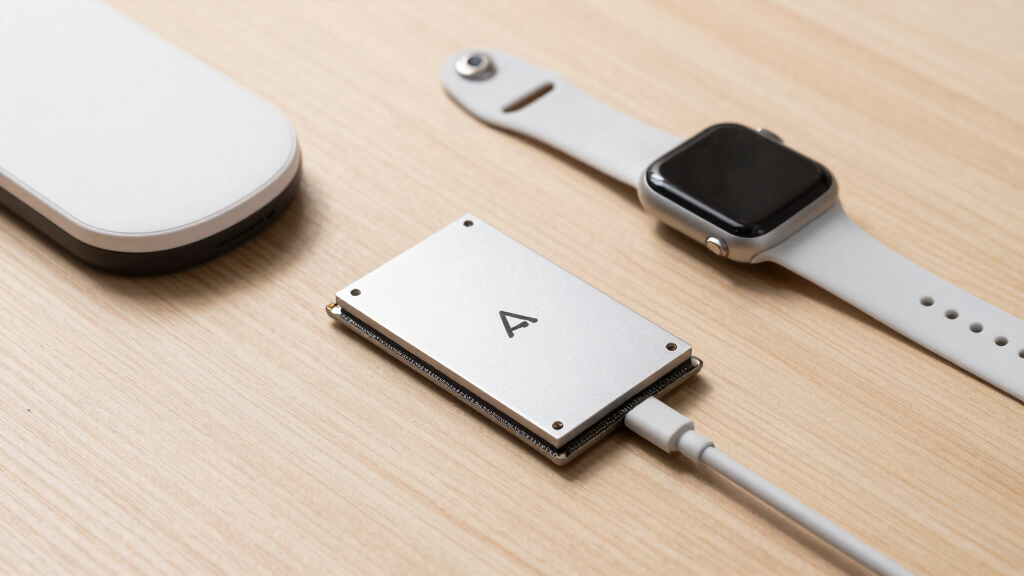
High Power Large Aluminum Heat Sink Plate 150mmx93mmx15mm/ 5.9x3.66x0.59 inch Heatsink Module Cooler Fin for PCB Board LED Motherboard Cooling GPU Backplate Radiator Routers RTX 3090 3080, Black

High Power Large Aluminum Heat Sink Plate 150mmx93mmx15mm/ 5.9×3.66×0.59 inch Heatsink Module Cooler Fin for PCB Board LED Motherboard Cooling GPU Backplate Radiator Routers RTX 3090 3080, Black

1. Product Name: Heat sink Cooling Fin; Material: Aluminium; 310g /pc (Sufficient materials only for excellent quality)

As an affiliate, we earn on qualifying purchases.

As an affiliate, we earn on qualifying purchases.

Key Questions

Why is Schwarz Group investing so heavily in AI infrastructure?

Schwarz Group aims to establish itself as Europe’s leading sovereign hyperscaler, leveraging its existing IT and cloud infrastructure to gain strategic control over AI capabilities.

How is this project different from other European AI initiatives?

Unlike government-funded projects like Intel’s Magdeburg fab, Schwarz’s €11 billion data center is fully privately financed, with no public subsidies or aid involved.

What does this mean for Europe’s AI sovereignty?

This pattern indicates a shift toward industry-led infrastructure, potentially reducing reliance on government programs and fostering more durable, commercially motivated AI development.

Will this project influence other companies to follow suit?

It is possible, especially if Schwarz’s model proves successful, encouraging other industrial firms to invest directly in AI infrastructure without public funding.

What are the risks of relying on private capital for AI infrastructure?

Potential risks include reduced coordination with public policy, limited access for smaller players, and challenges in scaling or standardizing infrastructure across Europe.

Source: ThorstenMeyerAI.com

You May Also Like

Trade voice copilo

A new voice copilot tool is being tested for small trades businesses to streamline job notes and invoicing, potentially saving hours daily.

ChannelHelm: One Video, Every Platform

ChannelHelm automates creating multi-platform content from a single video, reducing manual work and expanding reach efficiently.

The Power Bottleneck: AI Data Centers and the Grid Cliff Approaching 2027-2028

Power constraints threaten AI data center expansion amid rising demand and slow grid upgrades, with significant implications for hyperscalers and AI growth.

Larry Fink Net Worth: BlackRock CEO and the Rise of Passive Investing

Keenly influencing global markets, Larry Fink’s net worth and leadership at BlackRock reveal the secrets behind passive investing’s rise.