
TL;DR
Siemens is developing AI tailored for industrial environments, emphasizing physical data over language models. Its partnership with NVIDIA aims to embed AI across manufacturing processes, starting with an AI-driven factory in Erlangen in 2026.
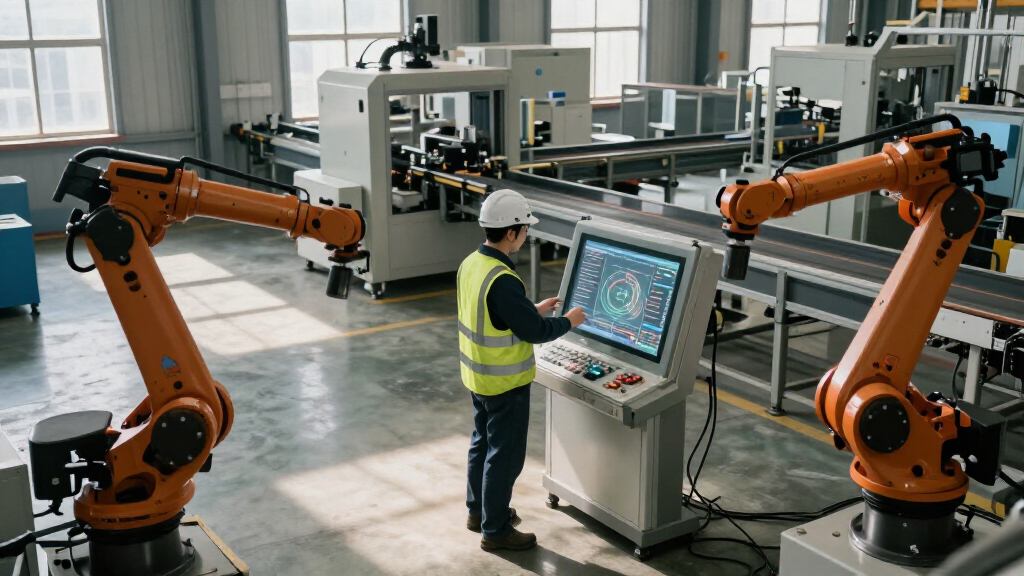
Siemens has revealed its plan to develop AI systems specifically designed for industrial environments, emphasizing physical data like 3D models, sensor telemetry, and engineering drawings, rather than text-based models. This initiative, announced during CES 2026, underscores Siemens’ belief that AI’s most significant impact will be on manufacturing and infrastructure, not chatbots or language AI. The company aims to embed AI across the entire industrial lifecycle, starting with a fully AI-driven factory in Erlangen, Germany.
Siemens’ strategy centers on the Industrial Foundation Model (IFM), a specialized AI designed to process and contextualize industrial data, such as 3D CAD models, 2D drawings, and operational telemetry. This approach contrasts with general-purpose large language models, which Siemens considers less effective on the shop floor. The company claims ownership of extensive proprietary industrial data, giving it an advantage in training these models.
In partnership with NVIDIA, Siemens is developing what it calls an Industrial AI Operating System. This platform aims to integrate AI into all stages of manufacturing, including design, engineering, and supply chain management. Specific initiatives include GPU-accelerated simulation, generative digital twins that actively optimize physical systems, and the launch of a fully AI-driven factory in Erlangen. Early applications include simulation tools like PepsiCo’s facility upgrades and industrial copilots across the value chain.
Siemens emphasizes its domain expertise as a key strength, citing its long history of industrial data collection and customer relationships with firms like PepsiCo and Audi. The company asserts that its physical AI models will generate durable value by leveraging proprietary data and deep domain knowledge, which startups and generalist AI labs lack.
Impact of Siemens’ Physical AI Strategy on Manufacturing
This development signals a shift toward AI systems tailored specifically for industrial use, moving beyond chatbots to enhance factory automation, design, and operational efficiency. Siemens’ focus on proprietary physical data and domain expertise could enable more accurate, reliable, and scalable AI solutions for manufacturing sectors, potentially transforming how factories operate and compete globally.
However, the heavy reliance on NVIDIA’s infrastructure and the long sales cycles typical of industrial hardware mean the full impact may unfold gradually. The initiative underscores a broader industry trend of integrating AI deeply into physical systems rather than superficial digital tools.
As an affiliate, we earn on qualifying purchases.
Background and Industry Shift Toward Physical AI
While AI conversations have historically centered on language models and chatbots, Siemens’ announcement reflects a growing recognition that the most valuable AI applications in industry lie in processing physical data. Earlier initiatives, such as Siemens’ announcement of the Industrial Foundation Model at Hannover Messe 2025, laid the groundwork for this shift. The company’s long-standing presence in industrial automation and its extensive data assets position it uniquely to lead this transformation.
Recent collaborations between tech giants and industrial firms, like NVIDIA’s push into simulation and digital twins, highlight a broader industry movement. Siemens’ strategy aligns with this trend but emphasizes its proprietary data and domain expertise as competitive advantages.
“Industrial AI is no longer a feature; it’s a force that will reshape the next century.”
— Roland Busch, Siemens CEO
As an affiliate, we earn on qualifying purchases.
Uncertainties Surrounding Siemens’ Industrial AI Ambitions
While Siemens has announced ambitious plans, specific details about the performance, deployment timelines, and validation of its AI models remain undisclosed. The success of the Erlangen factory as a lighthouse project is pending, and the long sales cycles of industrial hardware could slow adoption. Additionally, reliance on NVIDIA’s infrastructure raises questions about hardware sovereignty and competitiveness in different regions.
It is not yet clear how quickly these AI solutions will be adopted at scale across Siemens’ customer base or how they will perform in complex, real-world manufacturing environments.
As an affiliate, we earn on qualifying purchases.
Next Steps for Siemens’ Industrial AI Deployment
Siemens plans to launch its fully AI-driven factory in Erlangen in 2026, serving as a blueprint for global replication. The company will also roll out Digital Twin Composer and industrial copilots, with early customer pilots like PepsiCo. Monitoring the development and validation of these tools over the coming months will be critical to assessing their real-world impact and scalability.
Further updates on hardware deployment, performance metrics, and customer adoption will clarify how Siemens’ vision materializes into tangible industrial transformation.
As an affiliate, we earn on qualifying purchases.
Key Questions
What is the Industrial Foundation Model?
The Industrial Foundation Model (IFM) is Siemens’ specialized AI designed to process and contextualize industrial data like 3D models, drawings, and telemetry to optimize manufacturing and automation.
How does Siemens’ partnership with NVIDIA support this strategy?
The partnership provides GPU-accelerated simulation, physics-based AI models, and digital twin technology, forming the technical backbone of Siemens’ AI platform for industry.
When will the fully AI-driven factory in Erlangen open?
Siemens aims to launch the lighthouse factory in Erlangen in 2026, serving as a prototype for global deployment.
What are the main challenges Siemens faces with this approach?
Key challenges include validating AI performance in real-world settings, long sales and adoption cycles, and potential dependency on NVIDIA hardware and software infrastructure.
Why is Siemens focusing on physical data rather than language models?
Siemens believes that the most valuable AI applications in industry involve processing physical data, which is more relevant for manufacturing optimization than text-based language models.
Source: ThorstenMeyerAI.com