The Co-Founder’s Black Hole — A Structural Read on Jack Clark’s Automated AI R&D Essay

📊 Full opportunity report: The Co-Founder’s Black Hole — A Structural Read on Jack Clark’s Automated AI R&D Essay on ThorstenMeyerAI.com — validation score, market gap, and execution plan.

TL;DR

Jack Clark, co-founder of Anthropic, forecasts a >60% probability of autonomous AI research systems capable of building their own successors by 2028. This prediction highlights a potential near-term shift in AI development, but raises questions about institutional readiness and the unpredictable nature of such progress.

On May 4, 2026, Jack Clark, co-founder and head of policy at Anthropic, publicly forecasted a greater than 60% probability that by the end of 2028, AI systems capable of autonomously conducting research and building their own successors will exist. This is the first time a sitting AI lab leader has made such a specific institutional forecast, marking a significant moment in AI policy and development discourse.

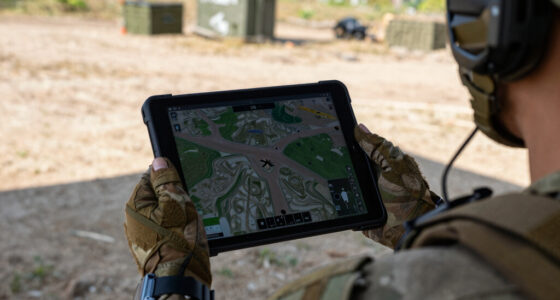
Clark’s forecast is based on a synthesis of recent benchmark improvements across six different facets of AI research capability, all showing a rapid saturation pattern within a similar timeframe. These include advancements in AI training speed, problem-solving benchmarks, and fine-tuning effectiveness, which collectively suggest a trajectory toward autonomous research systems. Clark emphasizes that the convergence of these indicators indicates a structural shift—what he describes as crossing a ‘Rubicon’ into a future where predictability diminishes sharply.

He highlights that the 32-month window remaining until the end of 2028 is critical, as current institutional capacities are not aligned to respond adequately to this rapid progression. The forecast implies that, barring unexpected breakthroughs or setbacks, the development of fully autonomous AI research systems is increasingly plausible within this period, with potential implications for AI safety, regulation, and global competitiveness.

The Co-Founder’s Black Hole — A Structural Read on Jack Clark’s Automated AI R&D Essay
DISPATCH / MAY 2026 CLARK SERIES · 5 OF 5 · THE SYNTHESIS
▲ Clark Series 05 The Synthesis · Black Hole · May 2026
The Co-Founder’s Black Hole · A Structural Read

The black hole
is visible.

Four threads converge. One window. Anthropic’s head of policy has publicly committed to crossing a civilizational threshold within 32 months.

The structural feature of Clark’s argument is not that we cross a boundary and continue forward; it is that beyond a certain threshold, the forecastability of subsequent events degrades dramatically. We can see the geometry around the threshold. We can estimate when we will reach it. We cannot model what happens on the other side. The black hole event horizon analogy is precise.

4 → 1threads converge · one window
The synthesis · the structural finding
The four threads — the statement, the cascade, the math, the endpoint — converge on a single editorial conclusion. The next 32 months are the most important window in modern AI policy history, and current institutional capacity is structurally inadequate.
32mo
Window · May 2026 → December 2028
Clark’s forecast resolution window
60%+
Clark’s published probability
Automated AI R&D by end-2028
40-50%
Thorsten’s subjective probability
Lower than Clark · synthesis-level errors
5 / 5
Synthesis-level omissions identified
China · IPO · compute · info ecology · coordination
THE BLACK HOLE IS VISIBLE EVENT HORIZON 32 MONTHS OUT · MAY 2026 → DECEMBER 2028 FOUR THREADS CONVERGE STATEMENT + CASCADE + MATH + ENDPOINT = ONE STRUCTURAL FINDING CATASTROPHIC TIMELINE THREADS 1 + 3 · CLARK FORECAST + COMPOUNDING ERROR POLICY EMERGENCY TIMELINE THREADS 1 + 4 · CLARK FORECAST + MACHINE ECONOMY 5 SYNTHESIS OMISSIONS CHINA · IPO · COMPUTE · INFO ECOLOGY · COORDINATION THE AGI DEBATE IS NOW CLOSED FOR THE PEOPLE WHO WOULD KNOW THE BLACK HOLE IS VISIBLE EVENT HORIZON 32 MONTHS OUT · MAY 2026 → DECEMBER 2028 FOUR THREADS CONVERGE STATEMENT + CASCADE + MATH + ENDPOINT
The four threads · in compressed form

Four pieces. One argument.

The four prior pieces in this series each addressed a single thread of Clark’s argument. The threads are independently significant. What this synthesis argues: they converge on a structural finding larger than any individual thread.

The four threads · compressed
Each card points back to the full sub-piece. Read in any order; the synthesis argument requires all four.
▲ Thread 01 · Piece 1
The statement
May 4, 2026. Anthropic’s head of policy publicly commits to 60%+ probability of automated AI R&D by end of 2028. First numerical commitment by sitting frontier-lab leadership to a specific takeoff threshold within a specific timeframe.
▲ Thread 02 · Piece 2
The cascade
Six benchmarks measuring AI R&D capability all saturate or track toward saturation on the same cadence. SWE-Bench 93.9%, CORE-Bench solved, METR 30s→12hr in 4 years. Pattern is the structural argument; the data supports the timeline.
▲ Thread 03 · Piece 3
The math
0.999^500 = 0.606. 99.9% per-generation alignment decays to 60.6% across 500 generations of recursive self-improvement. 5+ nines needed at 10K generations; current toolkit produces ~3 nines on adversarial bench. Multiple orders of magnitude short.
▲ Thread 04 · Piece 4
The endpoint
AI labor ~5,000× cheaper than human labor for cognitive functions. Three stages: tool inside human firms → AI-native firms compete → machine-to-machine economy. Default scenario if alignment is solved. Self-reinforcing transition.
The convergence · how the threads connect
1000 AI Tools Directory 2026: The Ultimate Guide to AI Tools for Business, Productivity, Content Creation, Marketing, Coding, Design, Research and Automation

1000 AI Tools Directory 2026: The Ultimate Guide to AI Tools for Business, Productivity, Content Creation, Marketing, Coding, Design, Research and Automation

As an affiliate, we earn on qualifying purchases.

As an affiliate, we earn on qualifying purchases.

Four threads. Four convergence arguments.

The threads converge structurally rather than independently. Each pair of threads produces a specific structural argument. The aggregate is larger than the parts.

How the four threads converge structurally
Each pair produces a specific argument. All four operate on the same 32-month window.
T2 SUPPORTS T1 T1+T3 = CATASTROPHIC TIMELINE T1+T4 = POLICY EMERGENCY T2+T4 = DEPLOYMENT VELOCITY T1 STATEMENT T2 CASCADE T3 MATH T4 ENDPOINT 32 months ONE WINDOW MAY 2026 → END 2028
▲ T2 → T1 · SUPPORT
The cascade supports the statement
▲ T1 + T3 · CATASTROPHIC TIMELINE
Statement + math = alignment urgency
▲ T1 + T4 · POLICY EMERGENCY
Statement + endpoint = structural policy crisis
▲ T2 + T4 · DEPLOYMENT VELOCITY
Cascade + endpoint = machine economy timing
Five synthesis-level omissions · what the integrated read adds
Embedded Systems Design with Microcontrollers: Applied Methods for Creating Reliable Hardware Driven Applications (Advanced Systems, Embedded Programming & Game AI Development Series)

Embedded Systems Design with Microcontrollers: Applied Methods for Creating Reliable Hardware Driven Applications (Advanced Systems, Embedded Programming & Game AI Development Series)

As an affiliate, we earn on qualifying purchases.

As an affiliate, we earn on qualifying purchases.

Clark’s essay doesn’t say.

Each sub-piece identified per-thread omissions. The synthesis level has its own omissions — features of the integrated argument that don’t appear in any single sub-piece but emerge when the threads are read together. Each is a real coordination problem with no resolution at scale.

What Clark left out at the synthesis level
Five structural features of the integrated argument that Clark’s essay doesn’t engage with.
01
The China dimension
Clark’s essay is structurally a US-domestic document. Chinese frontier labs (DeepSeek, Qwen, Zhipu, Moonshot) are 6-12 months behind and narrowing. Coordination problem is US-China, not US-internal. Coordination may be unsolvable on the timeline through current policy mechanisms.
GEOPOLITICAL
02
The IPO valuation implication
Anthropic IPO at $900B in Q4 2026 is the market’s implicit assessment of Clark’s three implications. Valuation only pays off if alignment solved + machine economy capture high. The IPO disclosure documents will need to address both. Clark’s essay is part of the public-record context.
CORPORATE FINANCE
03
The compute supply binding
Capability may saturate before physical infrastructure can deploy at scale. $500B+ capex announced but constrained by power, cooling, semiconductor capacity, grid interconnection. 60%/2028 may be the upper bound if compute binds. Most likely non-capability-ceiling failure mode.
INFRASTRUCTURE
04
The information ecology problem
Same capability advances that produce automated AI R&D produce machine-cadence content generation in arbitrary modalities. Information ecology challenge is the leading wave; economic challenge is the trailing wave. Democratic institutions depend on functional info ecology. Current institutional response inadequate.
EPISTEMIC INFRA
05
The coordination problem at scale
The fundamental problem. Each lab has incentives incompatible with alignment timeline. Each government has incentives incompatible with international coordination. Three resolutions: coordinating institution (5-10 years to build), coordinating crisis (unpredictable), coordination failure (default). Default most likely.
FUNDAMENTAL
The 32-month window · what to watch for
Federal Motor Carrier Safety Regulations Pocketbook, Softbound, English, 5"x7", Easy Access to FMSC Regulations, 5 Pack, J. J. Keller & Associates, Inc.

Federal Motor Carrier Safety Regulations Pocketbook, Softbound, English, 5"x7", Easy Access to FMSC Regulations, 5 Pack, J. J. Keller & Associates, Inc.

FMCSA regulations book includes Parts 40, 380, 382, 383, 387, 390-397, 399 and Appendix G of the FMCSRs….

As an affiliate, we earn on qualifying purchases.

As an affiliate, we earn on qualifying purchases.

Thirty-two months. Five markers.

From May 4, 2026 to December 31, 2028 is 32 months. The trajectory either delivers the threshold Clark forecasts or it doesn’t. Specific indicators along the way that resolve the synthesis read in either direction.

The 32-month resolution window
Capability markers, policy markers, and forecast-update events that the next 32 months should produce.
MAY 2026
LATE 2026
MID 2027
LATE 2027 / MID 2028
END 2028
Now · baseline
  • Clark publishes 60%/2028
  • METR ~12 hr
  • SWE-Bench 93.9%
  • CORE solved
  • Anthropic IPO prep
Cotra resolves
  • METR ~100hr target
  • SWE saturated
  • MLE-Bench saturating
  • PostTrain 40-50%
  • Anthropic IPO Q4
RSI proof-of-concept
  • METR 300-500hr
  • MLE saturated
  • PostTrain at human
  • RSI demo non-frontier
  • 30%/2027 evidence
Acute window opens
  • METR 1K-3K hr
  • “Trains successor” demos
  • Alignment claims
  • Catastrophic-risk window
  • Stage 2 visible
Forecast resolves
  • METR ~10K hr (naive)
  • Automated AI R&D OR
  • Inflection visible
  • Machine economy Stage 3
  • Black hole crossed
Where the analysis might be wrong · five potential errors
Autonomous Minds: How Agentic AI Predicts and Learns to Enable Productivity and Empowerment

Autonomous Minds: How Agentic AI Predicts and Learns to Enable Productivity and Empowerment

As an affiliate, we earn on qualifying purchases.

As an affiliate, we earn on qualifying purchases.

Five errors. Honest probabilities.

A serious analysis owes the reader an explicit account of where it could be wrong. Five categories of potential error in the synthesis above. The structural finding survives at lower forecast probabilities but is less acute.

Five categories of potential error
Each could shift the synthesis read materially. Probability assignments are subjective and held loosely.
01
Capability trajectory may bend
METR curve has been exponential for 4 years with no inflection. 30-40% probability of meaningful inflection by end-2028. Mechanisms: scaling laws shift, algorithmic ceilings, reliability gap persists. Would shift 60% forecast toward 35-50%.
30-40%
02
Compute supply may bind harder
Physical buildout factors — power, cooling, semis, grid — could constrain deployment. 30% probability of materially harder binding than capex announcements imply. Would shift timeline 6-18 months. Most likely non-capability failure mode.
~30%
03
Alignment may close the gap
Current 3 nines on adversarial bench. Could improve materially via automated alignment research, mechanistic interpretability, or formal verification breakthroughs. 15-25% probability of substantive breakthrough in 32 months. Would change compounding error analysis substantially.
15-25%
04
Coordination may be tractable
Historical examples of fast institutional response under pressure exist (nuclear arms control, ozone, post-2008). 15-30% probability of meaningful coordination on the timeline, conditional on a precipitating event. Would change the coordination-failure component.
15-30%
05
Machine economy may deploy slower
Even if AI engineering saturates on schedule, machine economy deployment requires regulatory permission, organizational change, customer acceptance. Probability of Stage 2 at meaningful scale by end-2028: 50-65%, lower than capability suggests. Affects policy-emergency timing.
50-65%
The structural finding · in three parts

Three parts. One window.

The four threads converge. The synthesis-level omissions sharpen the picture. The structural finding is the answer to “what does the Clark essay actually tell us, and what does it imply we should do?”

The structural finding · the synthesis read
Three parts. Each is an empirically resolvable claim about the next 32 months and the institutional response.
01
The AGI debate is closed for the people who would know.
Anthropic’s head of policy has publicly committed to a 60%+ probability of automated AI R&D arrival by end of 2028. The forecast is supported by public benchmark data. The question is no longer “is fast AI capability coming?” It is “what do we do during the window in which we still have time to act?” Anyone arguing AGI-relevant capability is 20+ years away is arguing against the public statement of the person institutionally positioned to know.
02
The 32 months are structurally bounded.
From May 4, 2026 to December 31, 2028. The timeline is bounded. It is also fast. The institutional response cycle in most democracies is longer than 32 months for substantial policy changes. The response window is shorter than the institutional capacity to respond. Within the window, specific empirical events resolve the forecast in either direction — the trajectory is falsifiable.
03
Current institutional capacity is structurally inadequate.
Alignment research is racing capability and losing. Policy frameworks are calibrated to slower trajectories. International coordination is nascent. Fiscal frameworks for machine economy don’t exist. Info ecology defenses are inadequate. Multi-lab race coordination doesn’t exist at institutional level. Each inadequacy is being worked on somewhere. None is on the timeline the synthesis read requires. Building institutional capacity at scale and pace is the central project of the next 32 months.

The black hole is visible. The event horizon is 32 months out. We can see the geometry around the singularity. We cannot see past it. What we can do during the window is build the institutional response that will determine what we encounter on the other side.

— The structural read · May 2026

Implications of the 2028 Autonomous AI Research Threshold

This forecast matters because it signals a potential near-term transition point in AI development, where systems may begin to independently pursue research and innovation without human oversight. Such a shift could accelerate technological progress but also raise profound safety and governance challenges. Current institutional frameworks are viewed by Clark as insufficiently prepared for this rapid evolution, increasing the risk of unanticipated consequences. The forecast underscores the urgency for policymakers, researchers, and industry leaders to reassess their readiness for this emerging frontier.
Recent Benchmark Trends and the Path to Autonomy

Over the past two years, six key benchmarks measuring aspects of AI research and engineering capability have shown consistent, rapid improvements. For example, AI training speeds increased from 2.9× to over 52× the human baseline in less than a year, and problem-solving benchmarks like SWE-Bench and CORE-Bench have approached near-complete saturation, with some declaring ‘solved.’ These trends align with Clark’s forecast timeline, suggesting that the technological trajectory is moving toward the threshold of autonomous research capabilities by 2028.

Prior to this, forecasts about AI takeoff were mostly speculative or based on capability framing by individual researchers or CEOs. Clark’s institutional forecast, however, carries weight because it originates from a co-founder of a leading AI lab, making it a significant indicator of industry sentiment and strategic planning.

“there’s a likely chance (60%+) that no-human-involved AI R&D — an AI system powerful enough that it could plausibly autonomously build its own successor — happens by the end of 2028.”

— Jack Clark

Uncertainties Surrounding the Autonomous AI Threshold

While the forecast is grounded in recent benchmark data, significant uncertainties remain regarding the actual emergence of fully autonomous AI research systems. The trajectory depends on unpredictable factors such as breakthroughs in alignment, hardware limitations, and unforeseen technical challenges. Moreover, the implications of crossing the forecast threshold are inherently uncertain, particularly concerning safety, governance, and global stability. It is not yet clear how institutions will adapt or whether the predicted timeline will hold under real-world conditions.

Next Steps for Monitoring AI Development and Policy Response

Researchers and policymakers should closely monitor ongoing benchmark progress and institutional commitments over the coming months. Key actions include assessing readiness for rapid deployment of autonomous AI systems, developing safety protocols, and engaging in international coordination efforts. The next 12-24 months will be critical in validating Clark’s forecast, with potential for significant policy shifts if the predicted trajectory accelerates or encounters setbacks.

Key Questions

What does ‘autonomous AI research’ mean in this context?

It refers to AI systems capable of independently conducting research, experimentation, and development tasks, including building their own successors, without human intervention.

Why is the 2028 timeline significant?

It marks the estimated point by which such autonomous systems might become feasible, representing a potential inflection in AI development and associated risks.

How reliable is Clark’s forecast?

The forecast is based on current benchmark trends and institutional statements but involves uncertainties related to technical breakthroughs, safety, and policy responses. It should be considered a probabilistic estimate rather than a certainty.

What are the main risks associated with this development?

Potential risks include loss of control over AI systems, unforeseen safety challenges, and geopolitical instability if autonomous research accelerates beyond current regulatory frameworks.

What can institutions do to prepare?

Institutions should enhance safety research, develop robust governance frameworks, and increase transparency around AI capabilities and risks to mitigate potential adverse outcomes.

Source: ThorstenMeyerAI.com

You May Also Like

Jeff Bezos Net Worth: The Amazon Founder’s Astonishing Wealth

Fascinating insights into Jeff Bezos’ staggering net worth reveal the secrets behind his wealth, but what challenges does he face in today’s economy?

The Atlas. What the framework is.

An in-depth analysis of the Post-Labor Transition Atlas, its empirical basis, structural insights, and implications for AI-driven labor displacement.

The 2028 Model Lab Endgame: How Six Becomes Two, Three, or Twelve

A scenario forecast by Thorsten Meyer predicts the future of Western frontier AI labs by 2028, with outcomes ranging from two to twelve dominant players.

Reception Areas Signal Status Fast—These Design Choices Do It Quietly

Open up your reception area’s communication with subtle design choices that quietly convey status—discover how to create a seamless visitor experience.