
📊 Full opportunity report: Avengers Labs: How Ukraine Turned Its Front Line Into the World’s Scarcest AI Dataset on ThorstenMeyerAI.com — validation score, market gap, and execution plan.

Get the latest gadgets delivered free — and shop member deals
- Fast, free delivery on millions of items
- Access to Prime Big Deal Days deals on October 6–7
- Prime Video, Amazon Music and more included
TL;DR
Ukraine has created a platform, Avengers Labs, that transforms battlefield drone data into advanced AI models for autonomous target detection and interception. This data-driven approach is reshaping modern warfare and defense AI development.
Ukraine is now using its vast body of battlefield drone data to develop autonomous AI systems for military use, effectively turning its front line into the world’s most valuable data asset for defense AI. The government has established Avengers Labs, a platform that allows domestic and international defense firms to train their models on real combat footage, with Ukraine retaining ownership of the improved models. This marks a significant shift in how warfare is approached, emphasizing data ownership as a strategic advantage.
Avengers Labs operates within Ukraine’s Brave1 defense-innovation cluster, providing a secure environment where companies can access structured, annotated datasets derived from tens of thousands of real combat drone missions. These datasets include thermal signatures, camouflaged targets, and targets in adverse weather conditions, all labeled with high precision because lives depend on accurate identification.
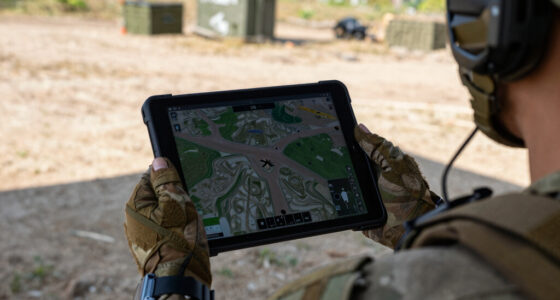
Ukraine’s Ministry of Defense, led by Mykhailo Fedorov, has publicly highlighted the value of this data, describing it as unmatched globally. The country’s extensive combat drone operations over recent years have generated millions of annotated frames, which are now being monetized as a sovereign export asset. The platform’s core system, Avengers, uses computer vision to detect, classify, and track enemy targets in real time, supporting Ukraine’s efforts to automate drone interception and reduce reliance on human operators in electronic warfare environments.
One notable application is the autonomous interception of Russian Shahed attack drones, which are increasingly difficult to counter due to jamming tactics. Ukrainian systems, integrated with AI vision models trained on the data from Avengers Labs, have shown a doubling of interception success over four months, with about 95% automation in the kill chain. The goal is to equip all frontline drones with onboard AI capable of autonomous navigation and target engagement, making Ukraine’s defenses more resilient against electronic warfare tactics.
Avengers Labs
Ukraine’s Ministry of Defense is renting access to the world’s only large-scale, real-war computer-vision dataset. The terms: train your model inside the protected Dataroom — Ukraine keeps the finished AI.
Inside the Dataroom
- Structured visual & thermal imagery of aerial and ground targets
- Hard cases: camouflaged armor, night, fog, rain, multiple sensors
- Feeds the Avengers platform inside the DELTA / VEZHA system
- Focus track: automatic detection & interception of enemy drones
The goal
- 100% of frontline drones with onboard machine vision
- Autonomous navigation in GPS-denied / jammed (EW) skies
- Autonomous Shahed interception — human keeps the trigger
- Scaling vs. Shahed launches rising ~35% / month
Ukraine’s Data-Driven Military Innovation
This development signifies a paradigm shift in military strategy, emphasizing the importance of data ownership and AI model training in modern warfare. Ukraine’s approach demonstrates how battlefield data can be transformed into a strategic asset, giving the country a technological edge against adversaries employing electronic jamming and other disruptive tactics. The model of sharing data for AI training while retaining control over the finished models could influence global defense industry practices and accelerate autonomous warfare capabilities.
As an affiliate, we earn on qualifying purchases.
Battlefield Data as a Strategic Asset
Since 2022, Ukraine has extensively used combat drones for reconnaissance and attack missions, generating a large volume of high-quality, annotated battlefield data. Mykhailo Fedorov has emphasized that Ukraine’s dataset includes diverse scenarios—night, fog, rain, and camouflage—making it uniquely valuable for training robust AI models. Previously, AI development in military contexts was limited by the scarcity of real operational data, but Ukraine’s ongoing combat operations have created a rich, verified dataset that is now being leveraged commercially and strategically.
Internationally, AI models trained on battlefield data have faced challenges due to lack of real-world training sets, but Ukraine’s approach of controlling the data pipeline and sharing models rather than raw footage is a novel strategy. The platform’s partnerships with firms like Palantir and Ukrainian companies exemplify a new model of defense innovation rooted in data sovereignty and operational security.
"Ukraine holds an unmatched body of battlefield data, and we are now turning it into a sovereign export that enhances our defense capabilities and those of our allies."
— Mykhailo Fedorov
As an affiliate, we earn on qualifying purchases.
Uncertainties About Data Ownership and Model Security
It is not yet clear how Ukraine’s data-sharing model will be adopted by international partners long-term or how effectively the data will be protected against espionage or misuse. While Ukraine retains ownership of the models, the extent of data security and potential geopolitical implications remain uncertain. Additionally, the impact of this approach on future AI development and warfare strategies is still evolving.
As an affiliate, we earn on qualifying purchases.
Next Steps in Ukraine’s AI Defense Strategy
Ukraine plans to expand its data collection efforts and integrate more autonomous systems equipped with AI vision. The government aims to increase the proportion of frontline drones with onboard AI and further develop the Avengers platform for broader international collaboration. Monitoring how adversaries respond to Ukraine’s data-driven approach will be essential, alongside ongoing assessments of the platform’s effectiveness in combat.
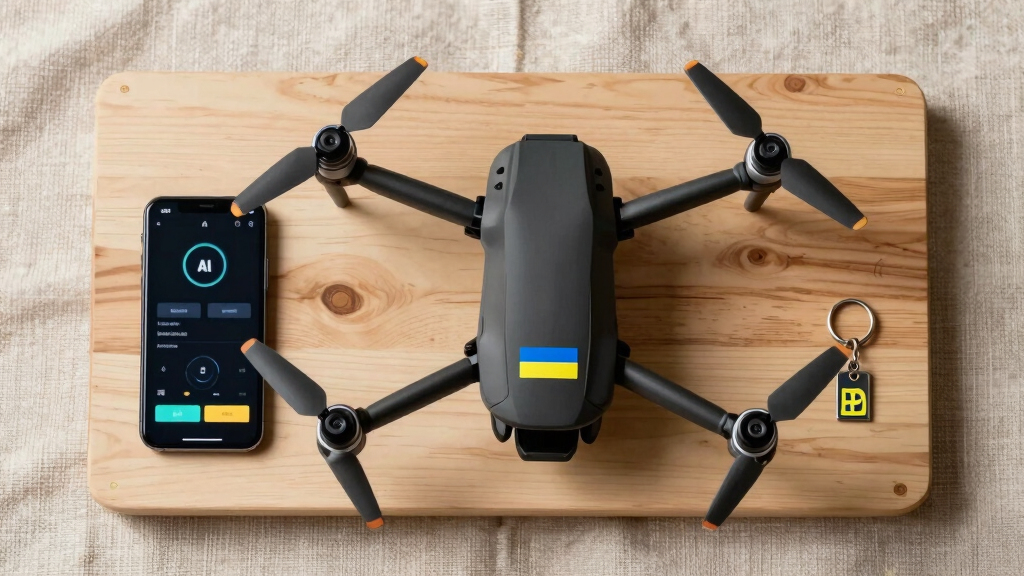
military drone interception system
As an affiliate, we earn on qualifying purchases.
As an affiliate, we earn on qualifying purchases.
Key Questions
How does Ukraine control its battlefield data?
Ukraine uses a secure, government-managed environment called the Brave1 Dataroom, which allows access to structured, annotated combat data without exposing raw footage. The data is used solely for training and improving AI models, which are then shared with partners.
Why is battlefield data so valuable for AI development?
Real operational data includes complex scenarios—weather, camouflage, electronic interference—that are difficult to replicate synthetically. Training AI on verified battlefield data produces more accurate and resilient models for autonomous target detection and engagement.
What are the risks of Ukraine’s data export approach?
The main concerns involve data security, potential espionage, and geopolitical tensions. While models are retained domestically, the export of training data and AI capabilities could be exploited or targeted by adversaries.
Will this approach influence global defense AI strategies?
Yes, Ukraine’s model of controlling battlefield data and sharing AI models rather than raw footage may set a new standard, emphasizing data sovereignty and operational security in defense AI development.
Source: ThorstenMeyerAI.com
Fall Picks
fall essentials
As an affiliate, we earn on qualifying purchases.