
TL;DR

Get the latest gadgets delivered free with Prime
- Fast, free delivery on millions of items
- Prime Video, Amazon Music and more included
- Member-only deals all year
A prototype autonomous flying umbrella has been developed that can follow users and shield them from rain and sunlight. The device is currently in testing, with commercial availability still uncertain. This innovation could transform personal weather protection.
An autonomous flying umbrella capable of following users and shielding them from rain and sunlight has been unveiled by a tech startup. The device, still in testing, aims to offer a new level of personal weather protection and mobility. The development is significant as it combines robotics, weather sensing, and autonomous navigation to address everyday weather challenges.
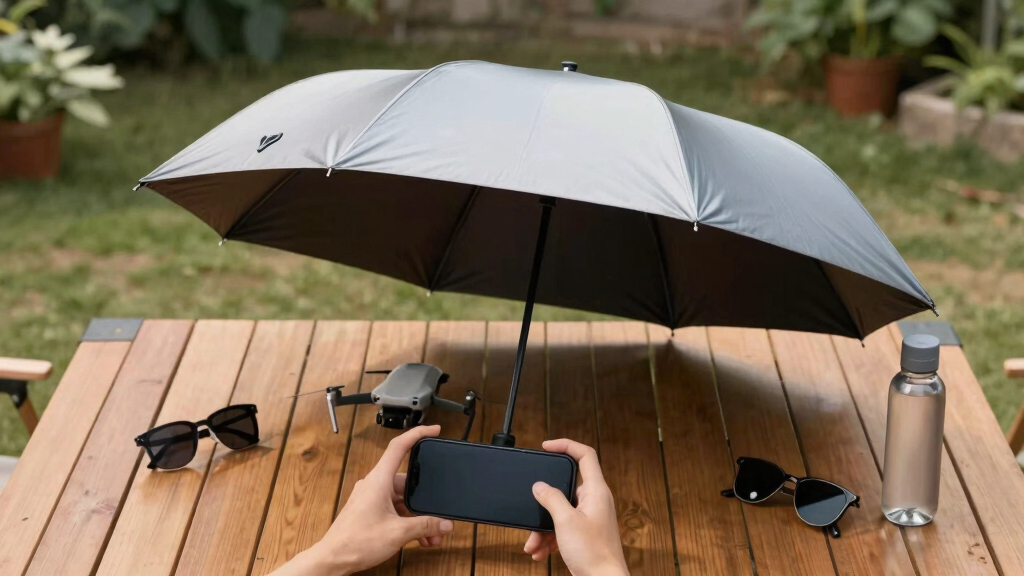
The prototype, developed by SkyGuard Technologies, uses a combination of GPS, computer vision, and weather sensors to track and follow a user. It features a lightweight, foldable design with built-in weather sensors that activate an umbrella canopy when rain or sun is detected. The device can operate autonomously, maintaining a safe distance from obstacles while following the user within a designated radius.
According to SkyGuard, the umbrella’s navigation system employs AI algorithms to predict user movement and adjust its position accordingly. The device is equipped with rechargeable batteries, offering up to two hours of continuous operation on a single charge. It can be controlled via a smartphone app, allowing users to set preferences and receive alerts about weather conditions.
Potential Impact on Personal Weather Protection
This innovation could significantly enhance personal mobility and comfort in adverse weather conditions, reducing reliance on traditional umbrellas or sunshades. It offers a hands-free, autonomous solution that adapts to user movement and environmental changes, potentially transforming daily commuting and outdoor activities. If commercialized, the device could influence the umbrella and wearable tech markets, encouraging further integration of robotics and AI in personal accessories.
As an affiliate, we earn on qualifying purchases.
Emerging Trends in Autonomous Personal Devices
The development of autonomous, wearable, and portable devices has accelerated over recent years, driven by advances in AI, robotics, and sensor technology. Companies have introduced various smart wearables, robotic assistants, and personal mobility devices. The flying umbrella builds on this trend, combining weather sensing with autonomous navigation to address a common daily inconvenience. Previous efforts in personal weather protection have focused on static umbrellas or wearable raincoats, but the autonomous flying umbrella represents a new approach.
“Our autonomous umbrella is designed to bring convenience and safety to users, adapting instantly to changing weather and movement patterns.”
— Jane Liu, CEO of SkyGuard Technologies
As an affiliate, we earn on qualifying purchases.
Unanswered Questions About Commercialization and Safety
It is not yet clear when the autonomous flying umbrella will be available for consumer purchase, or what the final cost will be. Details about safety features, obstacle avoidance reliability, and weather performance in extreme conditions remain under development. Regulatory approval processes for autonomous flying devices are also still uncertain, and further testing is needed to validate safety and efficacy.
As an affiliate, we earn on qualifying purchases.
Upcoming Tests and Potential Market Launch
SkyGuard plans to conduct extensive field tests with diverse user groups over the next year to refine the device’s navigation and weather sensing capabilities. A public demonstration is scheduled for late 2024, with potential commercial release targeted for 2025 if testing proves successful. The company is also exploring partnerships for mass production and distribution.
As an affiliate, we earn on qualifying purchases.
Key Questions
How does the autonomous umbrella follow the user?
The umbrella uses GPS and computer vision to track the user’s position and movement, adjusting its flight path accordingly while maintaining a safe distance from obstacles.
Can the umbrella operate in extreme weather conditions?
It is designed to activate its canopy when rain or strong sunlight is detected, but its performance in extreme weather such as storms or high winds is still being tested.
What safety features are included?
The device includes obstacle detection sensors and automatic stop functions to prevent collisions, but comprehensive safety validation is ongoing.
Will this device be affordable for everyday users?
Pricing details are not yet confirmed, but the company aims to make it accessible, balancing advanced features with cost considerations.
How is this different from traditional umbrellas?
Unlike static umbrellas, this device autonomously follows the user and adjusts to weather conditions, offering hands-free, mobile protection.
Source: hn
Halloween Picks
halloween
As an affiliate, we earn on qualifying purchases.