📊 Full opportunity report: A Camera-Speaking Coach App For Small Business Communication Practice on IdeaNavigator AI — validation score, market gap, and execution plan.

Get the latest gadgets delivered free with Prime
- Fast, free delivery on millions of items
- Prime Video, Amazon Music and more included
- Member-only deals all year
TL;DR
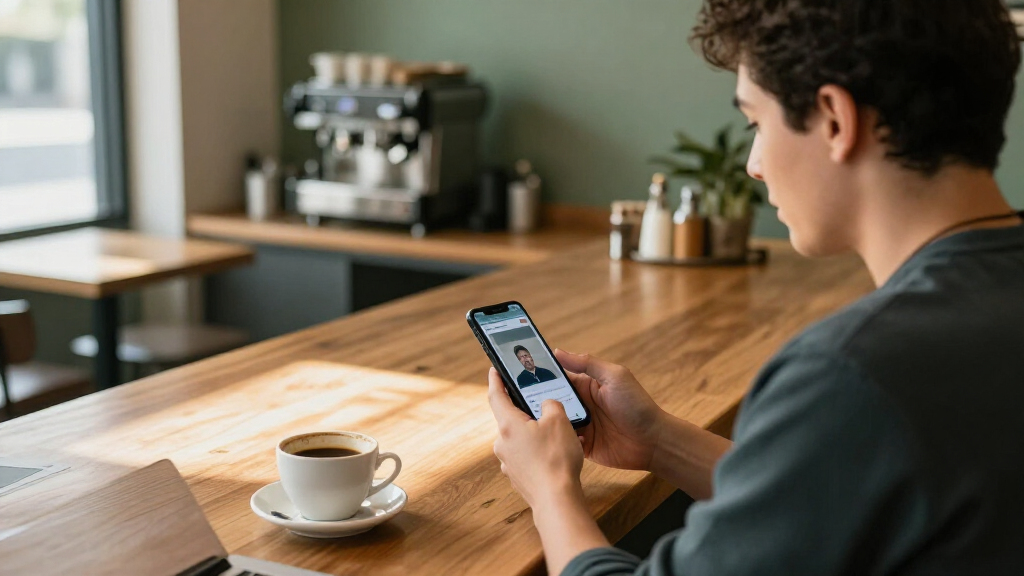
IdeaNavigator AI has outlined a proposed app to help small-business owners practice speaking on camera through short exercises and private feedback. The concept includes a 30-day test with 100 owners, but no app launch, trial results or evidence of effectiveness is reported.
IdeaNavigator AI has outlined a proposed camera-speaking practice app for small-business owners who know video could help their marketing but freeze when recording. The concept pairs brief daily exercises with feedback on delivery, but it remains a proposal: no product launch, completed trial or effectiveness results are reported. These details come from the concept description published by IdeaNavigator AI.
According to IdeaNavigator AI’s concept description, the proposed app targets owners who may struggle with stumbling, self-criticism and repeated retakes when recording alone. The concept argues that conventional public-speaking courses do not directly address the private, self-recorded setting where these difficulties arise. That framing describes the proposed user need; it is not evidence that the app has already reduced camera anxiety.
IdeaNavigator AI proposes a first version with daily, two-minute prompted exercises, beginning with reading and progressing toward speaking more freely. The concept says the app would assess delivery measures such as pace, filler words, eye line and energy, then show progress over time. A confidence-streak feature would encourage continued practice, with the intended endpoint of recording real business content.
The concept description proposes a consumer subscription, with a team tier for agencies that coach clients. It also sets out a validation plan: run a 30-day cohort of 100 business owners and compare the share who publish a first real video by day 45 with a waitlist control group. This is a suggested experiment, not a completed study; IdeaNavigator AI provides no results or participant details.
A Camera-Speaking Coach App for Small Business Communication Practice
A proposed app would help business owners practice speaking on camera through short daily exercises and private delivery feedback. It is an early concept with a suggested test plan; no launch, trial results, or evidence of effectiveness has been reported.
Concept described by IdeaNavigator AI · Recommended by lookatworth.com
Brief daily prompts, from reading aloud toward more spontaneous speaking.
Suggested cohort, with first-video publication checked by day 45.
No app availability, completed study, or outcome data reported.
From recording pressure to private practice
The concept targets owners who want to use video for marketing but feel self-conscious when recording alone. Its routine aims to make practice gradual and repeatable.
Start with a short take
Two-minute daily exercises would begin with reading and progress toward freer speaking, reducing the pressure of immediately making customer-facing content.
Review delivery signals
Proposed feedback covers pace, filler words, eye line, and energy, with progress shown over time. These are specifications, not verified app capabilities.
Build toward publishing
A confidence streak would encourage continued practice. The intended endpoint is a real business video, though the concept does not report that users have reached it.
Read a prompt
Use a brief, guided speaking exercise.
Speak more freely
Move gradually beyond reading aloud.
See delivery feedback
Track proposed measures and practice over time.
Publish a business video
Turn private practice into real content.
The key test is behavior beyond the app
The proposed success measure focuses on whether owners publish a first real video, rather than counting practice sessions alone.
Suggested 30-day cohort
IdeaNavigator AI proposes a group of 100 business owners, comparing the share who publish a first real video by day 45 with a waitlist control group. Recruitment, assignment, follow-up, and the exact definition of “first real video” are unspecified.
Possible commercial path
The concept suggests a consumer subscription and a team tier for agencies coaching clients. It does not provide pricing, commercial terms, or details about what coaches could see.
Useful questions remain unanswered
A short cohort could offer an initial behavioral signal. It would not establish performance across industries, business sizes, speaking styles, or levels of camera anxiety.
Availability: No development status, launch date, platform, or operating team is specified.
Privacy: Recording storage, AI training use, retention, and deletion options are not described.
Assessment: No technical method or accuracy testing is given for scoring eye line, energy, or other delivery measures.
Study design: Recruitment, group assignment, participant follow-up, and reporting schedule have not been set out.
Accessibility: The concept does not explain how feedback would account for varied speaking styles or accessibility needs.
Coaching use: Agency access and the handling of client feedback or recordings remain undefined.
Follow the path from practice to publication
If the cohort is run, the comparison and outcome definitions will shape what readers can conclude. The source gives no start date or reporting schedule.
Reading the graphic: The bars show the proposed sequence, not measured progress or trial results.
Keep the proposal and proof distinct
Quick answers
Is the app available now?
No launch is reported. The source describes a proposed app and test plan, with no release date or availability details.
Who is it intended to help?
Business owners who want to use video but feel blocked when recording, including people concerned about stumbling, self-criticism, or repeated takes.
What would users do?
Practice with two-minute daily prompts, progressing from reading to more spontaneous speech, and receive proposed feedback on delivery.
Has it been shown to help?
No results are reported. The 100-owner cohort and day-45 publication check are proposed validation, not a completed trial.
How might it make money?
The suggested model combines a consumer subscription with a team tier for agencies. Pricing and terms are not provided.
A Testable Route to Camera Practice
The idea addresses a practical gap between knowing that video may be useful and actually publishing it. For owners who avoid recording, a private practice routine could offer a lower-pressure starting point than filming content for customers immediately. Whether it helps depends on users continuing the exercises and moving from practice clips to publicly publishing real business videos.
The proposed cohort could provide an initial measure of that behavior. Comparing participants with a waitlist group would be more informative than counting app sessions alone, because the stated goal is publication by day 45. Still, a test of 100 owners over a short period would not, by itself, establish how well the approach works for different industries, business sizes or users with varying levels of camera anxiety.
For agencies, the suggested team tier points to a possible coaching use: advisers could support clients practicing between sessions. But the concept does not specify what coaches would see, how feedback would be handled, or whether the app’s assessments would be validated. Those decisions could affect both its usefulness and users’ willingness to record themselves.
Products Worth Considering

Logitech MX Keys S Wireless Keyboard, Graphite

Apple AirPods Pro 3 Wireless Earbuds with Active Noise Cancellation

Logitech MX Mechanical Wireless Illuminated Keyboard, Tactile Quiet, Graphite
As an affiliate, we earn on qualifying purchases.
From Video Pressure to Practice
IdeaNavigator AI’s concept is based on the premise that video-first marketing pressure reaches businesses of every size. It identifies recording alone as a distinct challenge: a person may be comfortable speaking in a meeting yet become self-conscious when addressing a camera without an audience. The proposal does not provide survey data or other figures establishing how common that problem is.
The concept also points to multimodal AI as a way to analyze aspects of recorded delivery and provide private feedback. Its suggested measures—pace, filler words, eye line and energy—are product specifications, not reported capabilities from a working app. IdeaNavigator AI provides no technical approach, accuracy testing or explanation of how the system would distinguish useful feedback from subjective judgments.
IdeaNavigator AI recommends a validation step focused on one buyer and one outcome: a business owner who wants to make video but freezes while recording, and whether that owner publishes a first video after practice. The proposed waitlist comparison would offer a benchmark, though the plan does not specify how participants would be recruited, assigned or tracked.
Product and Trial Details Remain Open
IdeaNavigator AI’s concept description does not say whether development has begun, when an app might become available, or who would build and operate it. It provides no pricing, platform details, privacy terms or sample feedback. The proposal also does not explain how recordings would be stored, whether they would be used to improve AI systems, or how users could delete them.
No completed cohort or outcome data is reported by IdeaNavigator AI, so there is no basis yet to say that the exercises improve confidence or lead to more published videos. The proposed measures also need definition: the plan does not say how eye line or energy would be scored, what counts as a first real video, or how the app would account for differences in speaking styles and accessibility needs.
The Proposed Day-45 Check
IdeaNavigator AI describes a proposed 30-day cohort of 100 owners, with publication of a first real video measured by day 45 and compared with a waitlist control group. If carried out, details about recruitment, the comparison method and participant follow-up would help readers judge what the results can show. The source specifies no start date, launch milestone or reporting schedule.
Until a test is run and results are shared, the app should be treated as an early product proposal rather than an available coaching service. The most direct evidence to watch for would be how many participants publish, how that compares with the waitlist group, and whether they continue recording after the initial practice period.
Source: IdeaNavigator AI
Key Questions
Is the camera-speaking app available now?
No launch is reported. IdeaNavigator AI describes a proposed app and validation plan, but provides no release date or availability details.
Who is the app intended to help?
The concept targets business owners who want to use video but feel blocked when recording, particularly by stumbling, self-criticism or repeated takes.
What would users do in the app?
The proposed routine uses two-minute daily prompts, progressing from reading to more spontaneous speaking. The app would offer feedback on pace, filler words, eye line and energy, then track progress.
Has the app been shown to help owners publish videos?
No results are reported. A 30-day test involving 100 owners, with first-video publication checked by day 45 against a waitlist group, is a proposed validation plan rather than a completed trial.
How might the app make money?
The suggested model is a consumer subscription plus a team tier for agencies coaching clients. Pricing and commercial terms have not been provided.
Source: IdeaNavigator AI