Gewerkton has entered beta with a voice-first construction documentation and defect management platform designed to turn spoken site information into structured project records. A public beta is planned for fall 2026.
Tech News · Beta briefing
Voice becomes the first draft of the construction record
Gewerkton enters beta with one connected platform designed to carry spoken site information into evidence, defects, reports, plans, models and operational data.
One brand · three connected product lines
Multilingual projects
27 content languagesCapture and reporting can cross multilingual teams while the original evidence remains unambiguous.
Bring your own AI
13 AI providersProvider choice spans the EU, US and Asia, including mainland China, with user-supplied keys and no vendor lock-in.
German roots · global direction
4 deep local integrationsCommercial workflows connect through:
Solo founder · agent fleet
Built with a coding-agent fleet using Codex and Claude; verified through negative controls and mutation tests.
Public presence
The 27-language marketing site runs with zero trackers, no cookie banner and a fully egress-free architecture.
“On site, what counts is what’s proven.”
The platform was born in the German market, where it offers its deepest commercial integration through GAEB, REB, XRechnung and DATEV. Its wider ambition is global: Gewerkton supports content in 27 languages and lets organisations choose among AI providers in the EU, US and Asia, including mainland China.
It is aimed at construction environments in which information is created quickly, often verbally and across multiple trades, locations and languages. The stated deployment fields range from wind farms and data centres to housing projects, industrial plants, infrastructure and tunnels.
Gewerkton is organised as one branded platform with three connected product lines: Gewerkton Field, Gewerkton Studio and Gewerkton Cloud. Together, they cover capture on site, browser-based work with plans and models, and coordination of operational data.
voice-activated construction site documentation device
As an affiliate, we earn on qualifying purchases.
As an affiliate, we earn on qualifying purchases.
What the three product lines do
Gewerkton Field is the voice-first construction site app. Its scope runs from dictation to evidence, defects and daywork reports, as well as takt and portal functions. The premise is that site teams can capture events in the form most readily available to them at the time, including speech, and turn that material into records that remain useful after the immediate conversation has ended.
Gewerkton Studio is the browser workspace for plans and models. It also addresses projects where a model does not already exist: in that case, the site team can create one in the browser. That gives the platform a route into jobs that cannot begin with a prepared model but still need a shared visual and operational reference.
Gewerkton Cloud handles operations and model or data coordination between Field, Studio and third parties. It connects the site-facing and browser-based parts of the platform while providing a coordination layer for information moving beyond Gewerkton itself.
The distinction matters because construction records rarely stay in one place. A spoken instruction may need to become evidence, a defect with a deadline, an item connected to a plan or model, or data passed to another party. Gewerkton’s three-part structure is intended to cover that movement without presenting the product lines as separate brands.

Artificial Intelligence in Construction Engineering and Management
As an affiliate, we earn on qualifying purchases.
As an affiliate, we earn on qualifying purchases.
Built in Germany, directed at global projects
Gewerkton’s German origins are most visible in its commercial integrations. GAEB, REB, XRechnung and DATEV give the platform a specific connection to German construction and business processes. At the same time, its language and AI-provider architecture points beyond its home market.
The system supports 27 content languages, with cross-border teams able to work on the same project in their own languages. The original evidence remains unambiguous while project information can move from capture to report across multilingual teams.
That approach is relevant to projects bringing together teams from the EU, US and APAC, as well as projects in Asia using Chinese, Korean and Vietnamese crews. Gewerkton’s stated scope is multilingual from initial capture through to reporting, paired with a choice over data residency.
Organisations can use an EU cloud or their own infrastructure. The choice sits alongside Gewerkton’s bring-your-own-AI model, which supports 13 AI providers and allows users to supply their own keys. Providers can be selected by region across the EU, US and Asia, including mainland China, with no vendor lock-in.
multilingual construction project app
As an affiliate, we earn on qualifying purchases.
As an affiliate, we earn on qualifying purchases.
Where voice-first capture is meant to fit
The platform’s deployment examples share a common problem: important information is generated in places where conventional desk-based input can be slow or disconnected from the work being recorded.

Wind farms and renewable-energy projects
Wind farms and renewables can involve distributed sites, rotating crews and field acceptance work. Gewerkton positions offline capture for dead zones as part of that setting, allowing site information to be recorded where connectivity is unavailable.
Data centres and industrial plants
Data centres and industrial plants can have many trades working in parallel against tight deadlines. In this context, Gewerkton turns decisions made in meetings into task lists sorted by trade, giving the spoken outcome a structured route into site activity.
Housing and building construction
For housing and wider building construction, the platform covers defects recorded with a photo and deadline, dictated daywork reports and signatures on a device during handover. These are familiar documentation points, but the voice-first emphasis changes how the initial information is entered.
Infrastructure and tunnels
Long-duration infrastructure and tunnel projects may accumulate many change orders. Gewerkton’s use case here includes instructions backed by their original audio, preserving the source material behind what was said while the project continues over an extended period.
Across these environments, the company’s marketing line is concise: “On site, what counts is what’s proven.” The practical test will be whether voice capture, original audio and structured outputs can remain connected as records pass between crews, plans, models and third parties.
construction site evidence capture tools
As an affiliate, we earn on qualifying purchases.
As an affiliate, we earn on qualifying purchases.
What is available now, and what remains beta
Gewerkton is in beta now. The public beta is planned for fall 2026. That status applies to the platform entering the market today and should frame expectations around Field, Studio and Cloud.
The current product proposition includes the voice-first Field app, the Studio browser workspace and the Cloud coordination layer. It also includes the stated language coverage, regional AI-provider choice, bring-your-own-key model and the option of an EU cloud or deployment on an organisation’s own infrastructure. However, the product is still in beta rather than presented as a finished general release.
The beta label is particularly important because the platform brings together several demanding areas: live site capture, evidence, plans and models, multilingual reporting, third-party coordination and regional infrastructure choices. The public beta planned for fall 2026 will mark the next stated stage in making that combined system more broadly available.
A solo founder with a coding-agent fleet
The development model behind Gewerkton is unusual. It is being built by a solo founder directing a fleet of coding agents using Codex and Claude. In one night, that fleet shipped 21 software packages, with the work verified through negative controls and mutation tests.
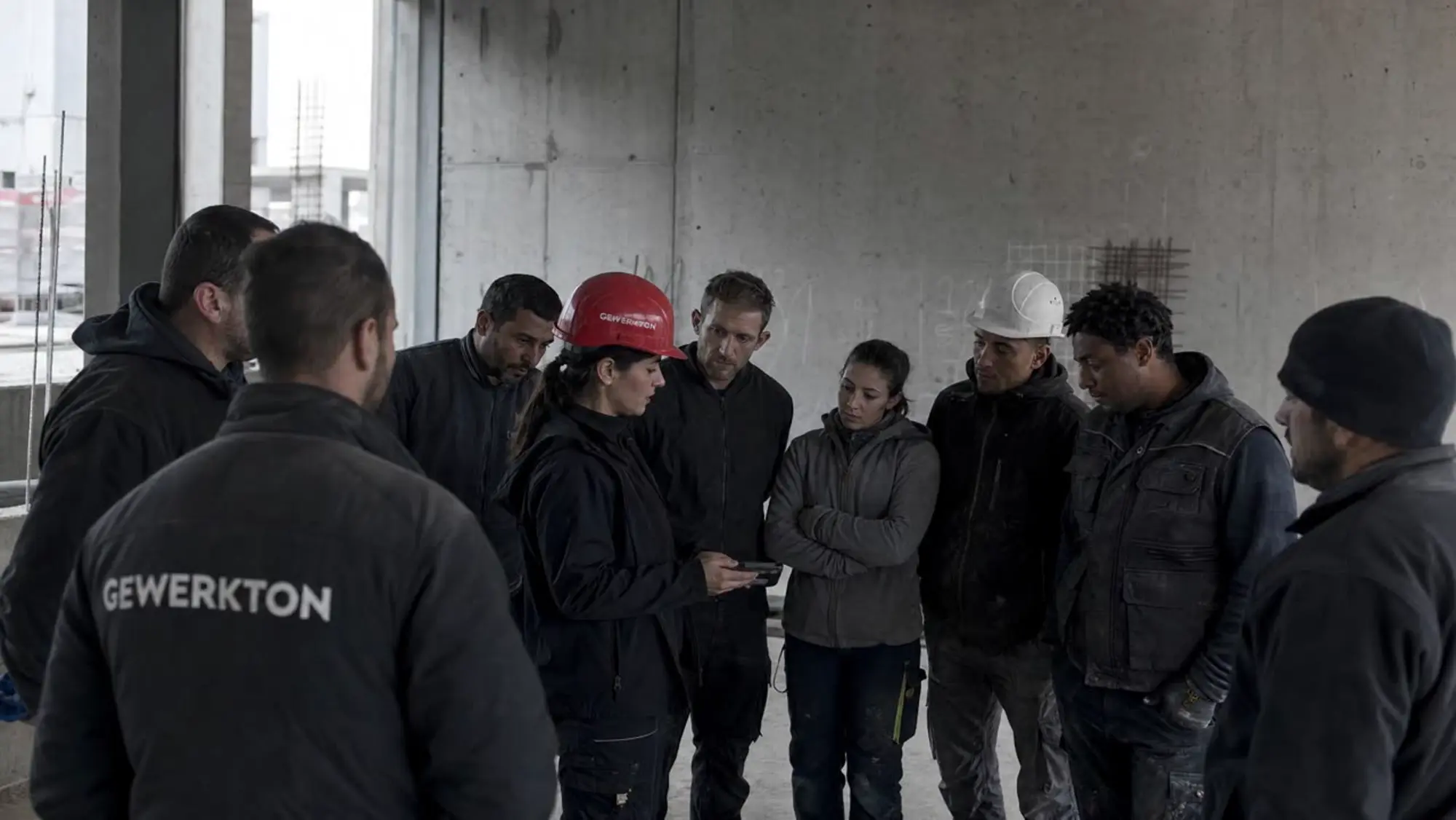
That detail offers a view into how a platform with three connected product lines and broad regional ambitions is being produced by a single founder. It does not change the present status: regardless of development speed or package count, Gewerkton remains in beta, with the public beta still planned for fall 2026.
A tracker-free public presence
The company’s marketing site mirrors some of the platform’s regional and data-handling themes. It is available in 27 languages and operates with zero trackers, no cookie banner and a fully egress-free architecture.
Gewerkton has also assembled a media bank containing more than 51 self-produced clips and posters. That gives the beta launch a substantial body of first-party material without changing the core story: this is a construction platform attempting to make voice the starting point for evidence, site records and operational coordination.
The proposition entering beta
Gewerkton arrives with a clearly defined structure. Field captures and organises information on site. Studio provides a browser environment for plans and models, including model creation when none exists. Cloud coordinates operations and model or data flows between those tools and third parties.
Its strongest local commercial connections remain German, through GAEB, REB, XRechnung and DATEV. Its broader design supports 27 content languages, 13 bring-your-own-key AI providers, regional provider selection and a choice between an EU cloud and an organisation’s own infrastructure.
For site teams working across wind farms, data centres, industrial plants, housing, tunnels and other infrastructure, the appeal is straightforward: spoken information can begin as capture and continue into evidence, reports, tasks, plans, models and coordinated project data.
For now, the key qualification is equally straightforward. Gewerkton is in beta, not a finished general release, and its public beta is planned for fall 2026. Readers can review the connected Gewerkton platform and its three product lines as the company moves towards that milestone.