

📊 Full opportunity report: The SSD Squeeze: Why Storage Joined the Party on ThorstenMeyerAI.com — validation score, market gap, and execution plan.
TL;DR
Storage, especially SSDs, is experiencing a significant price increase due to high demand from AI applications and limited supply caused by wafer competition and manufacturing delays. Industry leaders are prioritizing margins over capacity expansion, leading to shortages and rising costs for all buyers.
Enterprise and consumer SSD prices have surged by up to 100% or more in 2026, driven by record-breaking shortages and increased AI storage demands. Industry sources confirm that NAND contract prices have multiplied four to four-and-a-half times in nine months, with major manufacturers deliberately limiting capacity to maintain high margins, rather than expanding supply to meet demand.
Over the past year, NAND flash memory has experienced unprecedented price hikes, with enterprise SSD contract prices jumping over 50% in a single quarter at the start of 2026, according to industry reports. Major players such as Samsung, SK Hynix, and Micron have cut wafer production targets, citing strategic prioritization of high-margin products like HBM and enterprise memory, which has reduced available NAND for storage applications.
Simultaneously, AI workloads are consuming vast amounts of storage, with high-end AI GPUs requiring up to 16TB of flash and entire server racks demanding over 1,000TB. As AI shifts from training to inference, new storage patterns—such as retrieval-augmented generation and key-value caches—are increasing demand for high-IOPS enterprise SSDs. Market forecasts indicate NAND revenue growth exceeding 100% in 2026, reflecting this surge.
Despite rising prices, supply remains constrained. Manufacturers like Micron report only 55-60% fulfillment of customer demand, and new fabs are years away. Industry insiders note that the scarcity is partly intentional, with firms prioritizing profitable high-margin products over capacity expansion, leading to persistent shortages and elevated prices across consumer and enterprise markets.
The SSD squeeze: storage joined the party
Storage was the last cheap thing in computing. Not anymore — a 2TB NVMe that was $120–150 in 2024 now lists at $300–480. And this time flash isn’t only collateral damage: AI eats storage directly.
both ways
Flash got hit twice — once as collateral sharing fabs with HBM, once directly as AI inference turned fast storage into something it consumes by the petabyte. That second force won’t fade; it grows with every model, every RAG pipeline, every cache that must live somewhere fast. Buy what you need now; favor TLC with DRAM cache, don’t overpay for Gen 5, watch for counterfeits. Relief isn’t forecast before late 2027. When the cheapest component in computing has a two-year waitlist, “commodity” no longer fits. Next: The High-End PC & Workstation Tax.
Impact of Storage Shortages on Tech Ecosystems
This increase in SSD prices and supply shortages has implications across various sectors. Enterprise data centers are experiencing higher operational costs, which may influence the pace of AI deployment and digital transformation initiatives. Consumers may face higher prices and limited storage options, while PC manufacturers are adjusting configurations in new models. Industries such as automotive and industrial automation, which depend on durable flash memory, are also affected by longer lead times and backorders. The prioritization of high-margin memory by manufacturers suggests that these shortages could continue, influencing market dynamics and pricing over the coming years.
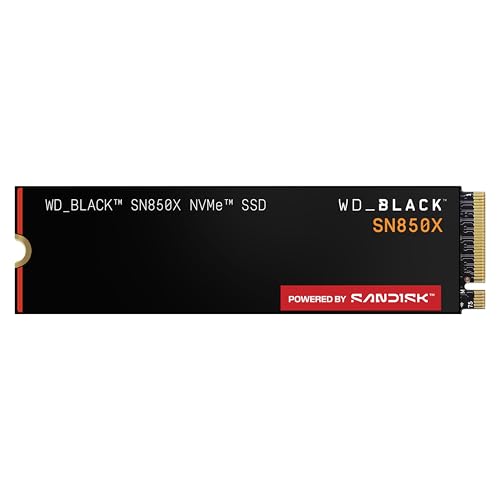
WD_BLACK SN850X 2TB NVMe SSD – M.2 2280, Up to 7,300 MB/s Read speeds, Up to 6,300 MB/s write speeds, Gaming Expansion, High Performance Internal Solid State Drive – WDS200T2X0E
- Maximum Read Speed: Up to 7,300 MB/s
- Maximum Write Speed: Up to 6,300 MB/s
- Storage Capacity: 2TB for high capacity
As an affiliate, we earn on qualifying purchases.
As an affiliate, we earn on qualifying purchases.
Historical Trends and Industry Dynamics Behind the Squeeze
For most of the past decade, storage components experienced declining costs, with prices generally decreasing over time. Recently, however, multiple factors have contributed to a shift, including increased demand for NAND due to AI applications, competition for manufacturing capacity with high-margin products like HBM and DRAM, and deliberate supply restrictions by key manufacturers. The industry’s focus on profitability over capacity expansion has resulted in a supply imbalance, with wafer targets being reduced and delays in new fabrication facilities. This situation mirrors previous shortages in DRAM, but is now compounded by AI’s substantial storage requirements.
Prior to 2026, NAND prices had remained relatively stable or declined, but the recent demand surge has altered this trend. Suppliers such as Samsung and SK Hynix have reduced wafer targets, citing strategic reasons, while Micron has indicated only partial fulfillment of demand. The market’s structure, dominated by a few major firms, has contributed to a scarcity environment that is expected to persist in the near term.
“We can only satisfy about 55-60% of our main customers’ demand due to wafer constraints.”
— A senior executive at Micron

Micron 5300 PRO 3.84TB 7mm 2.5 inch Enterprise SATA 6Gb/s Solid State Drive Self-encrypting (SED) TCG eSSC – MTFDDAK3T8TDS
- High Capacity Storage: 3.84TB 2.5-inch SSD
- Advanced NAND Technology: 96-layer 3D NAND
- Enhanced Security Features: AES 256-bit encryption and TCG eSSC
As an affiliate, we earn on qualifying purchases.
As an affiliate, we earn on qualifying purchases.
Unclear Duration and Market Impact of the Shortage
It remains uncertain how long the supply constraints will persist. While new fabs are projected to come online in the next two to three years, the industry’s deliberate capacity restrictions and high demand from AI applications suggest shortages may continue into 2027. The exact impact on prices, availability, and market structure remains uncertain, and some industry insiders warn that the current scarcity could be prolonged or even deepen if demand outpaces supply growth.
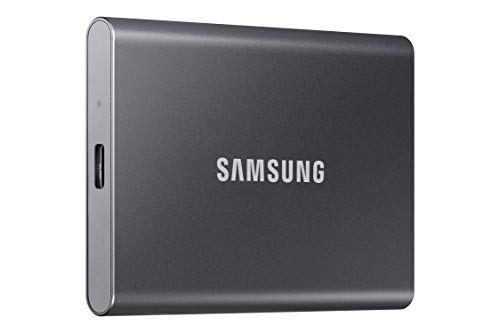
Samsung T7 Portable SSD 1TB Titan Gray, USB 3.2 Gen 2, Up to 1,050MB/s
- Designed for Creators: Fast speeds and durable for creators
- Quick Data Sharing: Up to 1,050MB/s read/write speeds
- High Capacity Storage: Up to 4TB storage for all files
As an affiliate, we earn on qualifying purchases.
As an affiliate, we earn on qualifying purchases.
Future Market Trends and Industry Responses
Market analysts anticipate that NAND prices will likely stay elevated through at least 2026, with some expectations of gradual easing as new manufacturing capacity becomes operational. Companies may explore alternative approaches, such as increased use of QLC NAND and more aggressive inventory management strategies. Buyers should prepare for ongoing high prices and potential shortages, particularly in sectors reliant on enterprise and AI storage. Monitoring developments in fab capacity and production plans will be important for assessing future market conditions.
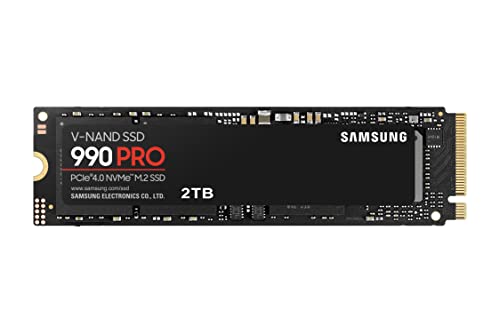
Samsung 990 PRO NVMe M.2 SSD, 2 TB, PCIe 4.0, 7,450 MB/s Read, 6,900 MB/s Write, Internal SSD, for Gaming and Video Editing, MZ-V9P2T0BW
- Generation: PCIe 4.0 NVMe SSD
- Capacity: 2TB storage capacity
- Read Speed: up to 7450 MB/s
As an affiliate, we earn on qualifying purchases.
As an affiliate, we earn on qualifying purchases.
Key Questions
Why are SSD prices rising so rapidly in 2026?
Prices are increasing due to significant shortages of NAND flash memory caused by deliberate capacity restrictions by leading manufacturers and increased demand from AI workloads, which require large amounts of high-performance storage.
Will the NAND shortage last long enough to impact prices significantly?
While new manufacturing facilities are expected to come online within the next two to three years, ongoing capacity restrictions and high AI demand suggest that shortages and elevated prices may continue into 2027 or beyond.
How is AI driving demand for storage?
AI applications require large volumes of high-speed flash memory for training and inference tasks, including vector databases and model caches, which increases storage needs beyond traditional applications.
What should consumers and businesses do in response to these shortages?
It is advisable to purchase only necessary storage, consider options like TLC NAND with DRAM caches for better endurance, avoid overpaying for PCIe Gen 5 drives unless required, and buy from reputable vendors to reduce the risk of counterfeit products.
Source: ThorstenMeyerAI.com