
📊 Full opportunity report: Capital: The Lever Beneath the Levers on ThorstenMeyerAI.com — validation score, market gap, and execution plan.
TL;DR
Major AI companies are raising billions through public offerings, shifting risk from private investors to the public. The circular flow of capital creates vulnerabilities that could impact the broader economy.
In June 2026, SpaceX/xAI listed on Nasdaq at a valuation near $1.77 trillion, while Anthropic and OpenAI prepare for public listings valued at around $965 billion and $730–850 billion, respectively. These offerings mark the largest concentration of private AI valuations hitting public markets in history, illustrating how capital flow underpins the entire AI infrastructure and growth cycle.
The public listings in June 2026 represent a transfer of approximately $4 trillion in private AI valuations into the public domain, according to industry analysts. These moves are driven by early investors cashing out, with over $6.6 billion in stock sales from OpenAI staff prior to its IPO, indicating a shift of risk from private to public investors.
The capital supporting AI infrastructure is largely circular: Microsoft, Amazon, and Google invest heavily in Nvidia, which supplies chips to AI firms like OpenAI and Anthropic. These companies then reinvest in the same ecosystem, creating a loop that amplifies demand but also introduces systemic risks. Microsoft’s recent step back from full compute commitments signals caution, yet collective spending remains high, risking a fragile equilibrium.
Capital: The Lever Beneath the Levers
Every chokepoint costs money — so whoever can fund the buildout decides who builds at all. In 2026 the bill came due in public: a trillion-dollar IPO wave, financed by a circle of firms paying each other, now sold to everyone else.
The meta-chokepoint: it gates the other five, because you can’t build any of them without clearing the capital bar. A synchronized machine has no natural brake — no one can slow first — and the IPO wave moves the risk to the public as insiders take gains. The hedge is solvency that doesn’t depend on the music playing: sane burn, own what’s cheap, self-host where you can.
Why Capital Flow Shapes AI’s Future Risks
The concentration of AI valuations and infrastructure investment in public markets makes the entire sector vulnerable to sudden shifts in investor sentiment. The circular demand and high debt levels could trigger cascading failures if demand wanes or if a slowdown occurs in one node of the loop. This interconnectedness means that a market correction or economic shock could have outsized impacts beyond tech, affecting the broader economy.

AAAwave 12GPU Mining Rig Frame – Sluice V2 Open Frame Case – Black
- Durable Construction: High-quality metal for long-lasting use
- Enhanced Cooling Design: Optimized airflow for heat dissipation
- Secure and Protective: Non-slip rubber feet and EVA foam
As an affiliate, we earn on qualifying purchases.
As an affiliate, we earn on qualifying purchases.
The Growth of Private AI Valuations and Public Market Entry
Since 2023, private AI companies like OpenAI, Anthropic, and xAI have seen their valuations soar, with combined private value estimates reaching around $4 trillion. These firms have been preparing for public listings, with OpenAI and Anthropic filing for IPOs in 2026. This wave of public offerings is the culmination of years of private investment and risk accumulation, now being transferred to public investors.
The cycle is fueled by private credit financing, with estimates of $3 trillion in global data-center spending between 2025 and 2028, much of it debt-financed. The demand for AI infrastructure remains driven more by internal corporate demand than by consumer spending, creating a fragile foundation for sustained growth.
“There is more greed than fear right now, and plenty of liquidity—conditional on continued optimism.”
— Goldman Sachs CEO

Seagate Exos 32TB Enterprise Internal Hard Drive HDD – 3.5in 6GB/s SATA 7200RPM 2.5M MTBF (ST32000NM004K)
- Large Storage Capacity: Up to 32TB of CMR storage
- High Areal Density: 3TB per platter for efficiency
- Reliable and Innovative: Combines proven components with Mozaic tech
As an affiliate, we earn on qualifying purchases.
As an affiliate, we earn on qualifying purchases.
Uncertainties in AI Market Stability and Infrastructure
It remains unclear how sensitive the AI sector is to macroeconomic shocks or shifts in investor sentiment. The extent to which demand can be sustained at current levels, given the high debt and limited consumer base, is still uncertain. Additionally, the potential for a market correction to trigger cascading failures across the interconnected ecosystem is a key concern that has not yet materialized.

BKFK New Type-C 4K@60Hz-1080P120HZ Virtual Display Adapter USB c,DDC EDID Dummy Plug Headless Ghost Display Emulator 3840 x2160@60Hz 1920x1080p@120Hz
- Unlocks GPU Power Instantly: Activates graphics card without a monitor
- Enhances Remote Desktop: Supports higher resolutions and smoother remote sessions
- Ideal for Headless Systems: Enables hardware acceleration on servers and media centers
As an affiliate, we earn on qualifying purchases.
As an affiliate, we earn on qualifying purchases.
Next Steps for Monitoring AI Capital Risks
Regulators, investors, and industry leaders will closely watch the upcoming public listings and infrastructure spending trends. Any signs of slowdown or market correction could reveal vulnerabilities, prompting reassessment of valuations and investment strategies. Further disclosures from firms about their infrastructure commitments and financial health are expected in the coming months.
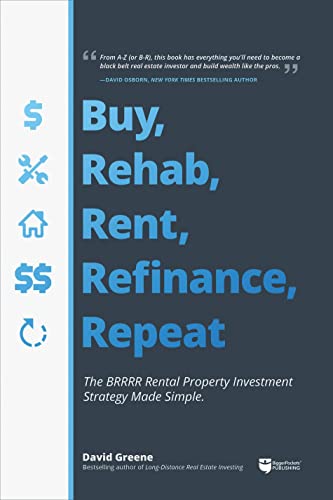
Buy, Rehab, Rent, Refinance, Repeat: The BRRRR Rental Property Investment Strategy Made Simple
As an affiliate, we earn on qualifying purchases.
As an affiliate, we earn on qualifying purchases.
Key Questions
Why are AI valuations so high right now?
Valuations are driven by strong private investment, anticipation of future growth, and the circular demand within the AI ecosystem, which inflates perceived value.
What risks does the current capital flow pose?
The interconnected demand and high debt levels could lead to systemic failures if demand wanes or a correction occurs, impacting the broader economy.
How does the circular investment loop work?
Companies invest in each other’s infrastructure and services, creating a feedback loop that amplifies demand but also concentrates risk within a closed ecosystem.
What role do public markets play in this cycle?
Public listings transfer private risk and valuations to a broader investor base, often at peak valuations, which can amplify market volatility and systemic vulnerabilities.
What should investors and regulators watch for next?
Key indicators include demand signals, infrastructure spending patterns, and any signs of market correction or slowdown that could trigger broader financial instability.
Source: ThorstenMeyerAI.com