
📊 Full opportunity report: The Memento Constraint: Why Continual Learning Is the Trillion-Dollar Bottleneck Nobody Is Pricing on ThorstenMeyerAI.com — validation score, market gap, and execution plan.
TL;DR
Current AI models are limited by the ‘Memento constraint,’ preventing them from learning across conversations. Solving this could reshape the trillion-dollar enterprise AI market, but it remains an unsolved challenge as of 2026.
As of 2026, all leading AI systems—including OpenAI’s GPT-5, Google’s Gemini, and others—are unable to learn from experience across conversations, a limitation known as the ‘Memento constraint.’ This fundamental barrier restricts models to static knowledge, with profound implications for the enterprise AI economy and the race to develop true continual learning.
Every frontier AI system today operates as a ‘Leonard’—highly capable within a single interaction but unable to retain or build upon past experiences. Models are trained to compress knowledge into weights during development but do not adapt or learn during deployment. This results in architectures that rely heavily on external scaffolding like vector databases, memory layers, and retrieval systems, which are stopgap solutions rather than true solutions to continual learning.
Experts like Malika Aubakirova and Matt Bornstein describe this as a critical bottleneck. The technical challenge lies in enabling models to update their parameters dynamically without catastrophic forgetting or data lineage issues. Current approaches—such as modular adapters and retrieval-augmented memory—are partial solutions, but none fully address the core problem of experience integration over time.
The Memento constraint.
Why continual learning is the trillion-dollar bottleneck nobody is pricing.
Every frontier AI system in 2026 is Leonard. Brilliant within any single conversation. Cannot compound. The lab that cracks continual learning first does not just win a research milestone — it reshapes the trillion-dollar enterprise AI economy on a timeline that compresses every other capital allocation question in the sector.
Every experience remains external.
It’s that he can never compound.
Three layers. Three different competitive dynamics.
Continual learning could happen at three layers of the system, and the strategic implications differ by layer. Each has a different cost structure, a different failure mode, and — most strategically important — a different competitive moat. Most production “memory” sits at Layer 3. The asymmetric outcome lives at Layer 1.
Context
Modules
Weights

Continual and Reinforcement Learning for Edge AI: Framework, Foundation, and Algorithm Design (Synthesis Lectures on Learning, Networks, and Algorithms)
As an affiliate, we earn on qualifying purchases.
As an affiliate, we earn on qualifying purchases.
The cost of working around the constraint.
Every memory layer in production right now exists because the model forgets. The vector database, the embedding compute, the retrieval orchestration, the engineering time spent debugging the gap between “the model knows this” and “we put it in the context window in a way the model used.” Conservatively for a Fortune 500: $3–8M/year per company.
The model can’t retain. The economy pays for it.
Vector databases at $5–50K/year per workload. Embedding compute on every query. Retrieval orchestration. Quality engineering. Workflow scaffolding. None of it is compounding learning. All of it is increasingly elaborate Polaroid-and-tattoo systems.
A continual-learning breakthrough does not improve enterprise AI margins by 5%. It eliminates a category of cost that compounds across every workflow at every customer. The company that produces this breakthrough captures economic surplus on a scale that none of the existing model-economics conversations are pricing.

Hands-On Meta Learning with Python: Meta learning using one-shot learning, MAML, Reptile, and Meta-SGD with TensorFlow
As an affiliate, we earn on qualifying purchases.
As an affiliate, we earn on qualifying purchases.
Six labs racing. One probability distribution.
If the breakthrough is achievable on a 12–36 month horizon, the competitive question is which lab ships it first. Each has different strengths and constraints. The probability estimates below are judgment, not data — they reflect the strategic and research-bench positions visible in May 2026.
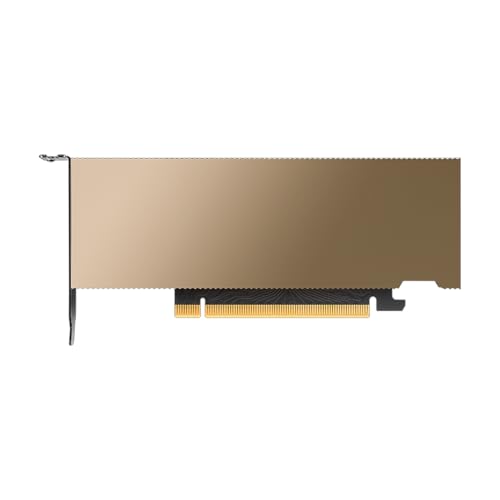
NVIDIA Tesla L4 24GB PCIe Graphics ACELLERATOR HH/HL 75W GPU 900-2G193-0000-000
24GB Video Memory
As an affiliate, we earn on qualifying purchases.
As an affiliate, we earn on qualifying purchases.
A fourth endstate the 2028 forecast didn’t price.
In the lab endgame piece I described three scenarios — Duopoly, Equilibrium, Stratification — for how six frontier labs become two, three, or twelve. Continual learning is the variable that does not appear in any of those scenarios but should. A Layer-1 breakthrough produces a fourth, asymmetric outcome.
One lab achieves a structural lead via a single capability breakthrough.
The lab that ships first does not just win a benchmark. It reshapes the architecture of every enterprise AI deployment in production. Within 60 days every CIO has to decide: stay with the current vendor and miss the capability, or migrate. Vendor switching costs are real but not infinite, and the productivity gain justifies migration cost for most workloads.
Migration decision wave
Enterprise CIOs forced to choose. Vendor lock-in calculus shifts overnight. Procurement cycles compress from 24–36 months to 6–12.
Market-share consolidation
First-mover captures 20–30 points of enterprise AI share that would have been distributed across the field. Closer to Scenario A duopoly — but compressed in time.
Capability propagates
Other labs implement their own versions. Open-weight catches up. Capability becomes table stakes. But the consolidation that happened in months 1–12 is durable.
Probability: 15–25%. Not a base case. Real enough that any portfolio with significant frontier-AI exposure should price it. The first-mover advantage compounds faster than any other lab can close it because the integration depth, workflow patterns, and customer-specific accumulated learning all sit with the lab that shipped first.
The lab that cracks continual learning first does not win a benchmark. It rewrites the AI economy. The race is on. It is mostly invisible from outside the labs.

Vector Databases: A Practical Introduction
As an affiliate, we earn on qualifying purchases.
As an affiliate, we earn on qualifying purchases.
Three principles. By role.
Treat the memory layer as transitional infrastructure.
The vector database and retrieval orchestration you are building now is a substitute for continual learning. It will become less central when the breakthrough ships. Architect so the memory layer can be shrunk or replaced without re-architecting the workflow. Memory-layer contracts ≤24 months. No proprietary memory-orchestration platforms.
Capture validated experience now.
The most valuable input to a continual-learning model in 2027–2028 is a corpus of validated experience: tasks attempted, outcomes observed, corrections applied, customer-specific patterns. Build the corpus before you need it. Same dynamic as data lakes 2015–2018: the companies that built ahead ended up with structural advantage.
Maintain vendor optionality.
When continual learning ships, the first-mover has structural pricing power for 12–24 months. Enterprises locked into the wrong vendor pay a premium or accept missing the capability. Dual-vendor capability and portable workflow patterns are the negotiating leverage. The skills marketplace logic applies more strongly here.
Price Scenario D in your AI portfolio.
The probability is 15–25% on an 18-month horizon. Most public-equity AI exposure is priced for Scenarios A/B/C. The Scenario D upside is asymmetric — the lab that ships first sees compressed market-share consolidation that rewards the position 2–3× more than base-case scenarios. Cheap optionality, asymmetric payoff.
Economic Impact of Solving Continual Learning
Solving the Memento constraint could dramatically reshape the enterprise AI landscape. The first lab to crack continual learning will not only achieve a major research milestone but could also dominate the trillion-dollar AI economy by enabling models that truly learn and adapt over time. This would reduce reliance on external scaffolding, lower operational costs, and unlock new capabilities in industries such as healthcare, finance, and customer service, fundamentally changing how AI is deployed at scale.
Current State of AI Learning Limitations
In 2026, all major AI models operate with static weights, meaning they cannot learn from ongoing interactions. This limitation has led to widespread use of external memory systems, retrieval architectures, and fine-tuning techniques to simulate learning. Despite these efforts, the core problem remains unsolved, creating a strategic bottleneck for enterprise AI development.
The challenge has been recognized for years, with researchers highlighting issues like catastrophic forgetting and data privacy concerns that hinder models from updating their parameters during deployment. Industry labs are racing to find solutions, but no breakthrough has yet emerged.
“The Memento constraint is the fundamental bottleneck that limits models from truly learning over time.”
— Malika Aubakirova
“The lab that cracks continual learning will reshape the trillion-dollar enterprise AI economy on an accelerated timeline.”
— Thorsten Meyer
Unresolved Technical Challenges in Continual Learning
It remains unclear when a definitive solution to continual learning will be achieved. Technical hurdles such as catastrophic forgetting, data privacy, and model stability continue to impede progress. While various approaches are promising, no consensus exists on the most effective method or timeline for deployment at scale.
Key Milestones Toward Breakthroughs in 2028
Research labs and industry consortia are expected to continue experimenting with hybrid architectures combining model weights, modular adapters, and external memory systems. Major breakthroughs could emerge within the next two years, potentially leading to pilot projects demonstrating true continual learning. The race is on to develop scalable, reliable methods capable of overcoming current limitations.
Key Questions
What is the Memento constraint in AI?
The Memento constraint refers to the inability of current AI models to learn or retain experience across multiple interactions, effectively making them amnesiacs that cannot build upon past knowledge during deployment.
Why is solving continual learning so important?
Achieving true continual learning would enable models to adapt over time, reduce reliance on external memory systems, lower costs, and unlock new enterprise applications, fundamentally transforming the AI economy.
What are the main technical hurdles?
Key challenges include catastrophic forgetting, data privacy concerns, model stability, and the complexity of updating large models in real-time without losing previously acquired knowledge.
When might we see a breakthrough?
Experts expect significant progress by 2028, with some pilot projects and prototypes demonstrating true continual learning capabilities within the next two years.
How does external scaffolding relate to this problem?
External scaffolding like vector databases and retrieval systems are stopgap solutions that simulate memory but do not enable models to learn continuously. Solving the core problem would eliminate the need for such external systems.
Source: ThorstenMeyerAI.com