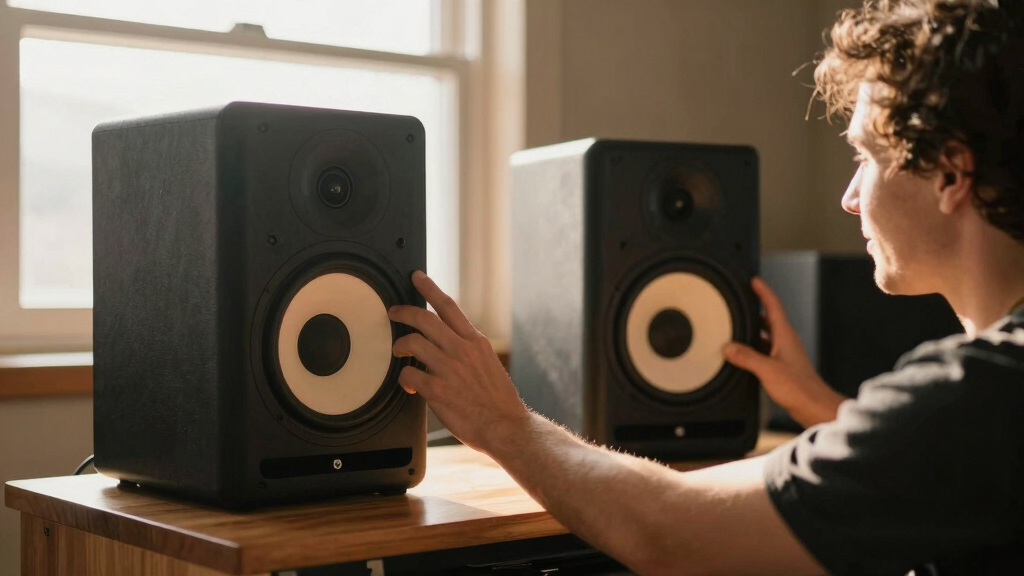

Choosing the right studio monitor speakers depends on your space, budget, and intended use. For those seeking versatile all-rounders, JBL 305P MkII offers excellent imaging and room tuning, making it a top choice for many producers. If you’re on a tight budget or need a compact setup, the M-Audio BX3 delivers professional sound in a small footprint. Meanwhile, for smaller home studios or desktop setups, the Mackie CR3.5 combines affordability with decent quality, though it sacrifices deep bass and higher power for size. Each of these options balances features with tradeoffs, helping you pinpoint what aligns best with your needs.

Get the latest gadgets delivered free with Prime
- Fast, free delivery on millions of items
- Prime Video, Amazon Music and more included
- Member-only deals all year
Complete the kit



Key Takeaways
- The JBL 305P MkII stands out for its professional imaging and room tuning features, ideal for detailed mixing.
- The PreSonus Eris 3.5 offers a powerful, balanced sound in a compact form, suited for multimedia and content creators.
- The Yamaha HS4 provides accurate, studio-grade sound with room controls, perfect for small spaces but limited in power.
- The Mackie CR3.5 is best for beginners or desktop use, with basic features and limited bass response.
- The M-Audio BX3 combines value and quality, ideal for those needing versatile connections and a professional sound in a small package.
| Mackie CR3.5 Studio Monitors (Pair), 3.5″ Woofers, Tone Knob, Black |  | Best for Desktop and Small Spaces | Speaker Size: 3.5 inches | Woofer Diameter: 3.5 inches | Tweeter Diameter: 1 inch | VIEW LATEST PRICE | See Our Full Breakdown |
| PreSonus Eris 3.5 Powered Studio Monitors (Pair) |  | Best for Versatile, Studio-Quality Sound | Speaker Type: Active Near-Field | Driver Size: 3.5 inches | Power: 50 watts | VIEW LATEST PRICE | See Our Full Breakdown |
| Yamaha HS4 Powered Studio Monitor, Black, Pair |  | Best for Accurate Monitoring in Small Spaces | Speaker Type: Monitor | Size: 4.5 inches | Woofer Diameter: 11.43 cm | VIEW LATEST PRICE | See Our Full Breakdown |
| JBL 305P MkII 5-Inch 2-Way Active Studio Monitors (Pair) |  | Best for Professional Imaging and Room Tuning | Size: 5 inches | Power: 2 x 41 Watts | Inputs: XLR/TRS | VIEW LATEST PRICE | See Our Full Breakdown |
| M-Audio BX3 3.5-inch Wired Studio Monitors Pair |  | Best for Value and Versatility | Driver Size: 3.5 inches | Woofer Material: Kevlar | Tweeter Type: Silk Dome | VIEW LATEST PRICE | See Our Full Breakdown |
| studio monitor speaker | Inputs |
|---|---|
| Mackie CR3.5 Studio Monitors | — |
| PreSonus Eris 3.5 Powered Stud | Balanced TRS, RCA, aux |
| Yamaha HS4 Powered Studio Moni | — |
| JBL 305P MkII 5-Inch 2-Way Act | XLR/TRS |
| M-Audio BX3 3.5-inch Wired Stu | 1/4-inch, 1/8-inch, RCA |
More Details on Our Top Picks
Mackie CR3.5 Studio Monitors (Pair), 3.5″ Woofers, Tone Knob, Black
The Mackie CR3.5 stands out for its compact size, making it ideal for desktop setups or small studios. Its 3.5-inch drivers may limit bass depth, but the inclusion of a tone control knob allows for sound customization. Compared to larger monitors like the Yamaha HS4, it sacrifices some audio fidelity for size and affordability. Unlike the JBL 305P MkII, it lacks advanced room tuning features but compensates with multiple input options and a versatile switchable mode. While the touch control might be less tactile, it offers convenience in tight spaces.
Pros:- Highly compact, perfect for small desks
- Multi-input options and switchable modes
- Includes necessary cables and isolation pads
- Adjustable tone control for sound tailoring
Cons:- Limited bass response due to small drivers
- No waterproof or rugged features
- Touch control may be overly sensitive
Best for: Beginners, students, or anyone needing a compact, affordable monitor for multimedia use.
Not ideal for: Users requiring high power output or deep bass for larger rooms or critical mixing.
- Speaker Size:3.5 inches
- Woofer Diameter:3.5 inches
- Tweeter Diameter:1 inch
- Connectivity:RCA, TRS
- Mounting Type:Tabletop
- Control Method:Touch
Our verdict“A practical, space-saving choice for desktop use, with some compromises on bass and tactile control.”
PreSonus Eris 3.5 Powered Studio Monitors (Pair)
The PreSonus Eris 3.5 offers a compelling mix of power and clarity, with 50W amplification and adjustable high- and low-frequency controls that enable tailored sound. Its balanced connectivity options make it suitable for a variety of setups, from home studios to gaming. Compared with the JBL 305P MkII, it has a slightly lower power rating but excels in delivering distortion-free sound at moderate volumes. It’s less suited for large rooms but shines in small to medium spaces, especially for content creation and editing.
Pros:- Powerful 50W output with clean sound
- Multiple input options and headphone output
- Customizable high- and low-frequency controls
- Compact and easy to set up
Cons:- Limited to near-field listening environments
- May need acoustic treatment for best results
- Design may not appeal to everyone
Best for: Content creators, gamers, or home producers seeking a versatile, high-quality monitor.
Not ideal for: Those with large rooms or requiring high SPL levels for loud mixing or live sound reinforcement.
- Speaker Type:Active Near-Field
- Driver Size:3.5 inches
- Power:50 watts
- Frequency Response:80 Hz–20 kHz
- Inputs:Balanced TRS, RCA, aux
- Additional Features:Headphone output, controls
Our verdict“A robust, flexible option for small studios and multimedia setups, balancing power and size well.”
Yamaha HS4 Powered Studio Monitor, Black, Pair
The Yamaha HS4 is prized for its precision and neutrality, featuring a 4.5-inch woofer and 1-inch dome tweeter that deliver highly accurate sound reproduction. Its room control and high trim response allow for tailored calibration, making it suitable for critical listening tasks like mixing and editing. Compared to the JBL 305P MkII, it offers less power at 26W but excels in clarity and detail, especially suited for small studios where accuracy outweighs volume.
Pros:- Highly accurate sound reproduction
- Multiple room and high trim controls
- Compact design fits small spaces
- Good build quality and durability
Cons:- Limited to 26W, not suitable for large spaces
- No waterproof features
- Requires power connection
Best for: Producers, video editors, and engineers needing detailed monitoring in limited space.
Not ideal for: Large rooms or situations demanding high SPLs, as the power output is limited.
- Speaker Type:Monitor
- Size:4.5 inches
- Woofer Diameter:11.43 cm
- Frequency Response:60 Hz – 22 kHz
- Maximum Output Power:26 watts
- Connectivity:XLR, TRS, RCA
Our verdict“Ideal for precision-focused tasks in small studios, though less suitable for large or loud environments.”
JBL 305P MkII 5-Inch 2-Way Active Studio Monitors (Pair)
The JBL 305P MkII offers impressive imaging and a broad sweet spot, thanks to dual 41-watt amplifiers and boundary EQ. Its ability to be finely tuned for room acoustics makes it a favorite for detailed mixing and sound design. Compared with the Yamaha HS4, it provides more power and advanced room correction features, but at a higher price point. Its robust build and adjustable EQ make it suitable for professional and serious home studios, though proper placement is essential for best results.
Pros:- Excellent sound clarity and imaging
- Adjustable EQ for room tailoring
- Wide sweet spot for consistent monitoring
- Robust build and professional inputs
Cons:- Higher cost may deter casual users
- Placement critical for optimal performance
Best for: Sound engineers and professionals needing precise imaging and room flexibility.
Not ideal for: Casual users or those with limited space who don’t want to invest in proper placement and tuning.
- Size:5 inches
- Power:2 x 41 Watts
- Inputs:XLR/TRS
- Enclosure Material:MDF
- Features:Boundary EQ, HF Trim
Our verdict“A top-tier monitor for those prioritizing imaging and room calibration, suitable for professional settings.”
M-Audio BX3 3.5-inch Wired Studio Monitors Pair
The M-Audio BX3 provides professional-grade sound in a small, wired package, making it a great choice for beginners and budget-conscious users. Its Kevlar woofers and silk dome tweeters deliver punchy bass and clear highs. Compared to the Mackie CR3.5, it offers slightly more refined audio and a broader range of input options, including 1/4-inch, 1/8-inch, and RCA. While it’s more feature-rich, it does require proper placement due to its size and may be overkill for casual listening.
Pros:- Studio-grade sound with punchy bass
- Flexible input options
- Includes passive speaker, cables, and software
- Good build quality for the price
Cons:- Requires space for placement
- Wired only, no wireless options
- Overkill for casual listening
Best for: Entry-level producers, gamers, and streamers needing reliable, studio-quality sound on a budget.
Not ideal for: Large spaces or users seeking wireless or ultra-compact solutions.
- Driver Size:3.5 inches
- Woofer Material:Kevlar
- Tweeter Type:Silk Dome
- Inputs:1/4-inch, 1/8-inch, RCA
- Included Accessories:Passive/active pair, foam feet
Our verdict“A highly capable, affordable monitor for those starting out or needing versatile wired connections.”

How We Picked
Our selection process focused on products that deliver reliable, accurate sound tailored for studio work, balancing performance, size, and cost. We prioritized models with strong build quality, flexible connectivity, and features that enhance mixing and production. We compared driver size, power output, sound clarity, and room adaptability across a range of budgets and use cases. Additionally, we considered user feedback and industry reputation to ensure these picks meet the needs of different types of users—beginners, home producers, and professionals alike.
Factors to Consider When Choosing Best Studio Monitor Speakers
When selecting the best studio monitor speakers, your main considerations should include size, power output, sound accuracy, and connectivity. Think about your room size, the type of work you’ll do, and your budget. Monitors are not just about loudness—they should provide a flat, true representation of your audio to help you make precise decisions during mixing and editing. Below, I outline key factors to help you make an informed choice.
Size and Power
Monitor size, typically 3.5 to 5 inches, influences low-frequency response and overall volume. Smaller drivers like 3.5 inches are suited for desktop setups or small rooms but may lack deep bass. Larger monitors, such as 5 inches, deliver more bass and higher SPL levels, better for bigger spaces. Power output, measured in watts, determines how loud your monitors can go without distortion. For small rooms, 20-50W is sufficient; larger spaces benefit from higher wattage for clarity at volume.
Sound Accuracy and Features
Flat frequency response is essential for mixing because it reveals the true sound. Controls like room EQ, high trims, and tone knobs help tailor the sound to your environment. Features such as multiple inputs, headphone outputs, and room calibration expand versatility. Remember, the best monitors provide a balanced, uncolored sound, but some features add convenience for different workflows.
Connectivity and Placement
Look for monitors with compatible inputs such as XLR, TRS, or RCA to match your interfaces. Proper placement—away from walls and at ear level—is crucial for accurate imaging. Monitors with boundary EQ or room correction options simplify setup, especially in less-than-ideal acoustics. Compact models are easier to position on desktops but require careful placement for optimal sound.
Frequently Asked Questions
Are studio monitors necessary for casual listening?
Studio monitors are designed to deliver a flat, uncolored sound that reveals the true audio. While this is essential for mixing and production, it may sound less engaging for casual listening, which often benefits from more coloration or bass emphasis. If your primary goal is casual music enjoyment, consumer speakers or multimedia monitors might be more enjoyable, but for accurate sound, monitors are preferable.
What size monitor should I choose for my small home studio?
For small spaces, 3.5-inch or 4.5-inch monitors like the Mackie CR3.5 or Yamaha HS4 are ideal. They provide enough detail without overwhelming your room with sound. Larger monitors may produce more bass and volume but can be excessive and cause acoustic issues in confined spaces. It’s better to prioritize accuracy and proper placement over size in small rooms.
Do I need active or passive studio monitors?
Most modern studio monitors are active, meaning they have built-in amplifiers, which simplifies setup and reduces the need for external gear. Passive monitors require a separate amplifier, adding complexity and cost. For ease of use and consistent performance, active monitors like the JBL 305P MkII or Yamaha HS4 are generally recommended for most users.
Can I use studio monitors for gaming or multimedia?
Yes, many studio monitors work well for gaming, streaming, and multimedia, especially models with versatile inputs and good sound clarity. However, keep in mind that they are tuned for flat, accurate sound rather than bass-heavy or surround-sound effects typical in gaming. If you want richer bass or more immersive sound, consider pairing monitors with a subwoofer or choosing models with enhanced bass features.
How important is room treatment when using studio monitors?
Room acoustics play a significant role in how monitors sound. Even the best speakers can sound subpar if placed in untreated or reflective environments. Using acoustic treatment like bass traps, diffusers, and proper positioning enhances clarity and imaging. Monitors with room calibration features help mitigate acoustic issues, but physical room treatment is often necessary for truly professional results.
Conclusion
For beginners or those with limited space, the Mackie CR3.5 offers an affordable, straightforward solution. Serious home producers and multimedia creators will appreciate the PreSonus Eris 3.5 for its balance of power and versatility. Professionals or those working in small studios demanding precision will find the JBL 305P MkII to be an excellent investment. The Yamaha HS4 is perfect for accuracy-focused tasks in compact environments, while the M-Audio BX3 provides great value for versatile, entry-level use. Choosing the best monitor depends on your space, budget, and the accuracy level you require.
Halloween Picks
halloween
As an affiliate, we earn on qualifying purchases.