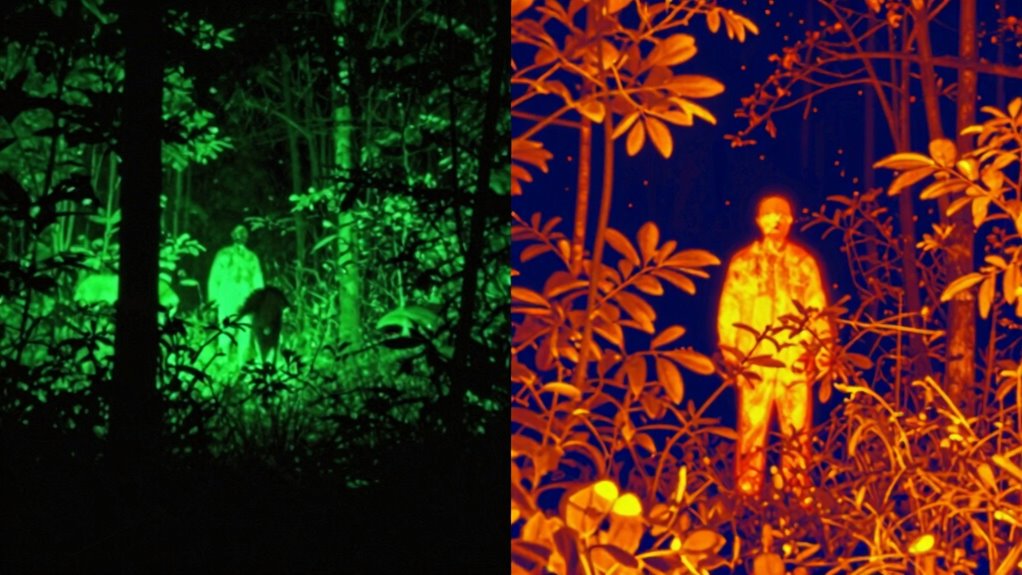

Night vision and thermal imaging address different problems, so mixing them up can lead to wasted money. Night vision enhances visual details in low-light conditions by amplifying ambient light or infrared illumination, while thermal imaging detects heat signatures even in total darkness or obscurants like fog or smoke. Choosing the right technology depends on your specific needs. If you want to learn how to select the best option for your situation, there’s more you should know.

Get the latest gadgets delivered free — and shop member deals
- Fast, free delivery on millions of items
- Access to Prime Big Deal Days deals on October 6–7
- Prime Video, Amazon Music and more included
Key Takeaways
- Thermal imaging detects heat signatures, ideal for obscured environments, while night vision enhances low-light visuals for detailed observation.
- Using the wrong technology for specific conditions can lead to unnecessary expenses and ineffective results.
- Combining both systems may increase costs without significant benefits if not aligned with operational needs.
- Proper understanding of each technology’s strengths prevents overspending on unsuitable equipment.
- Selecting the right device ensures cost-effective solutions tailored to environmental challenges and mission objectives.
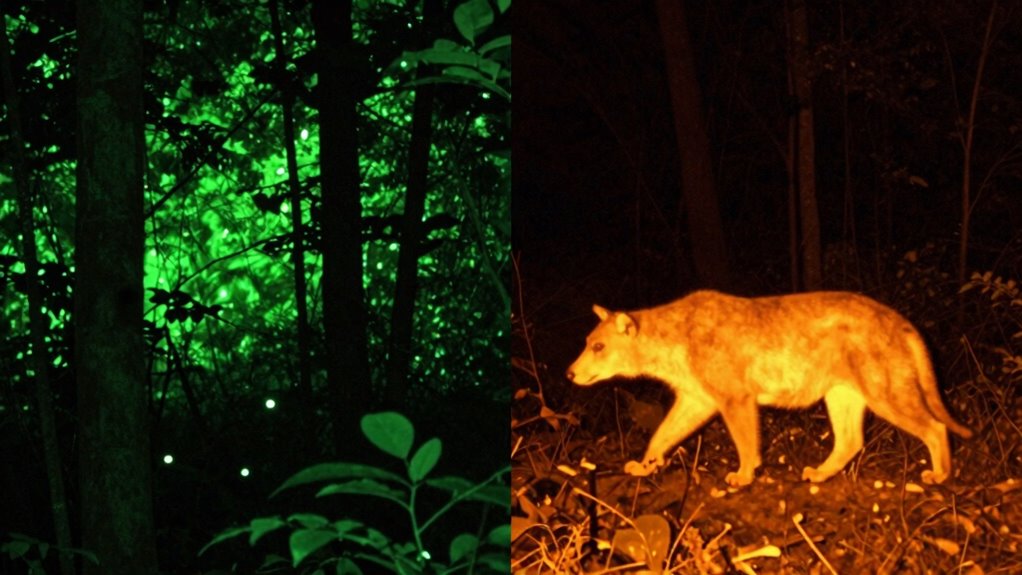
Thermal imaging, on the other hand, detects the heat emitted by objects rather than relying on reflected light. It creates images based on temperature differences, which is especially useful in complete darkness or obscured conditions like fog, smoke, or dense foliage. When you switch to thermal imaging, you get a different perspective—one that highlights heat signatures. This capability is particularly beneficial in heat detection, making it invaluable for spotting people, animals, or heat-emitting machinery from a distance. Unlike night vision, thermal imaging doesn’t require any ambient light or infrared illumination, making it perfect for scenarios where infrared technology falls short. Additionally, understanding the infrared technology behind each system can help you better evaluate the features and limitations of various devices. Recognizing the technological differences between these systems ensures you choose the most suitable equipment for your needs.
For example, thermal imaging can be more effective in obscured environments, providing visibility where traditional night vision might fail. If you confuse these two technologies and try to use them interchangeably, you risk overspending on equipment that doesn’t meet your specific needs. For example, investing heavily in night vision equipment with advanced image enhancement features might seem like the best choice, but if your primary goal is to detect heat sources in complete darkness, thermal imaging would be more appropriate. Conversely, opting solely for thermal cameras when you need detailed visual information in low-light conditions can leave you blind to important visual cues that night vision easily captures. Mixing these technologies might also lead to unnecessary costs, as you could end up buying multiple devices or more expensive hybrid units that aren’t optimized for your particular tasks.
Understanding the differences between infrared technology used in night vision and the heat detection capabilities of thermal imaging helps you make smarter, more cost-effective choices. You’ll avoid overspending on features that don’t add value to your specific applications. Whether you need to see through darkness with image enhancement or detect heat signatures in complete darkness, choosing the right technology ensures you get the most out of your investment without wasting money on tools that won’t serve your purpose effectively. Recognizing the distinct functions of these technologies is essential for making informed purchasing decisions.
thermal imaging camera for heat detection
As an affiliate, we earn on qualifying purchases.
As an affiliate, we earn on qualifying purchases.
Frequently Asked Questions
How Long Do Night Vision Devices Typically Last Before Replacement?
Night vision devices typically last around 3 to 5 years before needing replacement, depending on device durability and usage. Regular maintenance, like cleaning lenses and checking batteries, can extend their lifespan. However, heavy use or rough handling may shorten this period. You should inspect your device frequently and follow the manufacturer’s maintenance guidelines to guarantee peak performance and avoid premature replacement.
Are Thermal Imaging Devices Affected by Weather Conditions?
Weather interference can definitely impact thermal imaging devices, but not in the way you might think. Heavy rain, fog, or snow can reduce image clarity, making it harder to distinguish heat signatures. Unlike night vision, which relies on ambient light, thermal imaging detects heat patterns unaffected by darkness. Still, extreme weather conditions can degrade performance, so you need to be prepared for less-than-ideal visuals when conditions turn nasty.
Can Night Vision and Thermal Imaging Be Used Together Effectively?
Yes, you can effectively use night vision and thermal imaging together through infrared blending and image fusion. These technologies combine the strengths of both systems, allowing you to see in low light and detect heat signatures simultaneously. By integrating these images, you get clearer, more detailed visuals, which improve your situational awareness. Just ensure your equipment supports image fusion to fully leverage these benefits without unnecessary costs.
What Is the Typical Cost Difference Between Night Vision and Thermal Imaging?
You’ll find thermal imaging devices cost considerably more than night vision, with a typical price difference of $2,000 to $5,000. The technology differences drive this gap: thermal imaging detects heat signatures, while night vision amplifies ambient light. Although thermal imaging offers enhanced capabilities in complete darkness or obscured conditions, it’s an investment. Carefully compare costs and features to choose the right technology without overspending on features you don’t need.
How Do Power Requirements Differ Between the Two Technologies?
Thermal imaging generally consumes more power than night vision, leading to shorter battery life. You’ll notice higher power consumption with thermal devices because they process heat signatures, which requires more energy. Night vision devices tend to have longer battery life since they amplify ambient light without heavy processing. If you need extended use in the field, choose your technology based on your power requirements to avoid frequent recharging or battery replacements.
night vision binoculars for low light
As an affiliate, we earn on qualifying purchases.
As an affiliate, we earn on qualifying purchases.
Conclusion
You stand in the dark, eyes adjusting to the shadows, knowing night vision amplifies faint starlight, revealing hidden details. But when the cold fog drifts in, thermal imaging slices through the gloom, showing heat signatures like ghostly whispers. Mixing these tools wastes your resources and blurs their power. Choose wisely—trust the vision that pierces the darkness or the heat that reveals unseen life. In the end, clarity comes from understanding what each technology can truly do.
As an affiliate, we earn on qualifying purchases.
thermal and night vision combo goggles
As an affiliate, we earn on qualifying purchases.
As an affiliate, we earn on qualifying purchases.
Fall Picks
fall essentials
As an affiliate, we earn on qualifying purchases.