Many casual golfers think that high launch monitor numbers, especially high spin rates, automatically mean better shots. However, understanding how these metrics interact is key. High spin with high ball speed can be good for control and distance, but too much spin might cause ballooning and less roll. Low spin combined with high ball speed can lead to lower, more penetrating shots. To improve, you need to see how these numbers work together—keep going to learn more.
Key Takeaways
- Casual golfers often misunderstand that high spin always equals better shots; in reality, excessive spin can reduce distance.
- Many assume ball speed alone determines shot quality, neglecting how spin rate influences control and trajectory.
- Golfers frequently overlook the importance of balancing spin rate with ball speed for optimal shot performance.
- There’s a misconception that low spin is always desirable, ignoring situations where higher spin improves shot control.
- Casual players often focus on hitting lower numbers without understanding how these metrics interact for better course results.
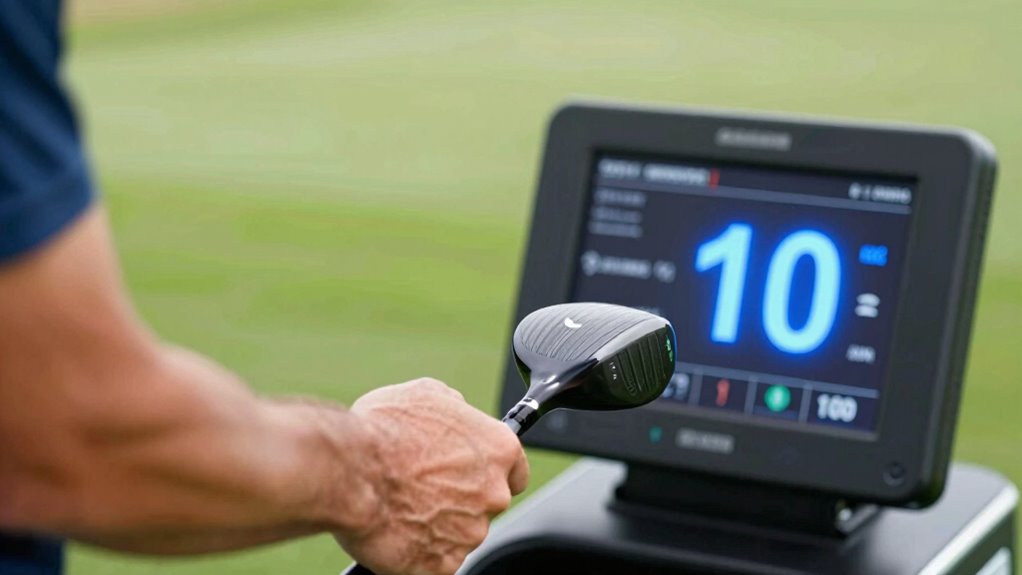
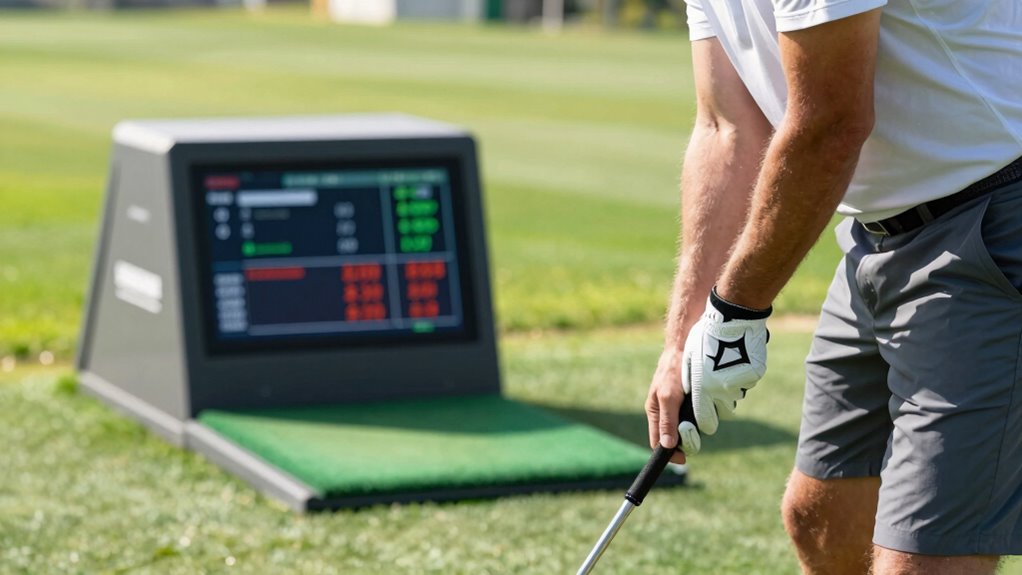
Many casual golfers focus heavily on their launch monitor numbers, but one key metric often leads to confusion: spin rate. While ball speed and spin rate are both critical in understanding how your shot performs, many players misunderstand what these numbers truly mean for their game. You might see a high spin rate and assume it’s always bad, but that’s not necessarily the case. To improve, you need to grasp how spin rate interacts with ball speed and how each impacts your shot.
Ball speed is the velocity of the ball immediately after impact. When you hit the ball with high ball speed, it generally translates into longer shots because more energy is transferred to the ball. Spin rate, on the other hand, measures how many revolutions the ball makes during its flight, usually expressed in revolutions per minute (RPM). It’s tempting to think that lower spin always results in better shots, but that’s an oversimplification. Too little spin can cause your ball to drift offline or fall short, especially with certain clubs or shots.
High ball speed means longer shots; balance spin rate to optimize control and distance.
The key is understanding the relationship between ball speed and spin rate. For a given ball speed, a higher spin rate can produce more backspin, which helps the ball stay in the air longer and generate more lift. This can be advantageous for control and stopping power on the greens. However, excessive spin can also cause the ball to balloon or lose distance, especially if it’s not matched with the right club or swing mechanics. Conversely, a low spin rate with high ball speed might produce a lower, more penetrating ball flight that rolls further after landing, which can be beneficial in windy conditions.
Many golfers misinterpret high spin rates as a flaw, without considering their swing or club choice. If your ball speed is high and your spin rate is also elevated, you may just be generating the ideal amount of spin for your shot type. What’s more important is how these numbers work together. If you have high ball speed but also a very high spin rate, you might experience inconsistencies or unwanted ballooning. If your ball speed is lower but your spin rate is high, you might not be getting enough distance or control. Additionally, understanding how spin rate affects the ball’s trajectory is crucial for optimizing your shot performance. Recognizing the impact of launch conditions can help you fine-tune your club selection and swing mechanics more effectively.
Ultimately, understanding your launch monitor numbers means recognizing how ball speed and spin rate combine to influence your shot shape and distance. Instead of chasing lower spin rates blindly, focus on how these metrics fit your swing and playing style. When you interpret these numbers correctly, you’ll gain better control over your shots and see real improvements on the course.

Swinora Golf Launch Monitor & Portable Swing Analyzer with 13 Metrics
- No Subscription Fees: Lifetime access with one-time download
- Built-in Environmental Sensors: Temperature, humidity, and pressure modules
- Enhanced Accuracy: Adjusts data based on real-time conditions
As an affiliate, we earn on qualifying purchases.
As an affiliate, we earn on qualifying purchases.
Frequently Asked Questions
How Accurate Are Launch Monitor Readings for Casual Golfers?
Launch monitor readings are fairly accurate for casual golfers, helping you analyze your golf swing and ball trajectory. While they might not be perfect, they give you a solid understanding of your club speed, launch angle, and distance. These insights can improve your game by highlighting areas for adjustment. Just remember, environmental factors and equipment differences can slightly affect accuracy, but overall, they’re useful tools for casual players aiming to improve.
Can Launch Monitor Data Improve My Game Instantly?
Think of launch monitor data as your personal golf GPS—it can point you in the right direction, but it won’t instantly fix your swing mechanics. When equipment calibration is spot-on, the data becomes more reliable, helping you identify flaws and adjust accordingly. While it’s a powerful tool, real improvement takes practice. Use the numbers as a guide, but remember, consistent effort and coaching turn data into lasting progress.
Which Launch Monitor Features Are Most Beneficial for Beginners?
As a beginner, focus on launch monitors with features like swing analysis and shot tracking. These tools help you understand your swing mechanics and improve consistency. They also provide data to refine your course strategy, making you more confident on the course. Look for user-friendly interfaces and real-time feedback, so you can make quick adjustments and see progress, ultimately boosting your enjoyment and skill level.
Are There Affordable Launch Monitors Suitable for Casual Players?
Think of an affordable launch monitor as your trusty guide to perfecting your golf swing and understanding ball trajectory. Yes, there are budget-friendly options designed for casual players that provide valuable data without breaking the bank. These monitors help you track key metrics, giving you insights to improve your game. You don’t need high-end gear—just something simple and reliable to turn your practice sessions into meaningful progress.
How Often Should I Check My Launch Monitor Numbers During Practice?
You should check your launch monitor numbers every few swings during practice. Focus on your swing tempo and grip pressure, adjusting as needed to improve consistency. Don’t obsess over every shot; instead, use the data to identify patterns and make small tweaks. Regularly monitoring your numbers helps you develop better rhythm and control, leading to more accurate shots and steady improvement over time.

BLACK T SHOT5 Golf Launch Monitor Portable Doppler Radar Swing Speed Trainer with Ball Speed, Club Head Speed, Smash Factor & Distance Tracking, Indoor Outdoor Golf Training Device
- Real Distance Data: Measures carry, ball speed, and more
- Quick Setup: Ready in 3 seconds without app or Bluetooth
- Essential Data Focus: Displays 5 key metrics for practical improvement
As an affiliate, we earn on qualifying purchases.
As an affiliate, we earn on qualifying purchases.
Conclusion
So, next time you’re on the course, remember that launch monitor numbers like spin rate or ball speed can seem confusing. For example, imagine you’re hitting shots with consistent club speed, but your spin rate is high, causing less distance. Understanding these numbers helps you improve, rather than just chasing the latest tech. By knowing what really matters, you’ll make smarter decisions and enjoy the game even more. Happy golfing!
Swinora Golf Launch Monitor & Portable Swing Analyzer with 13 Metrics
- No Subscription Fees: Lifetime access with one-time download
- Built-in Environmental Sensors: Temperature, humidity, and pressure modules
- Enhanced Accuracy: Adjusts data based on real-time conditions
As an affiliate, we earn on qualifying purchases.
As an affiliate, we earn on qualifying purchases.

PRGR HS 130-A Portable Golf Launch Monitor | Doppler Radar Measures Club & Ball Speed, Smash Factor, Total & Carry Distance | Tracks Swing Speed Training Aids
- Accurate Launch Monitoring: Tracks club and ball speed, distance, smash factor
- Affordable Golf Tech: Budget-friendly, no Wi-Fi or Bluetooth needed
- High-End Comparison: Provides precise data and stores 500 swings
As an affiliate, we earn on qualifying purchases.
As an affiliate, we earn on qualifying purchases.