
Choosing between paying mortgage points or making a larger down payment depends on your financial goals. Paying points can lower your interest rate and save money if you plan to stay in your home long-term, while a bigger down payment reduces your loan amount and total interest paid from the start. Typically, a larger down payment offers more immediate savings and builds equity faster. To make the best decision, consider your long-term plans and explore the details ahead.
Key Takeaways
- A larger down payment reduces the principal amount, decreasing total interest paid over the loan term long-term.
- Paying mortgage points lowers the interest rate, potentially saving more over time if you plan to stay in the home long-term.
- Higher down payments often lead to quicker equity buildup and may eliminate private mortgage insurance (PMI).
- Mortgage points involve upfront costs but can be more beneficial if you have a high credit score and plan to hold the property long-term.
- The optimal choice depends on your cash flow, time horizon, and interest rate environment; consulting a mortgage professional is advisable.
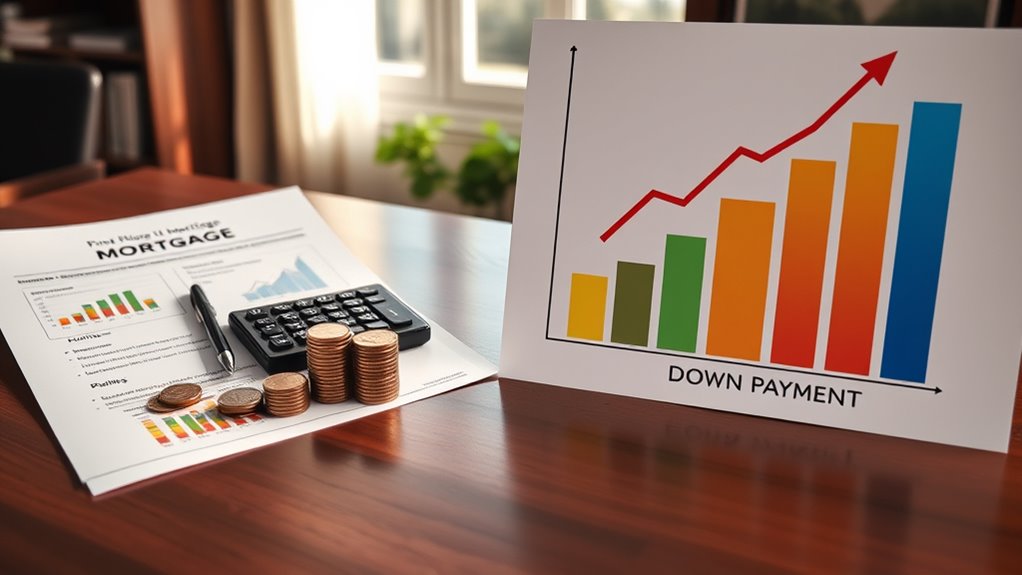
Are you trying to decide between paying for mortgage points or making a larger down payment? Both options can influence your long-term savings, but understanding how they work can help you make the right choice. When considering mortgage points, keep in mind that they’re essentially prepaid interest; paying more upfront can lower your interest rate over the life of your loan. However, the impact of mortgage points hinges heavily on your credit score and current interest rates. If your credit score is high, lenders typically offer lower interest rates, which means paying for points might not provide as much benefit. Conversely, if your credit score is lower, purchasing points could substantially reduce your interest rate, saving you money over time.
Interest rates are vital here. When you buy mortgage points, you’re paying a fee (typically 1% of the loan amount per point) to lock in a lower rate. This can be especially advantageous if you plan to stay in your home for many years, as the upfront cost will be offset by reduced monthly payments. But if you’re uncertain about staying long term or expect interest rates to drop, paying for points might not be the best move. On the other hand, making a larger down payment reduces the principal amount you borrow, which can also lower your monthly payments and total interest paid over the life of the loan. This approach can be particularly beneficial if you want to build equity quickly or aim to avoid private mortgage insurance (PMI).
Buying mortgage points can lower your interest rate if you plan to stay long-term, while a larger down payment reduces total interest and builds equity quickly.
Choosing between these options depends on your financial situation and goals. If you have a good credit score and attractive interest rates, it might make more sense to put extra money toward a larger down payment. This strategy reduces your loan size from the start, lowering your overall interest payments and helping you build equity faster. If your credit score is less than ideal, or if you expect interest rates to stay steady or fall, paying for mortgage points could be more advantageous, as it can lower your rate and save you money over the long run.
Additionally, the contrast ratio of your mortgage can influence how you perceive your investment, especially in terms of overall image quality and long-term savings. Ultimately, it’s about balancing your immediate cash flow with your long-term savings. If you have enough savings to make a sizable down payment without risking your financial security, that might be the smarter move. But if you’re looking to minimize your interest costs and your credit score supports favorable interest rates, investing in mortgage points could pay off over time. Carefully weigh these options, consider how long you plan to stay in the home, and consult with a mortgage professional to determine what makes the most sense for your unique circumstances.
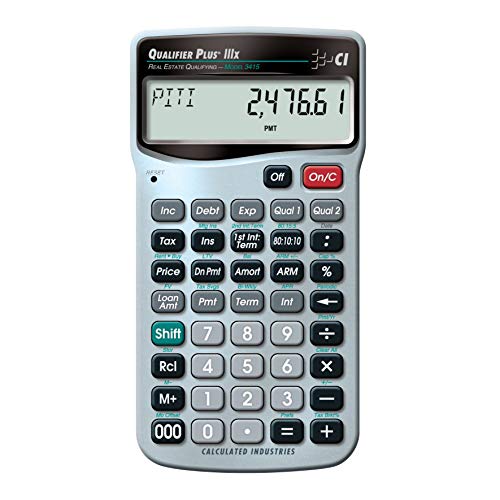
Calculated Industries 3415 Qualifier Plus IIIx Advanced Real Estate Mortgage Finance Calculator | Simple Operation | Buyer Pre-Qualifying | Solves Payments, Amortization, ARMs, Combos, FHA, VA, More
SPEAKS YOUR LANGUAGE: Keys clearly labeled in residential mortgage finance terms like Loan AMT, Int, Term, PMT. This…
As an affiliate, we earn on qualifying purchases.
As an affiliate, we earn on qualifying purchases.
Frequently Asked Questions
How Does Credit Score Influence the Decision Between Points and Down Payment?
Your credit score impacts both your loan approval and the credit impact of choosing points or a higher down payment. A higher score may qualify you for lower interest rates, making points more beneficial since they reduce your rate further. Conversely, with a lower score, a larger down payment might be better to improve approval chances and minimize overall costs. Always consider how your credit influences these choices to maximize savings.
Are There Tax Implications for Paying Mortgage Points?
When you pay mortgage points, you might be able to deduct them as part of your mortgage interest on your taxes, which can reduce your taxable income. However, the IRS requires that these points be paid upfront and that they meet specific criteria to qualify for this tax deduction. So, paying points could offer long-term tax benefits, but you should consult a tax professional to understand your specific situation.
Can I Combine Paying Points With Increasing My Down Payment?
You can combine paying points with increasing your down payment to potentially lower your mortgage rate and reduce your monthly payments. Paying points involves upfront costs to get a better rate, while increasing your down payment decreases the loan amount. Using both strategies can maximize your savings over time, but it’s important to evaluate your financial situation and long-term plans to find the best balance for your needs.
How Do Different Loan Types Affect the Choice Between Points and Down Payment?
Your choice between points and down payment depends on your loan eligibility and interest rate types. Different loan types, like FHA, VA, or conventional, have varying rules for accepting points or larger down payments. Some loans may offer lower interest rates with points, while others favor a bigger down payment. Consider how each option impacts your long-term savings, and consult your lender to find the best strategy for your unique financial situation.
What Are the Risks of Choosing Higher Down Payment Over Mortgage Points?
Choosing a higher down payment can reduce your loan amount and interest over time, but it carries risks like limited cash reserves. If interest rates fluctuate or you face unexpected costs, your loan’s amortization schedule might strain your finances. You might also miss out on potential investment opportunities. Be sure to weigh these risks carefully, considering how interest rate changes could impact your long-term savings and financial flexibility.

Calculated Industries 3405 Real Estate Master IIIx Residential Real Estate Finance Calculator | Clearly-Labeled Function Keys | Simplest Operation | Solves Payments, Amortizations, ARMs, Combos, More
DEDICATED FUNCTION KEYS for Quick Financial Solutions: Clearly labeled function keys enable you to quickly and confidently provide…
As an affiliate, we earn on qualifying purchases.
As an affiliate, we earn on qualifying purchases.
Conclusion
Choosing between mortgage points and a higher down payment is like deciding whether to save now or later. Paying points can lower your interest rate, saving you money over time, but a larger down payment reduces your loan amount from the start. Think of it like planting seeds today or watering them for future growth. Ultimately, your decision depends on your financial goals and patience—both paths can lead to long-term savings if you play it wisely.
private mortgage insurance removal
As an affiliate, we earn on qualifying purchases.
As an affiliate, we earn on qualifying purchases.
mortgage interest rate reduction tools
As an affiliate, we earn on qualifying purchases.
As an affiliate, we earn on qualifying purchases.