TL;DR

Get the latest gadgets delivered free with Prime
- Fast, free delivery on millions of items
- Prime Video, Amazon Music and more included
- Member-only deals all year
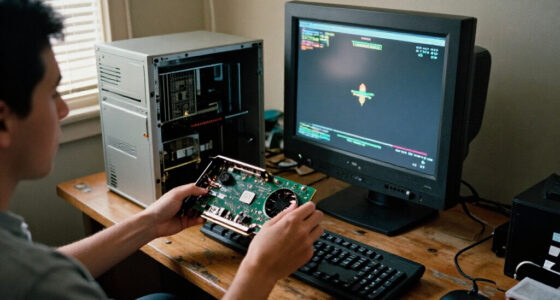
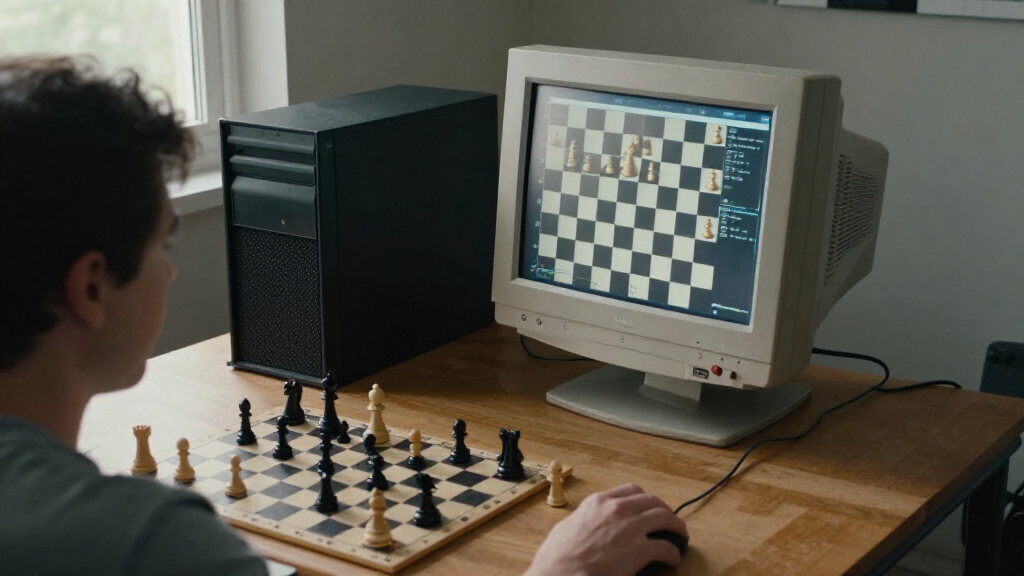
A 2026 report tested modern chess-engine techniques on a 200 MHz Pentium Pro and estimated the adapted Stockfish port at 3,180 Elo at 30 seconds per move. That is far above Garry Kasparov’s reported rating of just under 2,800, suggesting such a system likely could have beaten him—but the experiment did not test the engine against Kasparov, and its Elo estimates are not a match result.
A 2026 chess-engine experiment found that a modern Stockfish program, rewritten and tuned to run on a 200 MHz Pentium Pro, reached an estimated 3,180 Elo at 30 seconds per move—well above Garry Kasparov’s reported rating of just under 2,800. The result supports the argument that an adapted modern engine on period hardware could have been a formidable opponent in 1996, but Kasparov did not play this machine, and the estimate is not proof of how a historical match would have ended.
The report by Nicholas Carlini compares chess programs across hardware and generations of software. Its central finding is that better engine design accounts for most of the improvement in its comparisons: the author attributes 720 of a 1,335-Elo gain to programming advances rather than faster hardware. Elo is a rating scale used to estimate relative playing strength; it does not guarantee the outcome of any single game or match.
In one test, a stock version of the 1996 engine Crafty scored an estimated 1,999 Elo on the Pentium Pro at one second per move and 2,383 at 10 seconds. On a modern Ryzen 7, that same engine reached 2,614 at one second per move. After the author added modern search and evaluation methods to Crafty, its estimated rating rose to 2,718 on the Pentium Pro at one second per move and 2,974 at 10 seconds.
The other test adapted Stockfish, a leading modern engine, to the Pentium Pro’s 32-bit architecture and 64 MB memory limit. The untuned port reached an estimated 2,496 Elo at one second per move; changes tailored to the old processor raised that to 2,846 at one second, 3,109 at 10 seconds and 3,180 at 30 seconds. In a separate 100-game test, the adapted modern engine beat the 1996 Crafty build running on modern hardware, with 78 wins, 17 draws and five losses. That match compared engines, not either program with Kasparov.
How Software Changed the Strength Equation
The experiment shifts attention from the raw speed of Deep Blue’s specialized hardware to the chess knowledge encoded in software. The author says Deep Blue used 30 processors and 480 custom chess co-processors and could analyze more than 200 million positions per second. The Pentium test suggests that modern search and evaluation methods can make a much slower machine play at a very high estimated level, even though it cannot examine positions at anything like Deep Blue’s reported rate.
That distinction matters to how the 1996 Kasparov-Deep Blue match is understood. Deep Blue beat Kasparov in one game on Feb. 10, 1996, the first time a computer program won a game against the reigning world champion, but Kasparov won that match. IBM’s specialized machine was not the only conceivable route to strong computer chess: the experiment indicates that later-developed software methods, if available and suitably adapted, could have produced a powerful engine on commodity-era hardware. This is a counterfactual about technology, not a claim that such software existed in 1996.
Products Worth Considering

Bose S1 Pro+ All-in-One PA Speaker

Apple AirPods Pro 3 Wireless Earbuds with Active Noise Cancellation

Samsung Odyssey G4 25-inch FHD Gaming Monitor
As an affiliate, we earn on qualifying purchases.
The 1996 Match and Modern Tests
Deep Blue’s performance came from a purpose-built system developed by IBM, while the new report asks a different question: how much strength could a modern engine’s algorithms retain when constrained to a computer from the same era? The Pentium Pro used in the experiment was a 200 MHz, 32-bit processor with 64 MB of RAM. Getting Stockfish to run required adapting its code to those limits and then tuning it for that processor.
The author also tested a reconstructed version of Crafty 11.13, a competitive engine from 1996 whose source code is available. These results are estimates produced by engine testing at specified time controls, with uncertainty ranges reported for several ratings. They should not be read as directly interchangeable with every historical player rating: conditions, rating pools and test methods can differ. Kasparov’s reported rating of just under 2,800 offers a useful reference point, not a guaranteed prediction of a head-to-head result.
What the Kasparov Counterfactual Cannot Show
The report does not include a match between the adapted Stockfish and Kasparov, so it cannot establish that the engine would have beaten him in 1996. Its Elo figures are estimates from engine tests, not results from a historical tournament, and the supplied account does not establish that the rating estimates use the same pool or conditions as Kasparov’s rating. The size of any rating gap can suggest likely relative strength, but it cannot settle a particular match’s score.
It is also a retrospective software comparison. The modern algorithms and neural-network evaluation methods used in the experiments were not available to a 1996 developer in the form tested. The report therefore addresses what could be achieved by combining later chess-engine advances with old hardware, not what IBM or other teams could actually have built with knowledge available at the time. The precise result would depend on match format, time controls, tuning and implementation.
Further Tests Would Narrow the Claim
The report’s next useful step would be broader testing across engines, time controls and hardware configurations, with rating methods and uncertainty described consistently. A direct human match cannot recreate the 1996 conditions, but carefully documented engine-versus-engine tests could clarify how sensitive the Pentium results are to tuning and match length.
For now, the evidence supports a limited conclusion: modern chess software can play at a very high estimated level on a 1996-era Pentium Pro. Whether that particular program would have defeated Kasparov remains an informed counterfactual, not a confirmed result.
Key Questions
Did a Pentium-based engine actually play Kasparov?
No. The report tests chess engines against other engines and estimates their ratings. It does not report a game or match against Garry Kasparov.
How strong was the adapted Stockfish port?
The author estimated it at 2,846 Elo at one second per move, 3,109 at 10 seconds and 3,180 at 30 seconds on the Pentium Pro. These are experimental estimates, not results from a Kasparov match.
What did Deep Blue do in 1996?
Deep Blue beat Kasparov in one game on Feb. 10, 1996, the first time a computer program won a game against the reigning world champion. Kasparov won the overall match.
Does the experiment prove the Pentium would have won?
No. The results suggest the adapted engine was rated well above Kasparov’s reported rating, but no head-to-head match was played. Ratings and engine tests cannot confirm the outcome of a hypothetical match.
Source: nicholas.carlini.com