
📊 Full opportunity report: How Automated Vision-Model Inspections Safeguard Food Quality on IdeaNavigator AI — validation score, market gap, and execution plan.
Prime for Young Adults — start your free trial
Fast free delivery, streaming and member deals for eligible 18–24 year olds.
Try it freeAs an affiliate, we earn on qualifying purchases.
TL;DR
A vision-model-based inspection system is being piloted in restaurant kitchens to verify food safety compliance through photos. This approach aims to replace traditional checklists with verifiable, timestamped data, improving food safety oversight.
Restaurant operators are piloting a vision-model inspection system that uses smartphone photos to automatically identify food safety violations during daily walk-throughs. This development aims to replace traditional, often unverified checklists with verifiable, timestamped data, potentially transforming food safety monitoring for multi-unit restaurant groups.
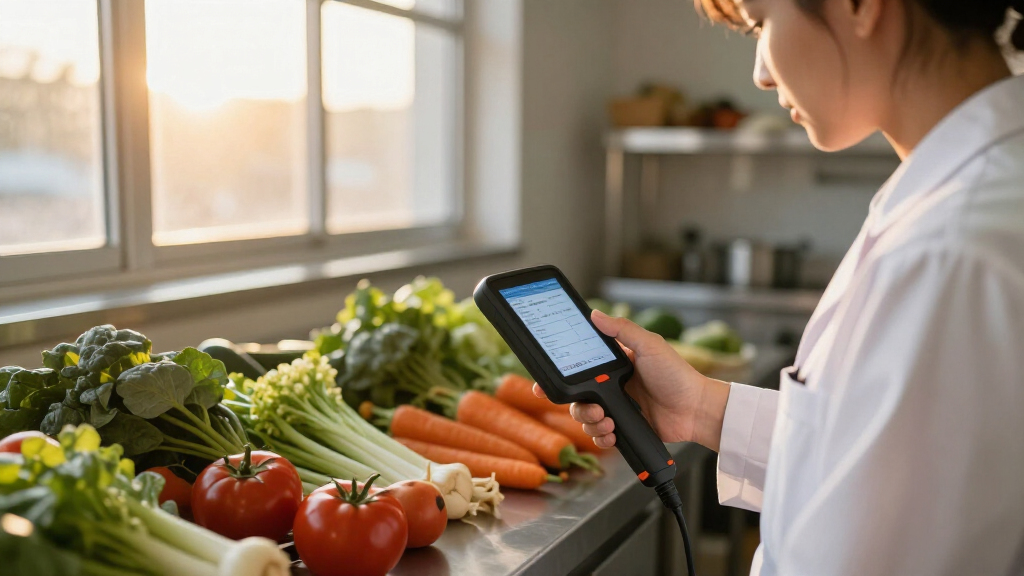
The system involves managers taking photos of key kitchen areas—such as prep stations, storage, and sinks—during morning walk-throughs. The vision model then analyzes these images to detect violations like uncovered containers, propped cooler doors, or missing date labels. It assigns severity ratings and creates timestamped reports for each location, allowing for trend analysis across multiple sites.
This approach is currently in a testing phase, with plans to validate its accuracy over two weeks across five restaurant locations. The goal is to compare the model’s flagged violations with findings from a hired health-inspection consultant to assess reliability. The system is designed to integrate into existing operations via a subscription model, offering a group dashboard for oversight.
How Automated Vision-Model Inspections Safeguard Food Quality
Smartphone photos become verifiable safety records. A pilot system analyzes daily kitchen walk-through images, flags visible violations, assigns severity and gives multi-location operators timestamped evidence instead of unchecked boxes.
From kitchen walk-through to accountable action
The workflow fits into an existing morning routine: managers document key areas, the model examines visible conditions, and operators receive structured reports that can be reviewed across sites.
Capture
Managers photograph prep stations, storage zones, coolers and sinks.
Analyze
The vision model scans each image for recognizable compliance issues.
Rate
Detected conditions receive violation categories and severity ratings.
Record
Findings are tied to timestamped photographic evidence by location.
Act
Teams correct issues while leaders compare trends across the group.
What the model is learning to detect
The first use cases focus on violations that can be recognized from photographs. Detection coverage may expand as the system is validated and trained across more varied kitchens.
Uncovered containers
Identifies exposed ingredients or prepared food that may face contamination risk.
Propped cooler doors
Surfaces visible conditions that can undermine temperature stability.
Missing date labels
Flags containers without clear dating information for staff review.
Cleanliness concerns
Highlights visible residue, clutter or questionable conditions in monitored areas.
Evidence changes the value of an inspection
Traditional checklists capture a claim that a task was completed. Photo-based inspection adds an auditable evidence layer while preserving human review for context and judgment.
| Oversight factor | Manual checklist | Vision-assisted |
|---|---|---|
| Verifiable evidence | ✗ Limited | ✓ Photo record |
| Timestamped activity | ~ Variable | ✓ Built in |
| Assessment consistency | ~ Subjective | ✓ Standardized |
| Cross-site analysis | ✗ Manual effort | ✓ Group dashboard |
| Contextual judgment | ✓ Human strength | ~ Review needed |
The pilot must prove accuracy in real kitchens
For two weeks, automated findings will be compared with observations from a hired health-inspection consultant across five restaurant locations.
Validation pathway
The comparison is intended to show where the model agrees with an expert, where it misses issues and where ambiguous images produce unreliable flags.
Questions still open
Early promise does not establish universal reliability. Broader evidence will be needed before the system can support widespread operational decisions.
Using AI to analyze kitchen photos can reliably flag violations, turning subjective checklists into objective, verifiable data.
Anonymous researcher
One image can connect action to accountability
The strongest operational benefit is not detection alone—it is the traceable chain connecting a visible condition with a time, location, response and longer-term pattern.
Will it replace human inspectors?
No. The near-term role is to supplement human judgment with consistent, verifiable evidence and reduce missed violations.
Is it ready for widespread use?
Not yet. The system remains in testing, and successful initial validation would still need broader confirmation.
How could restaurant groups benefit?
Operators could gain objective records, quicker issue visibility and scalable oversight across multiple locations.
Impact of Automated Inspection on Food Safety Oversight
This development could significantly improve how restaurant chains verify compliance with food safety standards. By providing verifiable, timestamped evidence of inspections, it reduces reliance on subjective checklists and manual reporting. This could lead to more consistent enforcement of safety protocols, potentially reducing violations and foodborne illness risks. Additionally, the system offers scalable oversight for multi-unit operators, enhancing overall operational transparency and accountability.
food safety inspection smartphone app
As an affiliate, we earn on qualifying purchases.
As an affiliate, we earn on qualifying purchases.
Recent Advances in AI-Driven Food Safety Monitoring
Traditional food safety inspections rely on manual checklists and subjective assessments, often leading to missed violations or unverified reports. Recent advances in AI and computer vision enable automated analysis of kitchen photos, promising more accurate and objective oversight. Pilot programs in various sectors have demonstrated AI’s potential to detect violations like improper food storage or cleanliness issues, but widespread adoption in restaurant operations remains in early testing stages.
The current initiative builds on these technological advances, aiming to integrate vision models into daily routines without requiring new hardware—only smartphones and existing workflows. This approach aligns with a broader industry trend toward digital, data-driven food safety management.
“Using AI to analyze kitchen photos can reliably flag violations, turning subjective checklists into objective, verifiable data.”
— an anonymous researcher
restaurant kitchen inspection camera
As an affiliate, we earn on qualifying purchases.
As an affiliate, we earn on qualifying purchases.
Uncertainties About Accuracy and Implementation
It is not yet clear how accurately the vision model will perform across diverse kitchen environments or how it will handle ambiguous situations. The validation process over two weeks will provide initial data, but broader testing is needed to confirm reliability. Additionally, questions remain about how staff will adapt to photo-based inspections and whether the system can be integrated seamlessly into existing workflows without causing disruptions.
food safety violation detection system
As an affiliate, we earn on qualifying purchases.
As an affiliate, we earn on qualifying purchases.
Next Steps for Validation and Deployment
The pilot program will run for two weeks, with results comparing model-flagged violations against expert inspections. If successful, the system could be rolled out more broadly across multiple locations, with further refinements based on initial findings. Long-term, developers aim to expand the system’s capabilities to cover more violation types and integrate with existing food safety management platforms.
verifiable food safety inspection tools
As an affiliate, we earn on qualifying purchases.
As an affiliate, we earn on qualifying purchases.
Key Questions
How does the vision-model inspection system work?
The system involves managers taking photos of key kitchen areas during walk-throughs. The AI analyzes these images to detect violations, assigns severity ratings, and creates timestamped reports for review.
What types of violations can the system detect?
Currently, it can flag issues like uncovered containers, propped cooler doors, missing date labels, and cleanliness concerns. Future updates may expand detection capabilities.
Will this replace human inspections entirely?
Not immediately. The system aims to supplement existing inspections by providing verifiable evidence and reducing missed violations, not replace human judgment entirely.
Is this system ready for widespread use?
It is still in testing. Successful validation over the pilot period could lead to broader deployment, but further validation and integration are needed.
How does this benefit restaurant chains?
It offers more accurate, objective, and verifiable food safety data, helping chains ensure compliance, reduce violations, and improve overall safety standards.
Source: IdeaNavigator AI
Fall yard work Picks
leaf blowers
As an affiliate, we earn on qualifying purchases.